

Almost, but not quite. Lake Baikal's maximum depth is 1,642 m. The Grand Canyon's maximum depth (from rim to river) is approximately 1,829 m. The Grand Canyon is about 187 m deeper than Lake Baikal — a margin of about 11%. Both are among the deepest natural features on Earth, just measured very differently.
The Short Answer
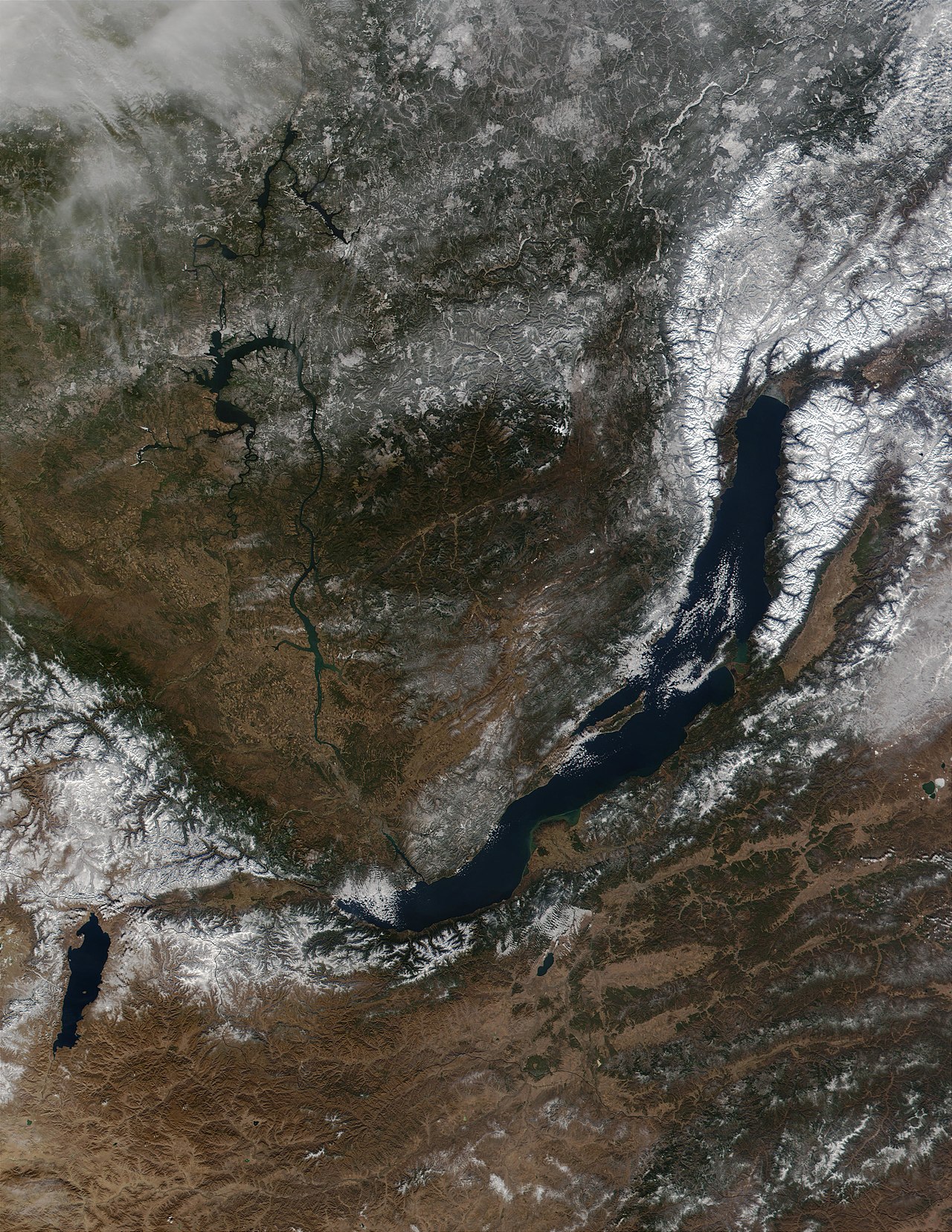
Lake Baikal in southern Siberia (Russia) is the deepest lake in the world. The Grand Canyon in Arizona (USA) is one of the deepest canyons. Comparing them is comparing different types of features — a body of water (Baikal) and a dry erosional valley (Grand Canyon). But both are spectacular natural depths.
The Grand Canyon edges out Baikal in depth, but Baikal contains more freshwater than any other lake on Earth (about 20% of the world's unfrozen surface freshwater). The two represent different categories of "deep" — vertical relief (Grand Canyon) versus water column (Baikal).
The Real Numbers
- Lake Baikal max depth: 1,642 m (5,387 ft)
- Grand Canyon max depth: ~1,829 m (6,000 ft) — from highest rim to Colorado River
- Difference: 187 m
- Ratio: Grand Canyon is about 1.11× the depth of Lake Baikal
The Grand Canyon's depth varies along its length — typically 1,800-1,829 m at its deepest, with some sections shallower (around 1,500 m). Lake Baikal's maximum depth is a single point — most of the lake is shallower.
Lake Baikal
Lake Baikal is in southern Siberia, Russia, near the Mongolian border. It's an ancient rift lake — formed by the Eurasian plate splitting at the Baikal Rift Zone over 25 million years ago. The lake is about 636 km long, 79 km wide on average, and 1,642 m at its deepest point. It contains about 23,615 km³ of water — that's more freshwater than all of North America's Great Lakes combined.
Baikal hosts unique biodiversity. The Baikal seal (nerpa) is the world's only freshwater seal species, found nowhere else. The lake also has the Baikal omul (a salmonid fish), and hundreds of other endemic species. About 80% of Baikal's 1,500+ species are found nowhere else on Earth.
The lake is also remarkably old — about 25-30 million years old, making it the world's oldest lake by a wide margin. (Lake Tanganyika in Africa is the next-oldest at about 10-12 million years.)
The Grand Canyon
The Grand Canyon is in northern Arizona, USA, carved by the Colorado River over the past 5-6 million years. The canyon is about 446 km long, up to 29 km wide (rim-to-rim), and up to 1,829 m deep. The canyon exposes about 1.7 billion years of geological history in its rock layers — one of the most complete geological records visible anywhere on Earth.
The Grand Canyon's creation involved both river erosion (the Colorado cutting downward) and uplift of the Colorado Plateau (which raised the land above sea level, allowing the river to cut deeper). The result is one of the most iconic landscapes in the world, and a major US national park since 1919.
How Both Compare to Other Extreme Depths
For broader context:
- Mariana Trench (deepest ocean): 10,994 m
- Mount Everest (tallest mountain): 8,849 m above sea level
- Grand Canyon: 1,829 m deep
- Lake Baikal: 1,642 m deep
- Yarlung Tsangpo Grand Canyon (China): 5,500 m deep — much deeper than the Grand Canyon
- Caspian Sea (deepest enclosed lake by absolute depth in some measures): 1,025 m
- Lake Tanganyika: 1,470 m deep
So the Grand Canyon is one of the deepest canyons in the US but not the deepest in the world. Lake Baikal is the deepest lake in the world but not the deepest natural feature.
Water Volume vs Vertical Relief
This comparison highlights how different the two features are. Lake Baikal contains:
- About 23,615 km³ of freshwater
- 20% of the world's unfrozen surface freshwater
- Enough water to flood the entire continental United States to about 3 m deep
The Grand Canyon contains:
- Almost no water by lake standards — the Colorado River runs through it but is just a stream relative to lake volumes
- Tremendous geological information in exposed rock layers
- Vast empty volume (about 4.17 trillion m³ of "air space" between rim and river)
So Baikal is a deep lake holding 1.6 km of water from surface to floor. The Grand Canyon is a deep canyon with 1.8 km of vertical relief from rim to river — but most of that vertical drop is air, not water.
Climate
Lake Baikal sits at 53°N latitude in a continental subarctic climate. Winter temperatures around the lake regularly drop to -25°C or colder, and the lake freezes over for about 4-5 months each year (December through April). Summer temperatures can reach 25-30°C briefly.
The Grand Canyon sits at 36°N latitude in a semi-arid climate. The South Rim (2,135 m elevation) has cold winters with snow and warm summers. The inner canyon at the river (760 m elevation) has hot summers (over 38°C is common) and mild winters. The temperature difference between rim and river can be 15-20°C.
Tourism
The Grand Canyon receives about 4.7 million visitors annually — one of the most-visited US national parks. Most visitors view the canyon from rim viewpoints. Hiking into the canyon (especially down to the Colorado River) is a significant undertaking. About 5,000 people raft the canyon each year.
Lake Baikal receives about 1-2 million visitors annually. Tourism has grown significantly since the 1990s as Russia opened to international travelers. Major activities include winter ice activities (when the frozen lake creates spectacular ice formations), boat trips in summer, and visiting indigenous Buryat communities.
Key Facts
- The Grand Canyon is about 11% deeper than Lake Baikal.
- Lake Baikal is the world's deepest lake (1,642 m max depth).
- The Grand Canyon is one of the deepest canyons in North America (1,829 m).
- Lake Baikal contains 20% of the world's freshwater.
- Both are major tourism destinations and UNESCO World Heritage sites.
Fun Facts
- Lake Baikal is older than the Atlantic Ocean — Baikal has existed for about 25 million years; the Atlantic opened about 200 million years ago, but Baikal's ancient origins predate most major modern geography features.
- The Grand Canyon's rocks at the bottom (the Vishnu Schist) are about 1.7 billion years old — among the oldest exposed rocks on the continent.
- Lake Baikal is so deep that if it were drained, it would take about 70 years to refill.
- The Grand Canyon's temperature can change 28°C from rim to river — equivalent to traveling from Canada to Mexico.
- Both features are still actively changing — the Grand Canyon erodes deeper each year (about 0.05 mm); Baikal's tectonic rift is widening by about 2 cm annually.
Cultural and Spiritual Significance
Lake Baikal is sacred to the Buryat people, an indigenous Mongolic group with roots in the region for thousands of years. Buryat shamanism and Tibetan Buddhism both consider Baikal a sacred site. Russian Orthodox Christian traditions also revere the lake. UNESCO declared Baikal a World Heritage Site in 1996.
The Grand Canyon has been sacred to Native American peoples for over 1,000 years. The Havasupai, Hualapai, Navajo, Hopi, Paiute, Zuni, and other tribes have ancestral connections to the canyon. It became a US national park in 1919 and a UNESCO World Heritage Site in 1979. Both features hold profound cultural meaning for the peoples who have lived alongside them for centuries.
The Bottom Line
The Grand Canyon is slightly deeper than Lake Baikal — by about 187 m or 11%. But the two are different types of features measuring different things. The Grand Canyon is vertical relief from rim to river through carved rock. Lake Baikal is the depth of water from surface to lake floor. Both are spectacular natural features that rank among Earth's most impressive geographic depths. Together they remind us how spectacularly varied Earth's surface can be — even after millions of years of erosion and tectonic activity.
Visiting Both
Visiting Lake Baikal requires travel to Russia's far east — typically through Irkutsk, the gateway city. Winter visits (when the lake freezes) offer unique experiences including ice driving on the frozen lake surface, exploring blue ice caves, and viewing dramatic ice formations. Summer brings boat tours, hiking, and visits to Olkhon Island (the largest island in the lake).
Visiting the Grand Canyon is much easier — the South Rim is accessible by car from Flagstaff, Arizona. The Grand Canyon Railway, a tourist train, also operates from Williams, Arizona. Most visitors view the canyon from rim viewpoints. More adventurous travelers hike down to the Colorado River (typically the Bright Angel or South Kaibab trails) — a strenuous journey requiring careful preparation.