
Lightning is one of nature's most spectacular and dangerous phenomena, killing an estimated 2,000 people worldwide each year and igniting countless wildfires. The Earth experiences approximately 44 lightning flashes per second — about 1.4 billion flashes per year — but this electrical activity is distributed very unevenly across the planet. Some locations are struck by lightning almost every day of the year, while others rarely see a single bolt.
Introduction
Lightning geography is determined by heat, moisture, and topographic features that force air upward to form thunderstorms. The tropics, where solar heating is most intense and moisture is abundant, are the most lightning-prone regions. Within the tropics, areas where mountains, lakes, or coastlines provide additional lifting mechanisms produce the highest lightning frequencies on Earth.
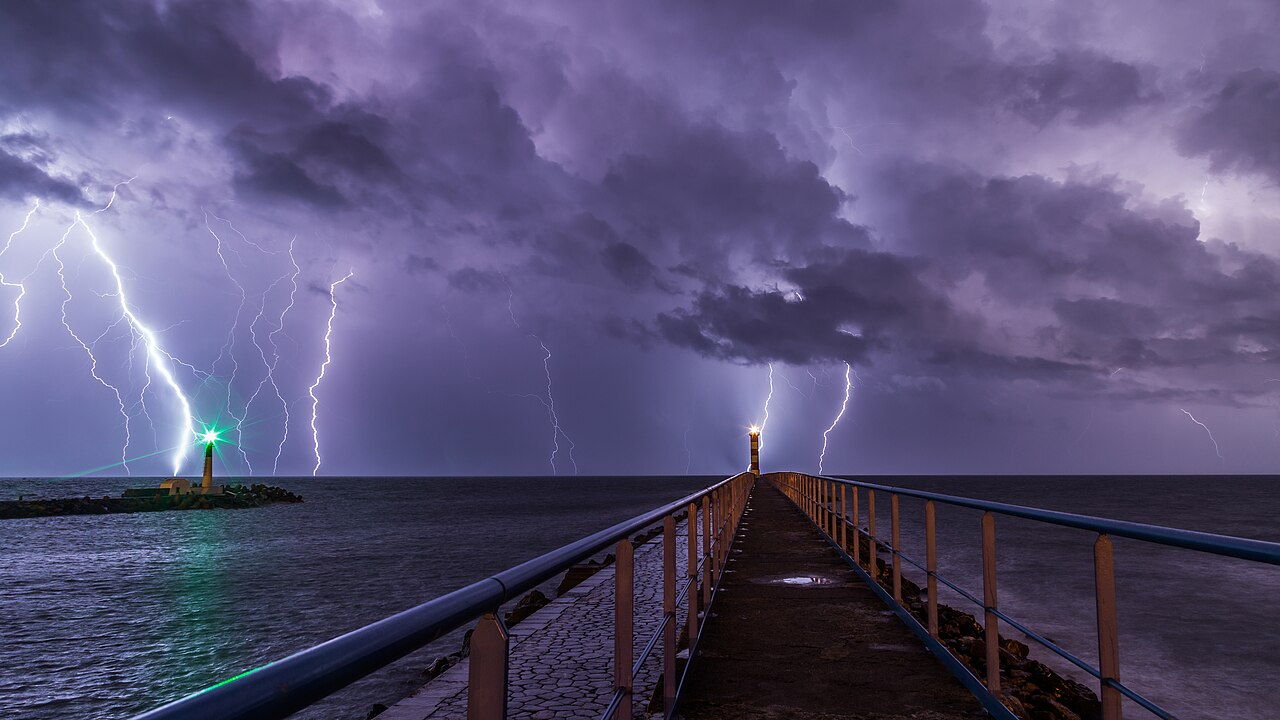
Lake Maracaibo: Lightning Capital of the World
- Location: Northwestern Venezuela, at the mouth of the Catatumbo River
- Lightning Frequency: Average 297 lightning days per year
- Flash Rate: Up to 28 flashes per minute during storms
- Local Name: Catatumbo lightning (Relámpago del Catatumbo)
Lake Maracaibo in northwestern Venezuela holds the Guinness World Record for the highest concentration of lightning on Earth. The phenomenon, known as Catatumbo lightning, occurs where the Catatumbo River meets the lake, producing thunderstorms on an average of 297 nights per year, with lightning visible for up to 10 hours per night and flash rates reaching 28 per minute.
The extraordinary lightning frequency is caused by a unique combination of geography. Lake Maracaibo is surrounded on three sides by the Andes Mountains and the Perijá Range, which trap warm, moist air from the Caribbean Sea and the lake's own evaporation. Each evening, cool mountain breezes converge over the warm lake, forcing the moist air explosively upward. The resulting thunderstorms are so consistent that Spanish colonial sailors used the Catatumbo lightning as a navigational beacon — calling it the "Lighthouse of Maracaibo."
Central Africa: The Lightning Continent
- Congo Basin: Among the most lightning-active regions globally
- Kifuka (DRC): Once held the world record at 158 flashes/km²/year
- Cause: Intense solar heating + Congo Basin moisture + ITCZ
- Danger: Lightning is a leading cause of death in rural Africa
Central Africa, particularly the Congo Basin, ranks among the most lightning-active regions on Earth. The Democratic Republic of the Congo, the Central African Republic, and Cameroon all experience extremely high lightning densities. The village of Kifuka in eastern DRC once held the world record for lightning density at 158 flashes per square kilometer per year (before Lake Maracaibo was recognized).
The intense solar heating of equatorial Africa generates powerful convective thunderstorms almost daily, especially during the transition seasons when the Intertropical Convergence Zone (ITCZ) passes overhead. Lightning is a significant cause of death in rural Africa, where people often shelter under trees or in unprotected structures during storms. Sub-Saharan Africa accounts for a disproportionate share of global lightning fatalities.
Other Global Lightning Hotspots
- Florida, US: Highest lightning density in the United States
- Northern Australia: Darwin region — most lightning-prone city in Australia
- Himalayas/Karakoram: Mountain-forced convection generates frequent lightning
- Singapore/Malaysia: Tropical maritime location = year-round thunderstorms
Florida is America's lightning capital, with the corridor between Tampa and Orlando known as "Lightning Alley." Sea breezes from the Atlantic and Gulf of Mexico converge over the Florida Peninsula each afternoon, triggering thunderstorms with remarkable regularity. Central Florida averages 80-100 thunderstorm days per year, and the state leads the US in lightning fatalities.
Northern Australia's Top End, centered on the city of Darwin, experiences an average of 80 thunderstorm days per year during the wet season (October-April). The combination of tropical heat, maritime moisture, and sea breeze convergence produces some of the most spectacular lightning displays in the Southern Hemisphere. Singapore and peninsular Malaysia experience thunderstorms on roughly 180 days per year due to their equatorial location between the Indian and Pacific Oceans.
Lightning Science and Safety
- Temperature: Lightning bolt reaches ~30,000 K (5x surface of the Sun)
- Speed: Return stroke travels at ~100,000 km/s
- Deaths Worldwide: ~2,000 per year
- Survival Rate: ~90% of lightning strike victims survive
A single lightning bolt carries a current of up to 200,000 amperes and heats the surrounding air to approximately 30,000 Kelvin — five times hotter than the surface of the Sun. The rapid heating creates a shockwave that we hear as thunder. Lightning comes in several forms: cloud-to-ground, cloud-to-cloud, and the rare ball lightning, which remains poorly understood by science.
Despite its terrifying power, approximately 90 percent of people struck by lightning survive, though many suffer lasting neurological damage, cardiac problems, and chronic pain. Lightning safety follows the "30-30 rule": if the time between seeing lightning and hearing thunder is less than 30 seconds, seek shelter; wait 30 minutes after the last flash before going back outside. Being inside a fully enclosed building or a hard-topped vehicle provides the best protection.
Key Facts
- Earth experiences approximately 1.4 billion lightning flashes per year — about 44 per second.
- Lake Maracaibo, Venezuela, averages 297 lightning days per year — the most in the world.
- Central Africa, particularly the Congo Basin, is the most lightning-active continent.
- Florida is the lightning capital of the United States, with 80-100 thunderstorm days annually.
- Lightning kills approximately 2,000 people worldwide per year, but 90% of strike victims survive.
Fun Facts
- Spanish colonial sailors used Catatumbo lightning as a navigational beacon, calling it the "Lighthouse of Maracaibo."
- A single lightning bolt contains enough energy to toast 100,000 slices of bread, but lasts only about 0.0002 seconds.
- Roy Sullivan, a US park ranger, was struck by lightning 7 times between 1942 and 1977 — and survived every time.
- Lightning produces ozone and nitrogen oxides that fertilize the soil with natural nitrates, making thunderstorm-prone regions slightly more fertile.
Final Thoughts
Lightning hotspots reveal the geography of atmospheric energy — where heat, moisture, and topography converge to produce the most powerful electrical discharges on Earth. From the nightly spectacle of Catatumbo lightning to the deadly storms of Central Africa, understanding lightning geography helps protect lives and illuminates the complex dynamics of our atmosphere.
Test Your Knowledge!
Think you know the world's extreme weather?
Play Geography Games →