

Malay is an official language in four countries — Malaysia, Indonesia, Brunei and Singapore — under three different names. Indonesia calls its standard Bahasa Indonesia, Malaysia calls its Bahasa Malaysia, Brunei uses Bahasa Melayu, and Singapore keeps Malay as its national language while conducting almost all business in English. Counting all standards and dialects together gives roughly 290 million speakers, which puts the Malay group in the world's top ten.
-
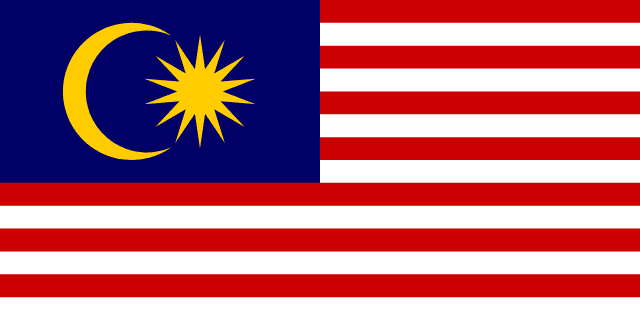 Malaysia
Bahasa Malaysia
Malaysia
Bahasa Malaysia
-
 Indonesia
Bahasa Indonesia
Indonesia
Bahasa Indonesia
-
 Brunei
Bahasa Melayu
Brunei
Bahasa Melayu
-
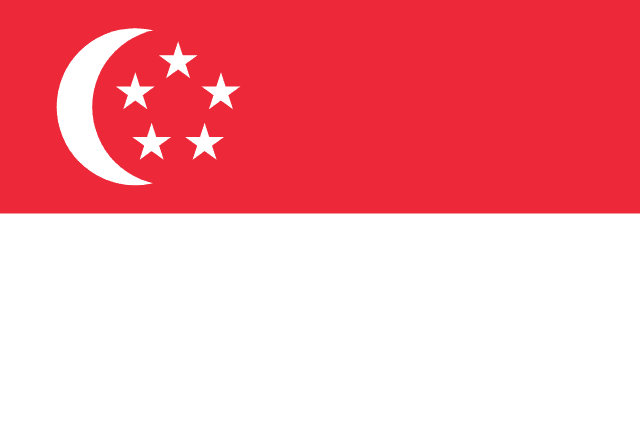 Singapore
national language
Singapore
national language
One Language, Two Big Standards
Indonesian and Malaysian are two standardised forms of the same language, roughly as Serbian and Croatian are, or as American and British English would be if the two countries had been colonised by different powers. Speakers understand each other with some effort and considerable amusement.
The divergence comes from the colonial vocabulary each absorbed. Indonesian took administrative and technical words from Dutch; Malaysian took them from English. Office is kantor in Indonesia, from the Dutch kantoor, and pejabat in Malaysia. A car is mobil in Indonesia and kereta in Malaysia, where kereta in Indonesia means a train.
The false friends are notorious. Percuma means free of charge in Malaysia and useless in Indonesia; butuh means need in Indonesia and is obscene in Malay; bisa means can in Indonesia and poison in Malaysia. Cross-border advertising copy gets checked carefully.
Indonesia Chose the Minority Language
The most consequential decision in the language's history was Indonesia's. At independence, Javanese was the first language of the largest group by far — around 80 million people today — and Malay was spoken natively by a small coastal minority.
The nationalist movement chose Malay anyway, in the Youth Pledge of October 1928, and named it Bahasa Indonesia. The reasoning was that Malay had been the trade lingua franca of the archipelago for centuries, belonged to no dominant group, and lacked Javanese's elaborate hierarchy of speech levels, which made it more egalitarian and easier to learn.
It worked to a degree few language policies manage. Indonesian is now spoken by the overwhelming majority of Indonesia's 280 million people, mostly as a second language after a regional one, and it holds together a country with more than 700 living languages across 17,000 islands.
Malaysia, Brunei and Singapore
Malaysia made Malay the sole official language in 1967 and renamed the standard Bahasa Malaysia in 1969, then Bahasa Melayu, then back again — the name has been a political marker, with Bahasa Malaysia signalling a national rather than ethnic language.
Brunei uses Bahasa Melayu as its sole official language and is the most linguistically straightforward of the four. Brunei Malay differs noticeably from the Malaysian standard in pronunciation and vocabulary and is what people actually speak.
Singapore is the anomaly. Malay is the national language, the national anthem is in Malay, and military commands are given in Malay — but it is one of four official languages alongside English, Mandarin and Tamil, and English is the medium of education and government. Around 13% of Singaporeans are Malay.
The Spelling Reform of 1972
Until 1972, Indonesian and Malaysian used different romanisations inherited from Dutch and English practice. Indonesian wrote tj, dj, j and oe where Malaysian wrote ch, j, y and u.
On 16 August 1972 both countries introduced a joint system, the New Rumi Spelling in Malaysia and the Perfected Spelling System in Indonesia, which unified the orthographies. Djakarta became Jakarta, tjinta became cinta.
The change was substantial and largely successful, and it is why written Indonesian and Malaysian look far more alike than they sound. Older Indonesians' names still carry the pre-1972 spellings, which is why the country's first president is Soekarno in some sources and Sukarno in others.
The Trade Language of the Archipelago
Malay's role as a lingua franca predates European contact by many centuries. The oldest inscriptions in Old Malay date to the late seventh century and come from Srivijaya, the maritime empire based at Palembang in southern Sumatra that controlled the Malacca and Sunda straits.
By the time the Portuguese took Malacca in 1511 the language was in use as a trade medium from Aceh to the Moluccas and beyond, and European traders learned it as the practical means of doing business across the region. Dutch, Portuguese and British administrators all used it.
That history explains why the language was available for Indonesia to adopt in 1928 and why it never belonged to a single ethnic group. Malay was already what everyone used with people they did not share a language with.
How Many People Actually Speak It
The numbers quoted for Malay vary more than for almost any comparable language, because what gets counted changes the answer by a factor of three.
Counting only people who speak a Malay variety as a first language gives roughly 80 to 90 million. Adding second-language speakers of Indonesian, who are the large majority of Indonesians, takes the total past 250 million. Including Malaysia, Brunei, Singapore and the scattered communities pushes it towards 290 million.
The honest formulation is that the Malay group is spoken by something close to 300 million people and is a first language for well under a third of them. That is a similar profile to Swahili, and for a similar reason: both are trade languages that became national ones.
The Language Councils
Malaysia's Dewan Bahasa dan Pustaka, founded in 1956, and Indonesia's Badan Bahasa are the two main standard-setting bodies, and both are unusually active by international standards — coining technical vocabulary, publishing dictionaries and issuing usage rulings.
They coordinate through MABBIM, the Language Council of Brunei Darussalam, Indonesia and Malaysia, established in 1972 and meeting annually since. It agreed the joint spelling reform and has since standardised tens of thousands of technical terms across the three countries, with Singapore attending as an observer.
Its record is mixed. Agreed scientific terminology is widely used in textbooks; agreed everyday vocabulary largely is not, because ordinary speech follows the media people actually consume, and Indonesian and Malaysian media are separate markets.
Where Else It Is Spoken
Southern Thailand's four southernmost provinces have a Malay-speaking Muslim majority using a variety called Patani Malay, written historically in the Jawi script. It has no official status and the language question is entangled with a long-running insurgency.
The southern Philippines has Malay-related languages in Sulu and Tawi-Tawi, and Malay historically functioned as a trade language there too. East Timor's constitution names Indonesian a working language alongside English, a legacy of the 1975 to 1999 occupation.
Sri Lanka has a small Sri Lankan Malay community descended from soldiers and exiles moved by the Dutch, speaking a creolised variety. Cocos Malay is spoken on the Cocos Keeling Islands, an Australian territory, and Cape Malay left substantial vocabulary in Afrikaans.
Two Scripts
Malay has been written in three systems in its history. The earliest inscriptions used Indic-derived scripts; from around the fourteenth century, with the arrival of Islam, it was written in Jawi, an adapted Arabic alphabet; and from the colonial period onward in Latin script, called Rumi.
Rumi is now dominant everywhere. Jawi remains co-official in Brunei, is used on signage and in religious contexts in Malaysia, and appears on Malaysian banknotes and in Islamic education. Proposals to expand Jawi teaching in Malaysian schools in 2019 became a substantial political controversy involving Chinese and Indian community groups.
Jawi's practical difficulty is the same one Arabic script poses for any language with more vowels than Arabic — several added letters were needed for sounds Arabic lacks, and vowels are frequently unmarked.
The Grammar Is Unusually Simple
Malay has no verb conjugation, no grammatical gender, no articles, no plurals formed by inflection and no tenses. Time is expressed with adverbs — sudah for already, akan for will — and plurality either by context or by repeating the noun, so buku-buku is books.
This makes it one of the easiest major languages for beginners. The US Foreign Service Institute places Indonesian and Malay in Category II at around 900 hours, and many learners find the first months faster than that suggests.
The complexity is in the affix system. Roots take prefixes, suffixes and circumfixes that change meaning substantially — from ajar, to teach, come belajar to study, mengajar to teach, pelajar student, pengajar teacher, pelajaran lesson and pembelajaran learning. Mastering that is where the difficulty sits.
Words That Travelled
English took a handful of words from Malay through the spice and colonial trade: amok, from amuk; orangutan, from orang hutan, forest person; sarong, gong, bamboo, cockatoo, gingham, launch and paddy. Compound, in the sense of an enclosure, comes from kampung, village.
Malay itself is a heavy borrower. Sanskrit supplied a deep layer through the Hindu-Buddhist period — bahasa, language, is Sanskrit — Arabic supplied the religious and legal vocabulary, and Portuguese, Dutch, Tamil, Hokkien and English all left substantial deposits.
The result is a language whose everyday vocabulary carries the whole trading history of the Indian Ocean and the South China Sea in it. Set against the count of countries in Asia and the position of Thai next door, Malay is the region's clearest example of a language that spread by commerce rather than conquest.