
The moai of Easter Island, known as Rapa Nui in the Polynesian language of its indigenous people, are among the most recognizable and enigmatic monuments on Earth. These 887 monumental stone statues, carved between approximately 1250 and 1500 CE, stand as silent sentinels across the most isolated inhabited island in the world — a tiny volcanic triangle in the southeastern Pacific Ocean, over 3,500 kilometers from the nearest continental landmass.
Introduction
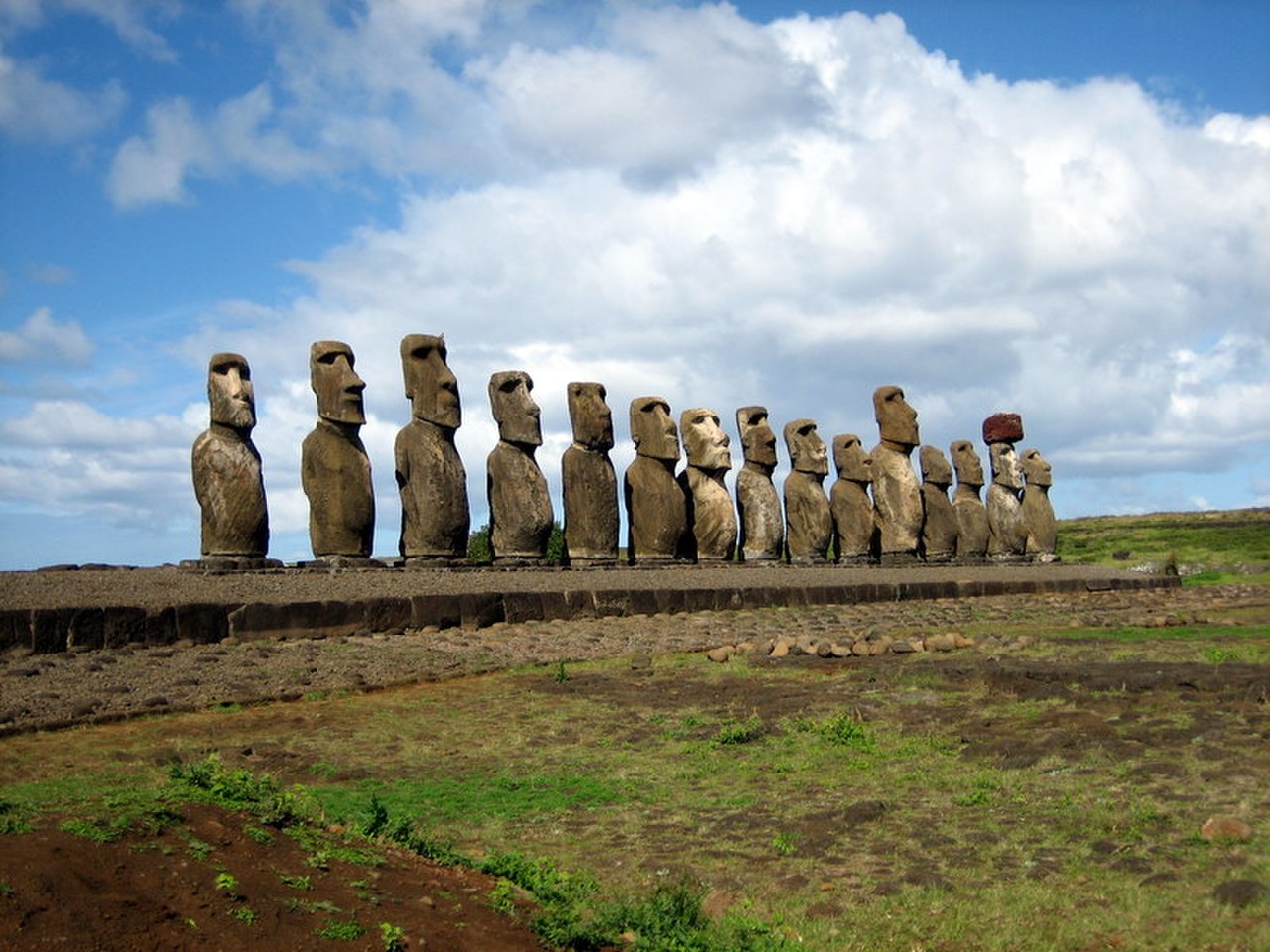
The statues were carved from compressed volcanic ash (tuff) at the quarry of Rano Raraku and transported across the island to ceremonial platforms called ahu along the coastline. The largest erected moai stands nearly 10 meters tall and weighs over 80 tonnes. How a small, isolated Polynesian society managed to carve, transport, and erect hundreds of multi-tonne statues remains one of the great questions of archaeology. The island was designated a UNESCO World Heritage Site in 1995.
Geographic Setting
- Location: Eastern Pacific Ocean, 27°S 109°W
- Nearest Land: Pitcairn Island, 2,075 km west
- Nearest Continent: Chile, 3,512 km east
- Area: 163.6 km², triangular volcanic island
Easter Island is one of the most geographically isolated places on Earth, a small triangular island formed by three extinct volcanoes: Terevaka (507 m, the highest point), Poike, and Rano Kau. The island has no permanent streams and relies on crater lakes and rainwater for fresh water. The climate is subtropical maritime, with relatively even temperatures year-round and exposure to strong southeastern trade winds.
When Polynesian settlers arrived, probably between 800 and 1200 CE, the island was covered in subtropical forest including the now-extinct Rapa Nui palm, related to the Chilean wine palm. The gradual loss of this forest — through land clearing, rat predation on seeds, and climate fluctuations — had profound consequences for the island's ecology and the ability of its inhabitants to build ocean-going canoes and transport moai.
Architecture & Engineering
- Total Moai: 887 catalogued statues
- Average Height: 4 meters, 12.5 tonnes
- Largest Erected: Paro moai — 9.8 m tall, ~82 tonnes
- Quarry: Rano Raraku crater, compressed volcanic tuff
The moai were carved at the quarry of Rano Raraku, a volcanic crater whose slopes provided the compressed tuff that was relatively easy to carve with stone hand picks (toki). Nearly 400 unfinished moai remain on the slopes of Rano Raraku in various stages of completion, providing a detailed record of the carving process. The largest unfinished moai, Te Tokanga, would have stood 21 meters tall and weighed approximately 270 tonnes had it been completed.
Completed moai were transported to ahu (ceremonial stone platforms) distributed around the island's coastline, where they were erected facing inland — watching over the communities. Most moai were topped with a separate red scoria cylinder called a pukao, representing a topknot or headdress, and had eyes inlaid with white coral and red scoria or obsidian pupils. Experiments and oral traditions suggest the moai were moved upright in a rocking motion, "walking" them along prepared roads.
Historical Significance
- Polynesian Settlement: c. 800–1200 CE
- Moai Carving Period: c. 1250–1500 CE
- Moai Toppling Period: c. 1600–1868 CE (internal conflicts)
- UNESCO Status: World Heritage Site since 1995
The Rapa Nui people were Polynesian navigators who reached Easter Island after an extraordinary open-ocean voyage, likely from the Marquesas or Mangareva islands. They developed a unique and complex society centered on ancestor worship, with each clan erecting moai to honor powerful ancestors whose spiritual energy (mana) was believed to protect the community. Competition between clans drove the construction of ever-larger statues.
The moai-building era ended around 1500 CE, possibly due to resource depletion and social stress. In subsequent centuries, all standing moai were toppled during inter-clan conflicts, and a new religious cult centered on the Birdman ceremony at the village of Orongo replaced the ancestor-worship system. European contact began with Dutch explorer Jacob Roggeveen on Easter Sunday 1722, and the island subsequently suffered devastating slave raids, disease, and cultural disruption.
Conservation & Tourism
- Annual Visitors: ~100,000 (pre-pandemic)
- Management: CONAF and Ma'u Henua indigenous community
- Threats: Erosion, weathering, tourism wear, climate change
- Access: Mataveri International Airport, flights from Santiago
Easter Island faces significant conservation challenges. The volcanic tuff from which the moai are carved is relatively soft and porous, making the statues vulnerable to wind erosion, rain, and lichen growth. Rising sea levels and increasingly intense storms threaten coastal ahu platforms. Several moai have suffered damage from visitors touching or climbing on them, leading to stricter site management and access restrictions.
In 2017, the indigenous Ma'u Henua community assumed greater control over the island's archaeological sites, marking a significant shift toward indigenous stewardship. Visitor numbers are regulated, and a park entry fee supports conservation. International conservation efforts have included the restoration of several ahu platforms and the re-erection of toppled moai, though some archaeologists argue that leaving toppled statues in place preserves an important part of the island's history.
Key Facts
- Easter Island has 887 catalogued moai statues carved from volcanic tuff.
- The moai were carved between approximately 1250 and 1500 CE.
- The largest erected moai, Paro, stands 9.8 meters tall and weighs about 82 tonnes.
- Easter Island is over 3,500 km from the nearest continent, making it one of the most isolated inhabited places on Earth.
- The island became a UNESCO World Heritage Site in 1995.
Fun Facts
- The moai were probably moved upright by rocking them side to side — literally "walking" them across the island.
- Nearly 400 unfinished moai remain on the slopes of the Rano Raraku quarry, frozen in various stages of carving.
- The largest unfinished moai would have stood 21 meters tall and weighed 270 tonnes had it been completed.
Final Thoughts
The moai of Easter Island stand as one of humanity's most remarkable achievements of monumental sculpture, created by a small Polynesian society on one of the most isolated islands on Earth. Their story — of ambition, artistry, resource limits, and cultural transformation — resonates as both an archaeological wonder and a powerful parable about the relationship between human societies and their environments.
Test Your Knowledge!
Think you know the world's ancient ruins and archaeological sites? Try our geography quiz games!
Play Geography Games →