
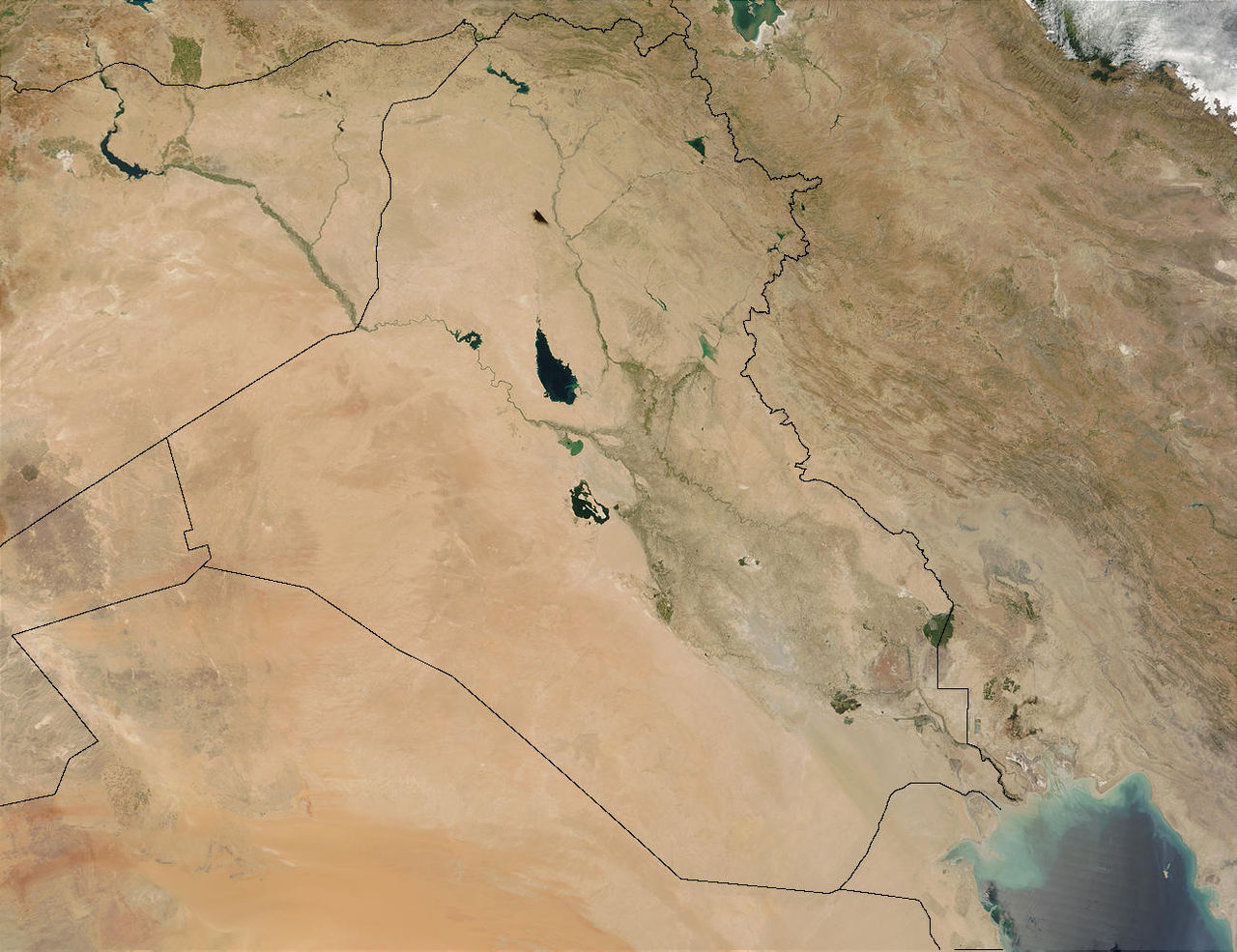
The major natural resources of Iraq include oil, natural gas, phosphate, sulfur, and the waters of the Tigris and Euphrates rivers. Iraq holds the world's 5th largest proven oil reserves at approximately 145 billion barrels, concentrated in the southern Basra region and northern Kirkuk, with oil revenue providing around 95% of government income.
Introduction
Historically known as Mesopotamia — the "Land Between the Rivers" — Iraq's 437,000 square kilometers encompass the fertile Tigris-Euphrates river system, vast southern oil fields, and the mineral-rich northern Kurdish region. This combination of hydrocarbon wealth and ancient agricultural heartland gives Iraq a resource profile matched by few countries on Earth.
The same land where farming was first invented roughly 10,000 years ago now sits atop one of the planet's deepest reservoirs of crude oil. Yet Iraq's resource story is also one of unrealised potential: decades of war, sanctions, and underinvestment have left much of its mineral and agricultural wealth undeveloped, even as it remains one of the world's most important oil exporters.

Energy Resources: The Foundation of the Economy
Oil is, without rival, Iraq's defining natural resource. With approximately 145 billion barrels of proven reserves, Iraq ranks fifth in the world, and these deposits are unusually cheap to extract because much of the crude lies in large, shallow, high-pressure reservoirs. The southern oil fields clustered around Basra — including Rumaila, West Qurna, and Majnoon — hold the majority of the country's reserves and anchor national production of roughly 3.5 million barrels per day.
- Oil: 145 billion barrels, the 5th largest reserves in the world
- Natural Gas: About 3.7 trillion cubic metres in reserves, the 12th largest globally
- Rumaila Field: One of the largest oil fields on the planet, near Basra
- Hydropower: Generated by multiple dams on the Tigris and Euphrates
- Solar: Very high irradiation across the country, though largely untapped
The Kirkuk field in the north has been producing continuously since 1927 and remains a strategic asset, particularly for the Kurdistan Region. Iraq's natural gas endowment is substantial, but much of it is "associated gas" produced alongside oil — and enormous volumes are still flared off rather than captured and sold, representing both an economic loss and an environmental problem. Closing this gap is one of the country's clearest opportunities for new revenue.
Major Mineral Resources
Beyond hydrocarbons, Iraq sits on a range of non-fuel minerals that remain strikingly underexploited. The western desert of Anbar Province contains massive phosphate deposits estimated at over 10 billion tonnes — among the largest known reserves anywhere — which could supply a major fertiliser industry if infrastructure and security allowed. Near Mosul, the Mishraq deposit is one of the world's largest concentrations of native sulfur.
- Phosphate: Over 10 billion tonnes in the western Anbar desert
- Sulfur: The Mishraq deposit near Mosul, one of the world's largest
- Iron Ore: Deposits concentrated in the northern Kurdish region
- Limestone: Abundant nationwide, feeding the cement industry
- Gypsum: Significant deposits used in construction materials
The northern Kurdish mountains add iron ore, copper, chromite, and marble to the mix, while limestone and gypsum are abundant across the country and support a growing domestic cement sector. The recurring theme, however, is that decades of conflict have starved these resources of investment. Iraq's mineral wealth beyond oil remains largely unexplored and could form the backbone of a more diversified economy in the decades ahead.
Agricultural and Land Resources
The Mesopotamian plain between the Tigris and Euphrates was the birthplace of agriculture approximately 10,000 years ago, and farming still shapes rural life today. Wheat and barley are the primary grain crops, grown on the irrigated plains of central Iraq and in the rain-fed north. The southern marshlands support rice cultivation alongside the traditional communities of the Marsh Arabs.
- Wheat: A major crop across the Mesopotamian plain
- Barley: Significant production in rain-fed northern areas
- Dates: Iraq was historically the world's largest date producer
- Rice: Cultivated in the southern marshlands
- Cattle & Sheep: Large herds in northern Kurdistan
Dates are perhaps Iraq's most storied crop. The country once led the world with over 30 million date palms, but war and neglect cut that population to roughly 10 million trees since the 1980s. Recovery efforts are now underway, reflecting a broader push to revive an agricultural sector that could reduce Iraq's heavy dependence on imported food.
Water Resources and the Environmental Dimension
The Tigris and Euphrates are Iraq's most vital natural resources, supplying water for drinking, agriculture, and industry to a nation that would otherwise be largely desert. But these lifelines are under severe strain. Upstream damming in Turkey — chiefly the giant GAP project — together with diversions in Iran has reduced river flows into Iraq by an estimated 40%, creating a deepening water crisis.
The Mesopotamian Marshes of southern Iraq, once the largest wetland ecosystem in the Middle East, were deliberately drained in the 1990s as a political reprisal. Partial restoration since 2003 has revived roughly 50% of the original marsh area, bringing back wildlife and the way of life of the Marsh Arabs. Iraq's forest cover is limited to oak and pine in the Kurdish mountains. Together, declining freshwater, gas flaring, and the urgent need to diversify beyond oil define the country's environmental challenge. Readers can place these resources in fuller context through our Iraq country guide.
How Iraq Compares to Similar Nations
Among oil-rich Middle Eastern states, Iraq occupies a distinctive position. Saudi Arabia holds larger reserves and far higher production capacity, but it lacks Iraq's abundant freshwater and fertile river plains. Iran is a closer parallel — both are large, populous countries combining major oil and gas reserves with significant agriculture — yet Iran's reserves are spread across more difficult geology, whereas Iraq's southern crude is among the cheapest in the world to extract.
Compared with a smaller petrostate like Kuwait, Iraq's advantage is diversity of resources: alongside its 145 billion barrels of oil, it has a 10-billion-tonne phosphate base, a world-class sulfur deposit, and the only major river system in the region. The shared weakness across all these peers is dependence on a single commodity — but Iraq's water and mineral endowment arguably give it the broadest, if least developed, foundation for an eventual post-oil economy. For the natural environment that underpins these comparisons, see our overview of the flag of Iraq and its national symbolism.
Key Facts
- Oil reserves: 145 billion barrels, the 5th largest in the world
- Government income from oil: Approximately 95%
- Natural gas reserves: 3.7 trillion cubic metres, 12th largest globally
- Oil production: Roughly 3.5 million barrels per day
- Phosphate reserves: Exceeding 10 billion tonnes in Anbar Province
- Agriculture: The Mesopotamian plain was the birthplace of farming ~10,000 years ago
- Marshland restoration: About 50% of the original marsh area revived since 2003
Frequently Asked Questions
What are the main natural resources of Iraq?
Iraq's main natural resources are oil, natural gas, phosphate, sulfur, and the freshwater of the Tigris and Euphrates rivers. Oil dominates the economy, with 145 billion barrels of proven reserves, while large phosphate and sulfur deposits and fertile river plains add further wealth.
Why is oil so important to Iraq's economy?
Oil revenue accounts for roughly 95% of the Iraqi government's income, making the country one of the most oil-dependent economies in the world. The southern fields around Basra are unusually cheap to develop, so crude exports fund the overwhelming majority of public spending and investment.
Is Iraq facing a water crisis?
Yes. Upstream damming in Turkey and Iran has cut the flow of the Tigris and Euphrates into Iraq by an estimated 40%, threatening agriculture and drinking-water supplies. The crisis has also affected the Mesopotamian Marshes, which are only partially restored.
Was Iraq once the world's largest date producer?
It was. Iraq historically led the world with more than 30 million date palms, but war and neglect reduced the population to around 10 million trees since the 1980s. Recovery and replanting efforts are now underway to rebuild this historic industry.
