
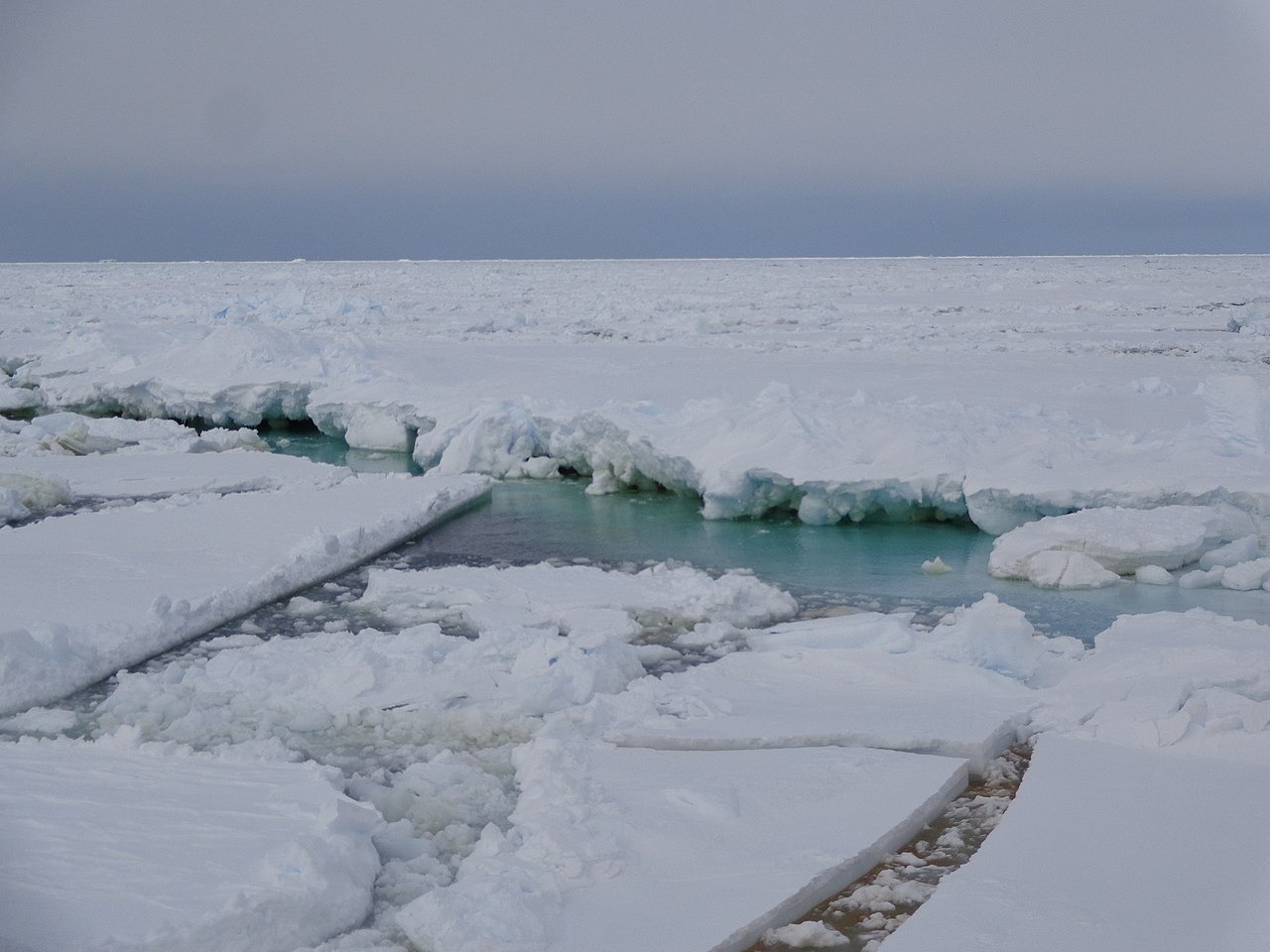
Introduction to the Ross Sea
The Ross Sea is a deep embayment of the Southern Ocean along the coast of Antarctica, widely regarded as the last intact marine ecosystem on Earth and often referred to as the "Last Ocean." It was first explored by Captain James Clark Ross during his Antarctic expedition of 1841 and subsequently served as the gateway for many of the heroic age Antarctic expeditions, including those of Robert Falcon Scott and Ernest Shackleton. The southern portion of the Ross Sea is dominated by the Ross Ice Shelf, the largest ice shelf in Antarctica, which covers an area roughly the size of France. In 2016, an international agreement established the Ross Sea Region Marine Protected Area, the world's largest marine protected area at the time, covering 1.55 million square kilometers. The Ross Sea's pristine waters and intact food web make it an invaluable natural laboratory for understanding marine ecosystem dynamics.

Key Facts
- Type: Sea
- Location: Southern Ocean, between Cape Adare and Cape Colbeck along the Antarctic coast
- Area: 487,000 km² (188,000 sq mi)
- Maximum Depth: 2,400 m (7,874 ft)
- Average Depth: 500 m (1,640 ft)
- Bordering Regions: Antarctica (Victoria Land, Marie Byrd Land), Ross Island, Ross Ice Shelf
Geography and Formation
The Ross Sea extends deeply into the Antarctic continent, creating a large embayment bounded by Victoria Land to the west and Marie Byrd Land to the east, with the massive Ross Ice Shelf forming its southern boundary. The continental shelf beneath the Ross Sea is unusually deep, having been depressed by the weight of Antarctic ice sheets over millions of years, with depths reaching over 700 meters compared to the global average of about 130 meters. Ross Island, home to Mount Erebus, the southernmost active volcano on Earth, sits near the western edge of the sea where the ice shelf meets open water. The seafloor topography includes deep troughs carved by ancient glacial advances, banks and ridges that influence ocean circulation, and the Iselin Trough that channels deep water onto the continental shelf. Dense, cold water that forms on the Ross Sea continental shelf sinks to the ocean floor and flows northward as Antarctic Bottom Water, driving global ocean circulation patterns.
Marine Life and Ecology
The Ross Sea supports one of the most productive and least disturbed marine ecosystems on the planet, with an intact food web stretching from phytoplankton through krill to apex predators including orca, leopard seals, and emperor penguins. Approximately 38 percent of the world's Adélie penguins, 26 percent of emperor penguins, and about 30 percent of Antarctic petrels depend on the Ross Sea for feeding and breeding. The sea is home to the Antarctic toothfish, a large deep-water predator that can live for over 50 years and plays a crucial ecological role similar to that of wolves or lions in terrestrial ecosystems. Vast blooms of phytoplankton during the austral summer produce enormous quantities of organic matter that sustain the entire food web and contribute significantly to the Southern Ocean's role as a global carbon sink. Unique benthic communities on the Ross Sea floor include glass sponges, sea spiders, and other invertebrates that grow to unusually large sizes in the cold, oxygen-rich Antarctic waters, a phenomenon known as polar gigantism.
Climate and Currents
The Ross Sea experiences one of the most extreme climates on Earth, with winter temperatures dropping below -40°C and the sea surface freezing over almost completely during the austral winter from March through October. During summer, increased solar radiation and warmer temperatures cause the sea ice to break up, creating polynyas, or areas of open water within the ice, that are critical for marine productivity and wildlife access. The Ross Sea polynya, one of the largest and most persistent in Antarctica, forms each spring when katabatic winds blowing off the Antarctic ice sheet push sea ice away from the coast. These polynyas are biological hotspots where phytoplankton blooms explode in productivity, fueling the entire marine food chain during the brief Antarctic summer. Climate change is affecting the Ross Sea region in complex ways, with sea ice extent showing some increases in recent decades even as the West Antarctic Ice Sheet and Ross Ice Shelf show signs of instability.
Human Significance
The Ross Sea has been central to Antarctic exploration since James Clark Ross first sailed into its waters in 1841, and it later served as the staging ground for the expeditions of Scott, Shackleton, and Amundsen during the heroic age of Antarctic exploration. McMurdo Station, the largest Antarctic research facility operated by the United States, and New Zealand's Scott Base are both located on Ross Island, supporting year-round scientific research programs. The Ross Sea is critically important for climate science, as its ice cores, ocean sediments, and ice shelf dynamics provide crucial data about past climate conditions and help predict future changes. A regulated fishery for Antarctic toothfish has operated in the Ross Sea since the late 1990s, managed by the Commission for the Conservation of Antarctic Marine Living Resources (CCAMLR), though conservationists have raised concerns about its impact on the ecosystem. The establishment of the Ross Sea Marine Protected Area in 2016, covering 1.55 million square kilometers with 1.12 million square kilometers as a no-take zone, represented a landmark achievement in international ocean conservation.
Interesting Facts About the Ross Sea
- The Ross Ice Shelf at the southern end of the Ross Sea is roughly the size of France, with ice cliffs rising 15 to 50 meters above the waterline and extending 300 meters below the surface.
- Mount Erebus on Ross Island is the southernmost active volcano on Earth and has a persistent lava lake in its summit crater that has been continuously active since at least 1972.
- Antarctic toothfish in the Ross Sea can grow to over 2 meters in length, weigh up to 135 kilograms, and have a natural antifreeze glycoprotein in their blood that prevents ice crystals from forming.
- The historic huts built by Scott and Shackleton on Ross Island over a century ago are remarkably well preserved in the cold, dry Antarctic air, with canned food and supplies still on their shelves.
- The Ross Sea produces approximately 25 percent of the world's Antarctic Bottom Water, the densest and coldest water mass in the global ocean, which drives deep ocean circulation around the entire planet.
Conclusion
The Ross Sea remains one of the world's most significant bodies of water, shaping the climate, ecosystems, and human civilizations along its shores. From its unique marine life to its role in global trade and culture, this sea continues to fascinate scientists, explorers, and travelers alike.