

Introduction
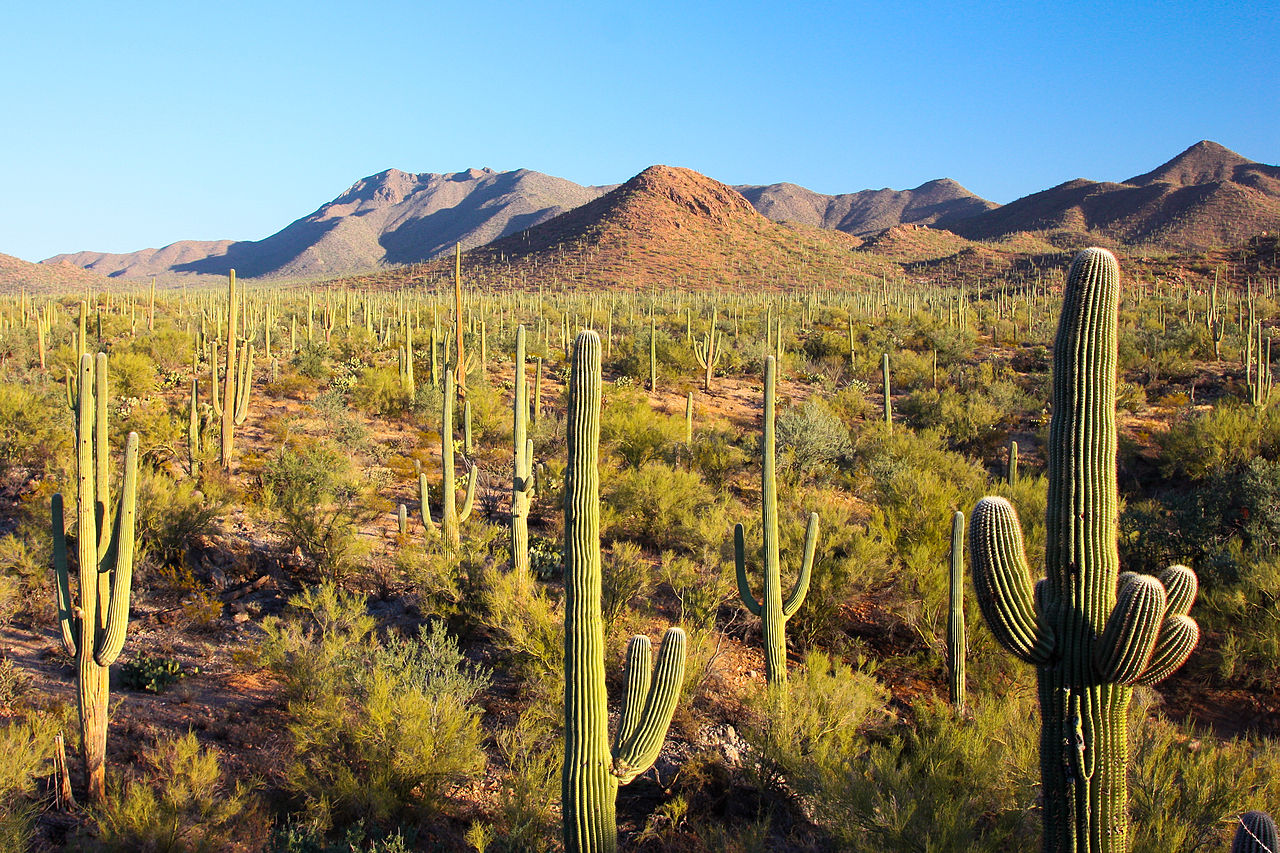
The Sonoran Desert is the hottest desert in North America and one of the most biologically diverse deserts on Earth. Spanning approximately 260,000 square kilometers across Arizona, California, and the Mexican states of Sonora and Baja California, it is defined by its iconic saguaro cacti and dual rainy seasons.
Unlike most deserts that receive rain in only one season, the Sonoran benefits from both winter Pacific storms and summer monsoon thunderstorms. This biseasonal rainfall supports an extraordinary variety of plant and animal life unmatched by any other North American desert.
Geography & Location
- Area: 260,000 km²
- Countries: United States, Mexico
- Elevation Range: Sea level to 2,000 m
- Major Cities: Phoenix, Tucson, Hermosillo
The Sonoran Desert extends from south-central Arizona and southeastern California in the United States into most of the Mexican state of Sonora and the Baja California Peninsula. It includes the fertile river valleys of the Colorado, Gila, and Salt rivers.
The terrain varies from low, flat basins and playas near the Gulf of California to rugged mountain ranges called sky islands that rise abruptly from the desert floor. These isolated mountains harbor unique ecosystems with species found nowhere else.
Climate
- Summer Highs: 48°C+ (118°F)
- Annual Rainfall: 75-380 mm
- Rainy Seasons: Two (winter and summer monsoon)
The Sonoran is the hottest desert in North America, with Phoenix recording temperatures above 48 degrees Celsius. The desert floor can reach surface temperatures of 75 degrees Celsius in summer, hot enough to cause severe burns on contact.
The summer monsoon season from July to September brings dramatic thunderstorms with intense lightning, dust storms called haboobs, and flash flooding. These storms are vital for the survival of many desert species that time their reproduction to the summer rains.
Wildlife
- Plant Species: 2,000+
- Mammal Species: 60+
- Reptile Species: 100+
- Bird Species: 350+
The Sonoran is the most biodiverse desert in North America. The saguaro cactus, which can grow over 12 meters tall, live for 200 years, and weigh up to 4,800 kilograms, is found naturally only in this desert. A single saguaro can hold up to 760 liters of water after a rain.
The Gila monster and the Mexican beaded lizard are the only venomous lizards in North America, both found in the Sonoran. Other notable residents include the roadrunner, javelina (peccary), desert bighorn sheep, and the endangered Sonoran pronghorn.
Human History
- Earliest Inhabitants: Paleoindians, ~12,000 years ago
- Hohokam Civilization: 300 BCE - 1450 CE
- Canal System: Over 1,600 km of irrigation canals
The Hohokam civilization built one of the most sophisticated irrigation systems in the ancient Americas, with over 1,600 kilometers of canals watering the desert around present-day Phoenix. They cultivated corn, beans, squash, cotton, and agave for over 1,700 years before mysteriously declining around 1450 CE.
The Tohono O'odham and Akimel O'odham peoples have lived in the Sonoran Desert for centuries, developing deep ecological knowledge. They harvested saguaro fruit, mesquite pods, and cholla buds, and their agricultural traditions continue today.
Notable Features
- Iconic Species: Saguaro cactus (up to 200 years old)
- Organ Pipe National Monument: Unique columnar cacti
- Sky Islands: 30+ isolated mountain ranges
The Sonoran's sky islands are isolated mountain ranges surrounded by desert that function as ecological islands. As elevation increases, habitats shift from desert scrub to oak woodland to pine forest, harboring species like black bears and Mexican spotted owls in the middle of the desert.
Organ Pipe Cactus National Monument on the US-Mexico border protects 30 species of cactus, including the organ pipe cactus found nowhere else in the United States. The monument is also a UNESCO Biosphere Reserve.
Key Facts
- The Sonoran is the most biodiverse desert in North America with over 2,000 plant species.
- Saguaro cacti can live for 200 years, grow over 12 meters tall, and store up to 760 liters of water.
- The Hohokam built over 1,600 km of irrigation canals in the ancient Sonoran Desert.
- The Sonoran is the only desert in North America with two distinct rainy seasons.
- Sky islands in the Sonoran support pine forests and black bears surrounded by desert.
Fun Facts
- A saguaro cactus doesn't grow its first arm until it is 50-70 years old.
- The roadrunner can run at speeds of 32 km/h and prefers running to flying.
- Phoenix's modern canal system partially follows the routes of ancient Hohokam canals.
- Haboob dust storms in the Sonoran can rise over 1,500 meters high and be visible from space.
Final Thoughts
The Sonoran Desert defies the stereotype of deserts as barren wastelands. Its dual rainy seasons support an extraordinary web of life, from towering saguaros to venomous lizards to sky island forests. Combined with thousands of years of human habitation, the Sonoran is one of the most dynamic deserts on Earth.
