
Introduction
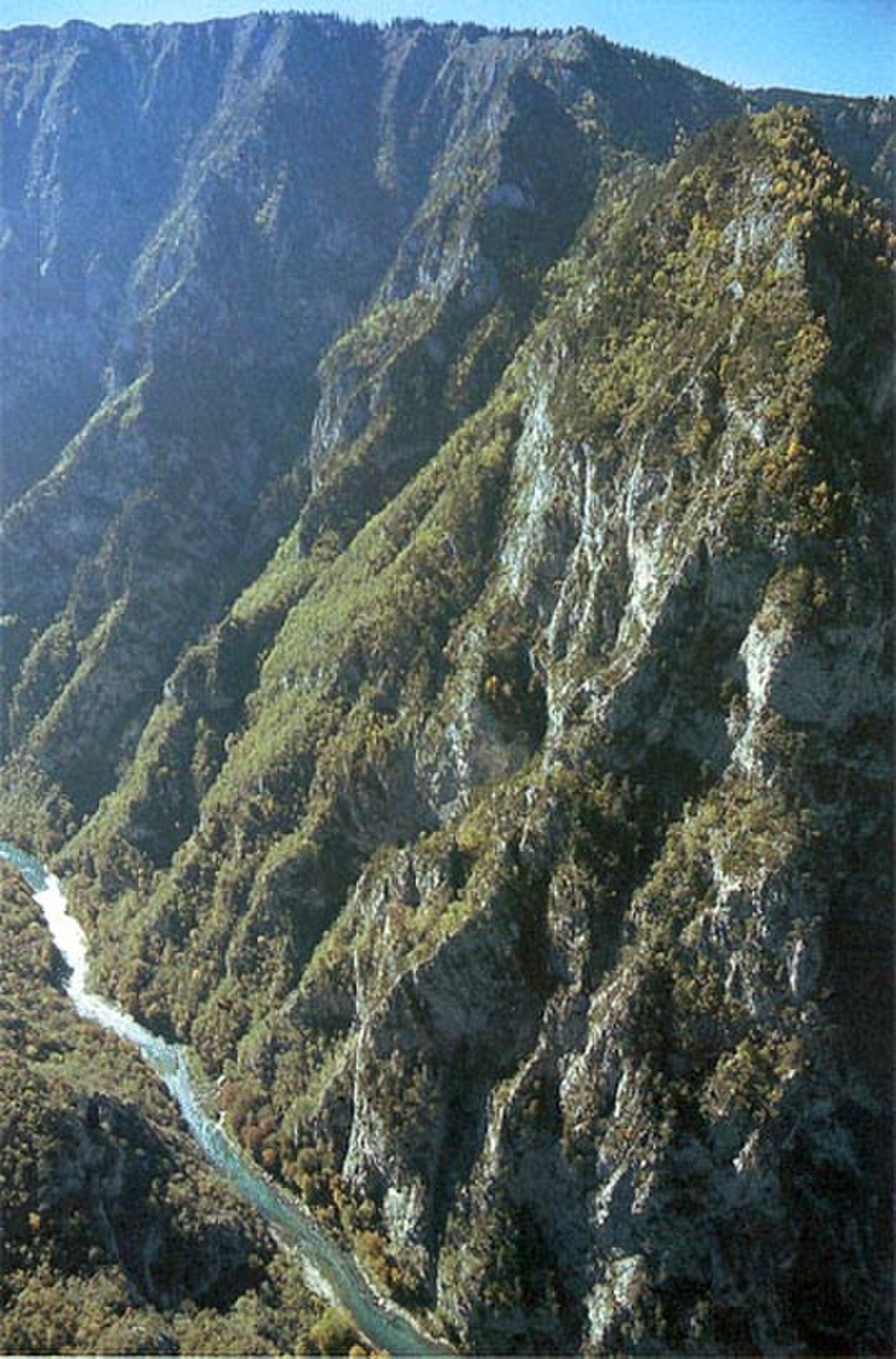
Cutting through the Durmitor mountain range in northern Montenegro, the Tara River Canyon reaches a depth of 1,300 meters, making it the deepest canyon in Europe and the second deepest in the world after the Grand Canyon by some measurements. The canyon stretches 82 kilometers through limestone mountains cloaked in primeval forest.
Part of the Durmitor National Park, a UNESCO World Heritage Site since 1980, the Tara River Canyon is celebrated for the extraordinary purity of its water, which is drinkable directly from the river along much of its course. The canyon is a premier destination for whitewater rafting in Europe and harbors some of the last remaining primeval forests on the continent.
Geology & Formation
- Canyon Depth: 1,300 m (4,265 ft)
- Rock Type: Mesozoic limestone and dolomite
- Rock Age: 250-65 million years
- Tectonic Context: Dinaric Alps orogeny
The Tara River Canyon was carved through thick Mesozoic limestone and dolomite formations deposited between 250 and 65 million years ago when the region lay beneath the Tethys Sea. The uplift of the Dinaric Alps, driven by the convergence of the African and Eurasian tectonic plates, raised these marine sediments thousands of meters and gave the river the gradient needed to incise deeply.
The canyon's dramatic depth relative to its width is a result of the limestone's properties: it dissolves chemically in water while also being hard enough to maintain vertical cliff faces. Karst features including caves, sinkholes, and underground streams are abundant along the canyon walls, and numerous springs emerge from the limestone to feed the river.
Dimensions & Scale
- Length: 82 km (51 mi)
- Maximum Depth: 1,300 m (4,265 ft)
- River Length: 144 km total
- Rafting Section: ~60 km with 21 rapids
The canyon stretches 82 kilometers through the Durmitor massif, with walls rising up to 1,300 meters above the river. The Tara River itself runs 144 kilometers in total before joining the Piva River to form the Drina. Within the canyon, the river drops through 21 significant rapids and over 40 smaller ones.
The canyon is remarkably narrow in places, with the walls pressing in to create deep, shadowed corridors where the river thunders through confined channels. In other sections, the valley opens slightly to reveal gravel beaches and forest-lined banks. The Djurdjevica Tara Bridge, a concrete arch bridge built in 1940, spans the canyon at a height of 172 meters and a length of 365 meters.
Ecosystems & Wildlife
- Forest Cover: Primeval black pine forests
- Water Quality: Drinkable directly from river
- Fish Species: Danube salmon (huchen)
- Protected Status: UNESCO World Heritage Site
The canyon harbors some of Europe's last primeval forests, including stands of black pine (Pinus nigra) that have never been logged. The steep canyon walls create a microclimate that preserves these ancient forests, with trees growing on slopes too steep for logging access. The forests contain endemic species of fern, moss, and lichen found nowhere else.
The Tara River's water is so pure that it is considered drinkable without treatment along most of its course, earning it the distinction of being one of the cleanest rivers in Europe. The river supports populations of the endangered Danube salmon (huchen), Europe's largest salmonid, which can grow to 1.5 meters in length. Brown trout, grayling, and the endemic soft-mouth trout also inhabit the crystal-clear waters.
Cultural History
- UNESCO Designation: 1980 (Durmitor National Park)
- Djurdjevica Bridge: Built 1937-1940
- WWII History: Bridge destroyed 1942, rebuilt 1946
- Traditional Use: Timber rafting
The canyon has been inhabited since prehistoric times, with archaeological evidence of Illyrian settlements in the surrounding mountains. For centuries, the river was used for timber rafting, with logs floated downstream to markets. The forests and canyon provided refuge for local populations during various conflicts, including the Ottoman period and both World Wars.
The Djurdjevica Tara Bridge, completed in 1940, was an engineering marvel of its time and the largest vehicular concrete arch bridge in Europe at its construction. During World War II, Montenegrin partisan Lazar Jaukovic, the bridge's engineer, helped destroy his own creation in 1942 to prevent Axis forces from crossing. He was captured and executed. The bridge was rebuilt in 1946 and remains a major landmark.
Notable Viewpoints & Features
- Djurdjevica Bridge: 172 m above river
- Rafting Season: May to October
- Zip Line: Over the canyon at the bridge
- Crna Gora Viewpoints: Multiple along canyon rim road
The Djurdjevica Tara Bridge is the most iconic viewpoint, offering vertiginous views 172 meters down to the turquoise river below. A zip line stretches across the canyon near the bridge, giving visitors a high-speed aerial perspective. Several viewpoints along the rim road on the Durmitor side provide sweeping panoramas of the forested canyon.
Whitewater rafting on the Tara is the canyon's most popular activity, with the main route covering approximately 60 kilometers over one or two days. The rapids range from Class II to Class IV, passing through pristine gorge sections accessible only by river. Camp sites along the river banks offer overnight accommodation under towering canyon walls. The rafting season runs from May to October, with the highest water levels in late spring.
Key Facts
- At 1,300 meters deep and 82 kilometers long, the Tara River Canyon is the deepest canyon in Europe.
- The river water is so clean that it is drinkable without treatment along most of its course.
- The canyon harbors some of the last primeval forests remaining in Europe.
- The Djurdjevica Tara Bridge stands 172 meters above the river and was destroyed and rebuilt during World War II.
- The canyon is home to the endangered Danube salmon (huchen), Europe's largest salmonid.
Fun Facts
- The bridge's own engineer, Lazar Jaukovic, helped destroy it during WWII to stop enemy advances and was executed for his act of resistance.
- The Tara River is sometimes called the "Tear of Europe" because of the exceptional clarity and purity of its water.
- Primeval black pine forests in the canyon contain trees over 400 years old that have never been logged.
- Rafters on the Tara can look up at canyon walls taller than the world's tallest building, the Burj Khalifa at 828 meters.
Final Thoughts
The Tara River Canyon is a rare place in Europe where wilderness still dominates. Its extraordinary depth, pristine river, and ancient forests create a landscape that feels untouched by the modern world. The canyon's combination of natural grandeur and poignant human history, embodied in the story of the Djurdjevica Bridge, makes it one of the continent's most powerful natural and cultural landmarks.