
Introduction
Mount Erebus stands 3,794 meters tall on Ross Island in Antarctica, making it the southernmost active volcano on Earth. It is one of the most remarkable volcanoes on the planet, hosting a persistent lava lake in its summit crater that has been continuously active since at least 1972.
The volcano exists in one of the harshest environments on Earth, where air temperatures at the summit regularly fall below -40°C, yet molten lava at approximately 1,000°C churns in a lake just meters across. This extreme contrast creates unique volcanic phenomena found nowhere else.
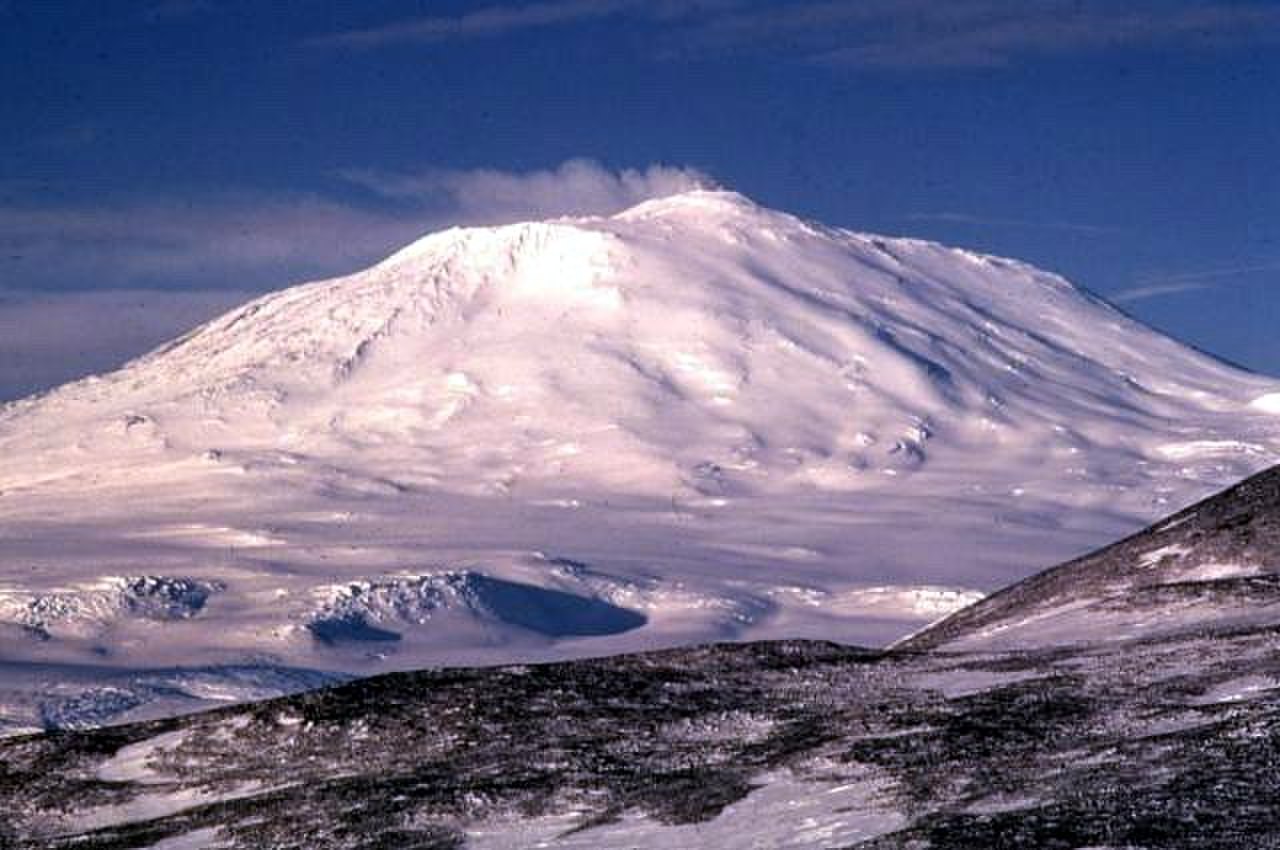
Geology & Setting
- Type: Stratovolcano
- Height: 3,794 m (12,448 ft)
- Location: Ross Island, Antarctica
- Age: ~1.3 million years
Mount Erebus is part of the McMurdo Volcanic Group, associated with the West Antarctic Rift System. Unlike most volcanoes formed by plate subduction, Erebus is linked to continental rifting and possibly a mantle plume beneath the Antarctic continent.
The volcano's composition is unusual: it erupts a rare type of lava called phonolite, rich in sodium and potassium. This makes Erebus one of only a few phonolitic volcanoes on Earth and gives its lava lake a unique character.
The Persistent Lava Lake
- Lake Diameter: ~30 m
- Lava Temperature: ~1,000°C
- Air Temperature: As low as -40°C
- Active Since: At least 1972
Erebus hosts one of the world's few persistent lava lakes, a feature found at only three to five locations on Earth at any given time. The lake sits in the Inner Crater at the summit and has been continuously active for at least 50 years.
The lava lake produces Strombolian eruptions, throwing molten bombs of phonolite lava several hundred meters into the air. In the extreme cold of the Antarctic summit, these bombs cool rapidly in the frigid air, creating unique volcanic bombs found nowhere else on Earth.
Ice Towers & Fumaroles
- Ice Towers: Up to 10 m tall
- Cause: Volcanic steam freezing in cold air
- Fumaroles: Hundreds on flanks
- Unique: Found only on Erebus
One of Erebus's most extraordinary features is its ice towers, hollow chimneys of ice that form around volcanic fumaroles. Hot volcanic gases escape through vents on the mountain, but the extreme cold instantly freezes the steam into towers of ice up to 10 meters tall.
Inside these ice towers, the air is warm enough to support microbial life, creating miniature heated ecosystems surrounded by the frozen Antarctic wilderness. Scientists study these as analogs for possible life in extreme environments on other planets.
Scientific Research
- Research Base: McMurdo Station (nearby)
- Monitoring: Mount Erebus Volcano Observatory
- Significance: Analog for extraterrestrial volcanism
Erebus's proximity to McMurdo Station, the largest Antarctic research base, makes it one of the most accessible extreme volcanoes for scientific study. The Mount Erebus Volcano Observatory has maintained continuous monitoring since the 1970s.
The volcano serves as a natural laboratory for studying volcanic processes in extreme cold, magma degassing, and the limits of life. Its ice tower ecosystems are studied as analogs for potential life on Mars or Jupiter's moon Europa, where volcanic heat might create habitable niches beneath icy surfaces.
Key Facts
- Erebus is the southernmost active volcano on Earth.
- It hosts one of only a handful of persistent lava lakes worldwide.
- Ice towers up to 10 meters tall form around volcanic fumaroles.
- The volcano erupts rare phonolite lava, rich in sodium and potassium.
- Its ice tower ecosystems are studied as analogs for potential extraterrestrial life.
Fun Facts
- Mount Erebus was named after HMS Erebus, one of the ships of James Clark Ross's Antarctic expedition in 1841.
- The lava lake bubbles at 1,000°C while air temperature above it can be -40°C, a temperature difference of over 1,000 degrees.
- In 1979, an Air New Zealand sightseeing flight crashed into Mount Erebus, killing all 257 people on board.
- Volcanic crystals called "Erebus crystals" form uniquely in the cold Antarctic conditions and are prized by mineral collectors.
Final Thoughts
Mount Erebus is one of Earth's most extraordinary volcanoes, combining extreme cold with persistent volcanic activity in ways found nowhere else. Its lava lake, ice towers, and unique ecosystems make it invaluable for scientific research, from understanding volcanic processes to exploring the possibilities of life in extreme environments.