
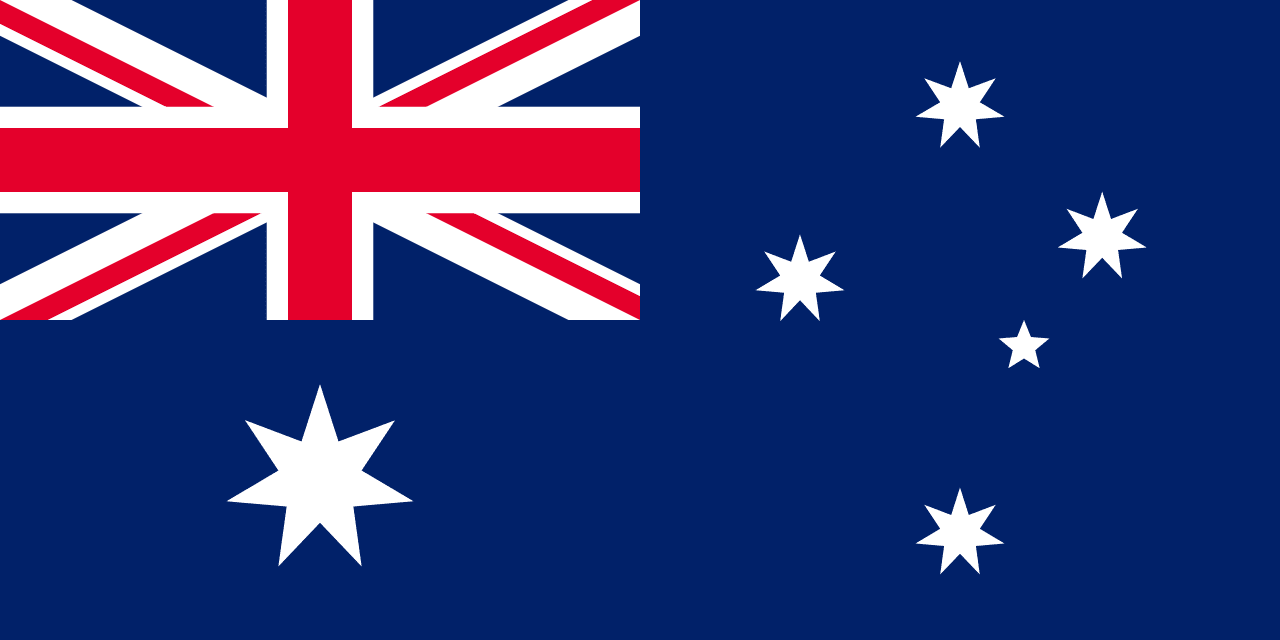
Australia is the only place on Earth that is a country, a continent, and an island all at once, marooned in the Southern Hemisphere with kangaroos on its coat of arms and a coastline that stretches for tens of thousands of kilometres. It is ancient and modern, vast and empty, urban and wild, all at the same time. These ten facts reveal why this sunburnt land continues to fascinate travellers, scientists, and the simply curious.
1. It Is the World's Only Country That Is Also a Continent
Australia holds a geographic distinction shared by no other nation: it is simultaneously a sovereign country, a continent, and the planet's largest island. Covering roughly 7.7 million square kilometres, it is the sixth-largest country on Earth, yet it has fewer people than many single cities elsewhere. This means enormous stretches of the interior, known affectionately as the Outback, remain almost entirely uninhabited.
Because it sits isolated in the Indian and Pacific Oceans, Australia evolved in splendid separation for tens of millions of years. That isolation is why its plants and animals look so different from anywhere else. You can read more in our country guide, which maps out the regions in detail.
2. The Capital Was a Compromise Between Two Rivals
Many people assume Sydney or Melbourne is the capital of Australia, but it is actually Canberra. The reason is wonderfully diplomatic: when the country federated in 1901, Sydney and Melbourne both wanted the honour and refused to back down. The solution was to build an entirely new, purpose-designed capital roughly between them.
Canberra was planned from scratch by American architects Walter Burley Griffin and Marion Mahony Griffin, who won an international design competition. The result is a deliberately green, low-rise city built around an artificial lake, with broad avenues radiating outward. It remains one of the world's relatively rare fully planned capital cities, more reminiscent of Washington or Brasilia than of an organically grown metropolis.
3. Most Australians Cling to the Coast
Australia is home to around 27 million people, but they are not evenly spread. The vast majority live within about 50 kilometres of the coastline, clustered in cities such as Sydney, Melbourne, Brisbane, Perth, and Adelaide. The arid interior, by contrast, is so dry and harsh that huge areas have almost no permanent residents at all.
This makes Australia one of the most urbanised nations on Earth, with the bulk of its population concentrated in just a handful of coastal metropolitan regions. The pattern reflects the continent's geography: the centre is desert, while the fringes catch the rain, the rivers, and the temperate climate that make modern city life comfortable.
4. There Is No Single Official Language
English is spoken by nearly everyone in Australia and functions as the national language, yet, surprisingly, the country has no official language enshrined in law. Australian English has its own delightful flavour, full of shortenings and slang: "arvo" for afternoon, "brekkie" for breakfast, and "barbie" for barbecue.
Beyond English, Australia is strikingly multilingual. Decades of immigration mean Mandarin, Arabic, Vietnamese, Italian, Greek, and many other languages are spoken in homes across the nation. Layered beneath all of this are the hundreds of Aboriginal and Torres Strait Islander languages, some still spoken today and others being actively revived by their communities.
5. It Has the Oldest Continuous Culture on the Planet
Aboriginal Australians represent the oldest continuous living culture in the world, with evidence of human presence on the continent dating back at least 65,000 years. For tens of thousands of years, hundreds of distinct nations and language groups developed rich traditions of art, law, storytelling, and spirituality tied intimately to the land.
The concept of the Dreaming, an intricate framework explaining creation, kinship, and the relationship between people and Country, sits at the heart of Aboriginal worldviews. Rock art galleries in places like Kakadu are tens of thousands of years old, making them some of humanity's most ancient surviving artistic records.
6. The Great Barrier Reef Is Visible From Space
Stretching more than 2,300 kilometres along the northeast coast, the Great Barrier Reef is the largest living structure on Earth and the only one visible from space. It is not a single reef but a sprawling system of around 2,900 individual reefs and hundreds of islands, built by billions of tiny coral polyps over millennia.
The reef teems with life, hosting thousands of species of fish, molluscs, turtles, dolphins, and corals in a kaleidoscope of colour. It is one of Australia's defining natural icons, a UNESCO World Heritage Site, and a major draw for snorkellers and divers, though it now faces serious threats from warming oceans and coral bleaching.
7. Its Wildlife Exists Nowhere Else
Thanks to millions of years of isolation, the overwhelming majority of Australia's mammals, reptiles, and frogs are found nowhere else on Earth. The continent is the global headquarters of marsupials, animals that raise their young in a pouch, including kangaroos, wallabies, koalas, and wombats.
Stranger still is the platypus, an egg-laying mammal with a duck-like bill and webbed feet that baffled European scientists when first described. Australia also famously hosts a remarkable concentration of venomous creatures, from the inland taipan to box jellyfish and funnel-web spiders. Yet for all the fearsome reputation, encounters are rare, and the wildlife remains a source of national pride.
8. A Mining Giant That Powers the World
Australia is one of the planet's great resource economies, sitting atop staggering reserves of iron ore, coal, gold, natural gas, lithium, and bauxite. It is among the world's largest exporters of iron ore and coal, much of it shipped across Asia to feed the steel mills and power plants of its trading partners.
This mineral wealth has helped give Australia a high standard of living and one of the world's more prosperous, developed economies. The mining heartland of Western Australia, in particular, drives a substantial share of national export earnings, while the country also exports vast quantities of beef, wheat, wine, and wool.
9. Sport Is Practically a National Religion
Few countries are as sports-mad as Australia. Cricket dominates the summer, and the rivalry with England in the Ashes series is followed with near-religious intensity. In winter, Australian Rules Football, a fast, high-flying code invented in Melbourne, fills enormous stadiums, alongside rugby league and rugby union.
The warm climate and that coast-hugging population also make Australia a swimming and surfing powerhouse, regularly punching far above its weight at the Olympics in the pool. Beach culture, weekend sport, and the backyard barbecue are woven tightly into the national identity, reflecting an outdoor lifestyle that the climate generously encourages.
10. Comfort Food With Quirky Names
Australian cuisine blends British roots, Indigenous ingredients, and waves of immigrant influence into a relaxed, multicultural table. National favourites include the meat pie, the lamington (a sponge cake dipped in chocolate and rolled in coconut), and the pavlova, a meringue dessert whose origins Australia hotly contests with New Zealand.
Then there is Vegemite, a dark, salty yeast-extract spread that Australians adore on buttered toast and that bewilders almost everyone else. "Bush tucker," the native foods used by Aboriginal peoples for millennia, has also gained new respect, bringing ingredients like kangaroo, macadamia nuts, and finger lime into modern restaurants. The country's red and green diagonals appear in our piece on the flag.
Frequently Asked Questions
What is the capital of Australia?
The capital is Canberra, a purpose-built city created as a compromise between rival cities Sydney and Melbourne. It is home to the federal Parliament, embassies, and major national institutions, even though it is far smaller than Australia's largest cities.
What is Australia most famous for?
Australia is famous for its unique wildlife, especially kangaroos and koalas, and for the Great Barrier Reef, the world's largest coral reef system. It is also known for the vast Outback, iconic Sydney Opera House and Harbour Bridge, beach culture, and its status as the only country that is also a continent.
Why are there so many dangerous animals in Australia?
Millions of years of geographic isolation allowed Australia's animals to evolve along their own path, producing many species, including highly venomous snakes, spiders, and jellyfish, found nowhere else. Despite the reputation, serious encounters are uncommon, as most of these creatures avoid humans.
Conclusion
From its ancient Aboriginal heritage and pouch-bearing wildlife to its planned capital and reef visible from orbit, Australia is a land of remarkable contrasts and superlatives. It rewards anyone willing to look beyond the postcards, revealing a continent that is at once one of the oldest and one of the most surprising places on Earth. Keep exploring, and Australia will keep amazing you.