
Tucked into the heart of the Alps, Austria packs an outsized cultural punch for a country smaller than the U.S. state of Maine. This is the land that gave the world Mozart, the waltz, the Sachertorte, and the modern ski holiday. Whether you are planning a trip or simply love trivia, these ten facts reveal why this landlocked nation continues to enchant travelers, musicians, and mountaineers alike.
1. Nearly two-thirds of the country is mountainous
Austria is famously alpine. The Alps cover roughly 60 percent of its territory, and the country boasts more than 900 peaks rising above 3,000 metres. The tallest is the Grossglockner at 3,798 metres, crowned by the Pasterze, Austria's largest glacier. These mountains are not just scenery: they shape settlement patterns, drive the tourism economy, and supply most of the nation's electricity through hydropower.
The terrain also explains why Austrians are world-class skiers. With sweeping valleys, glacial lakes, and high alpine pastures, the landscape ranges from the warm vineyards of the eastern lowlands to permanently snow-capped summits. To dig deeper into the country's regions, see our full country guide.
2. Vienna is repeatedly named the world's most liveable city
The capital, Vienna, is home to roughly two million people and has topped global liveability rankings year after year. Once the imperial seat of the mighty Habsburg dynasty, the city is dotted with palaces like Schonbrunn and the Hofburg, grand boulevards along the Ringstrasse, and some of Europe's finest museums.
Vienna is also a city of music. Beethoven, Brahms, Schubert, Strauss, and Mahler all lived and worked here, and the Vienna Philharmonic's New Year's Concert is broadcast to tens of millions worldwide. The city's coffee-house culture is even recognized by UNESCO as intangible cultural heritage.
3. German is the official language, but the accent is distinctly Austrian
Austrians speak German, yet the Austrian variety has its own vocabulary, pronunciation, and charm. Locals say Servus and Grüss Gott rather than the standard German greetings, and everyday food words differ too: tomatoes are Paradeiser and potatoes are Erdäpfel.
These differences run deep enough that Austria negotiated a special protocol when joining the European Union to protect 23 of its food terms. Regional dialects vary sharply from valley to valley, a legacy of the mountains keeping communities isolated for centuries.
4. The Habsburgs ruled here for more than 600 years
Few dynasties have shaped Europe like the House of Habsburg, which governed Austria from the late 13th century until 1918. Through strategic marriages rather than wars, they assembled one of the largest realms in history, at one point ruling Spain, the Low Countries, much of Italy, and vast stretches of Central Europe.
The empire ended dramatically: the assassination of Archduke Franz Ferdinand in 1914 triggered the First World War, and the Austro-Hungarian Empire dissolved in 1918. Modern Austria emerged as a small republic, but the Habsburg legacy lives on in its palaces, art collections, and the sheer grandeur of Vienna.
5. It is the birthplace of Wolfgang Amadeus Mozart
Salzburg, Austria's fourth-largest city, gave the world Wolfgang Amadeus Mozart in 1756. The composer wrote more than 600 works before his death at just 35, and his birthplace on Getreidegasse remains one of the most visited museums in the country.
Music remains central to Austrian identity. The country produces the famous Mozartkugel chocolates, hosts the prestigious Salzburg Festival each summer, and treats classical performance as a living tradition rather than a museum piece. Few nations of nine million people have contributed so disproportionately to the Western musical canon.
6. The Sound of Music was filmed here, but Austrians barely know it
The 1965 film The Sound of Music was set and filmed around Salzburg and has drawn millions of fans to Austria ever since. Yet here is the quirk: the movie was a modest success in Austria itself and is largely unknown to most Austrians, who never grew up watching it.
The real-life von Trapp family did exist and did flee the Nazis, though many details were dramatized for Hollywood. Today specialized tour companies shuttle visitors between the gazebo, the abbey, and the alpine meadows, a tourism phenomenon that bemuses many locals to this day.
7. Austrian cuisine is built around comfort and cake
Austrian food is hearty and unforgettable. The Wiener Schnitzel, a thin breaded veal cutlet, is the national dish, often served with potato salad. Hearty staples like Tafelspitz (boiled beef), Knödel (dumplings), and Kaiserschmarrn (shredded pancake) reflect the country's love of warming, filling fare.
Then there is the pastry. Austria's coffee houses serve Apfelstrudel, Linzer torte, and the legendary Sachertorte, a dense chocolate cake invented in Vienna in 1832 whose exact recipe is still a closely guarded secret. Pairing cake with a strong coffee is practically a national ritual.
8. Austria is one of the world's richest countries
Despite its small size, Austria has one of the highest GDP-per-capita figures in the European Union. Its economy blends high-tech manufacturing, a strong industrial base, and a powerhouse tourism sector that welcomes tens of millions of visitors each year for skiing, hiking, and city breaks.
The country is also famously environmentally conscious. A large share of its electricity comes from renewable sources, especially hydropower fed by alpine rivers, and Austria has never operated a commercial nuclear power plant despite building one. A 1978 referendum banned it before it ever went live.
9. It declared permanent neutrality after World War II
Occupied by Allied forces after 1945, Austria regained full sovereignty in 1955 on one major condition: permanent neutrality, written into its constitution. The country never joined NATO, choosing instead to position itself as a bridge between East and West during the Cold War.
That neutral status helped make Vienna a global diplomatic hub. The city hosts major United Nations offices, the International Atomic Energy Agency, and OPEC, making it one of only a handful of cities worldwide to serve as a UN headquarters seat alongside New York and Geneva.
10. The national flag is among the oldest in the world
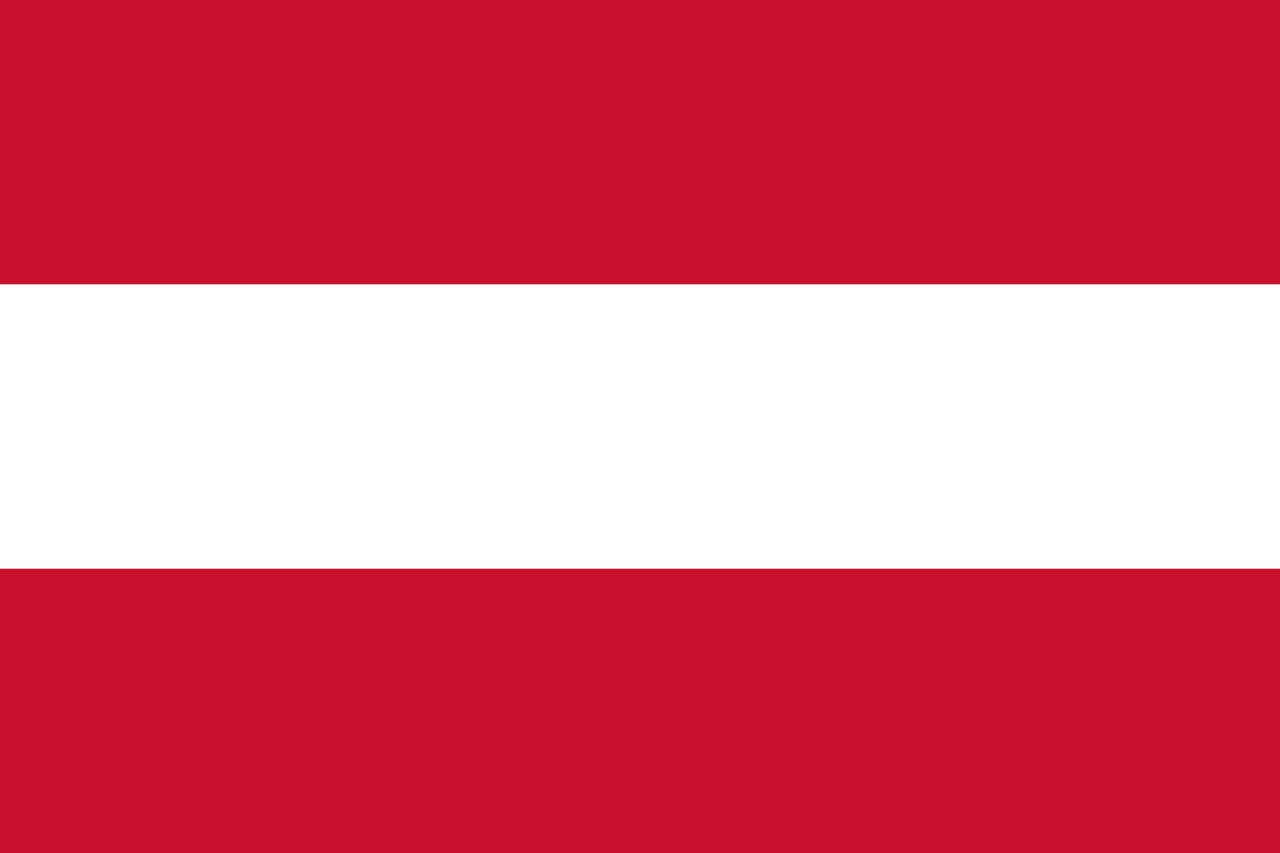
Austria's striking red-white-red flag is one of the oldest national designs still in use, with origins traced to the 13th century. Legend holds that Duke Leopold V's white battle tunic was soaked red with blood during the Crusades, leaving only a white stripe where his belt had been.
Whether or not the story is true, the simple tricolour has endured through empires, republics, and reinventions. It remains a powerful symbol of continuity in a country whose borders and government have changed dramatically over the centuries.
Frequently Asked Questions
What is the capital of Austria?
The capital is Vienna, home to around two million people. Once the seat of the Habsburg Empire, it is today celebrated as one of the world's most liveable cities and a global centre for classical music, museums, and diplomacy.
What is Austria most famous for?
Austria is best known for the Alps and its world-class skiing, its rich classical music heritage including Mozart and the Vienna Philharmonic, imperial palaces from the Habsburg era, and indulgent treats like Wiener Schnitzel and Sachertorte.
Is Austria the same as Australia?
No, and Austrians get asked this constantly. Austria is a landlocked alpine country in Central Europe with about nine million people, while Australia is a vast island continent in the Southern Hemisphere. The two are separated by thousands of kilometres and share only a similar-sounding name.
Conclusion
From towering glaciers and imperial palaces to symphonies and Sachertorte, Austria proves that a small country can leave an enormous mark on the world. Its blend of natural beauty, deep history, and cultural refinement makes it endlessly rewarding to explore. These ten facts are only the beginning of what this remarkable alpine nation has to offer.