
Bahrain may be the smallest Arab nation by land area, but this island kingdom in the Persian Gulf punches far above its weight when it comes to history, oil, and pearls. Once known as the land where freshwater springs bubble up beneath the sea, it has reinvented itself as a banking hub and the host of the Middle East's first Formula 1 race. Here are ten genuinely fascinating facts that reveal why Bahrain is one of the Gulf's most surprising destinations.
1. It Is an Archipelago of Around 33 Islands
Bahrain is not a single landmass but an archipelago of roughly 33 natural and artificial islands clustered in the Persian Gulf, just off the coast of Saudi Arabia. The largest, Bahrain Island, accounts for the bulk of the country's modest area of about 780 square kilometers, making it one of the smallest sovereign states in the world. Decades of land reclamation have steadily expanded the country, with man-made islands like the Amwaj Islands and Durrat Al Bahrain reshaping the coastline. The name "Bahrain" itself comes from the Arabic for "two seas," a poetic nod to the legend of sweet freshwater springs that once welled up amid the salty Gulf waters.
2. Manama Is a City of Glass Towers and Old Souqs
Manama, the capital, is home to a large share of the country's population and serves as its commercial and cultural heart. The skyline is dominated by the twin sail-shaped Bahrain World Trade Center, famous for the wind turbines suspended between its towers, and the gleaming Bahrain Financial Harbour. Yet just minutes from these futuristic landmarks lies the labyrinthine Manama Souq, where vendors sell spices, gold, textiles, and oud perfume. To learn more about the country's layout and regions, see our country guide. Manama blends 21st-century finance with centuries-old trading traditions in a remarkably compact space.
3. Bahrain Was Home to the Ancient Dilmun Civilization
Long before oil, Bahrain was the heartland of Dilmun, one of the oldest civilizations in the world, flourishing from around 3000 BCE. Mentioned in Mesopotamian texts as a paradise and a vital trading link between Sumer and the Indus Valley, Dilmun was renowned for its prosperity. The island is dotted with tens of thousands of ancient burial mounds, one of the largest prehistoric cemeteries on Earth. The Qal'at al-Bahrain, or Bahrain Fort, a UNESCO World Heritage Site, sits atop an artificial mound built up by 4,000 years of continuous human settlement, layer upon layer of history.
4. It Was Once the Pearl Capital of the World
Before the discovery of oil, Bahrain's economy revolved entirely around pearling. For thousands of years, divers descended into the Gulf with nothing but a nose clip and a weighted rope, harvesting oysters whose natural pearls were prized across Arabia, India, and Europe. Bahraini pearls were considered among the finest anywhere. This heritage is so important that the Pearling Path on Muharraq Island, tracing the route from oyster beds to merchants' houses, is a UNESCO World Heritage Site. To this day, Bahrain bans the sale of cultured pearls, protecting the reputation of its natural ones, a unique legal stance found nowhere else.
5. Oil Transformed the Kingdom in 1932
Bahrain holds a landmark distinction in the Gulf: it was the first country on the Arabian side to strike oil, in 1932. The discovery at Jabal Al Dukhan well, in the shadow of the country's highest point, kick-started the modern Gulf oil era and pivoted Bahrain away from its declining pearl trade just as Japanese cultured pearls were collapsing the market. However, Bahrain's reserves were always relatively modest compared to neighbors like Saudi Arabia. This early scarcity pushed the kingdom to diversify decades ahead of its rivals, building a robust banking, finance, and services sector that now anchors the economy.
6. The Tree of Life Survives Alone in the Desert
One of Bahrain's most mysterious natural wonders is the Tree of Life, a roughly 400-year-old mesquite tree standing entirely alone in the barren desert, miles from any visible water source. How it has survived for centuries in such arid conditions remains a subject of local legend and scientific curiosity, with theories ranging from a deep taproot reaching hidden aquifers to extraction of moisture from the air. Some locals connect the site to the ancient belief that Bahrain was the Garden of Eden. The lone, sprawling tree has become a beloved national symbol and a popular pilgrimage point for visitors crossing the desert.
7. The King Fahd Causeway Connects It to Saudi Arabia
Bahrain is linked to mainland Saudi Arabia by the King Fahd Causeway, a 25-kilometer series of bridges and embankments opened in 1986. The crossing transformed Bahrain from an isolated island into an accessible weekend getaway, and thousands of Saudis pour across it on Thursdays and Fridays to enjoy Bahrain's more relaxed social atmosphere, restaurants, and entertainment. The causeway even features a shared border station built on an artificial island midway across, where Bahraini and Saudi customs sit side by side. It remains one of the most important pieces of infrastructure binding the Gulf Cooperation Council nations together.
8. It Hosts the Gulf's First Formula 1 Grand Prix
In 2004, Bahrain made motorsport history by hosting the first-ever Formula 1 Grand Prix in the Middle East at the Bahrain International Circuit in Sakhir. Carved out of the desert, the floodlit track has become a fixture of the F1 calendar and frequently opens the season. The race draws international crowds and has helped put Bahrain firmly on the global sports map. Beyond Formula 1, the circuit hosts endurance races and drag events, and the kingdom has used the spectacle as a centerpiece of its tourism strategy, showcasing a modern, cosmopolitan image to the world.
9. Arabic Is Official, but Bahrain Is Strikingly Diverse
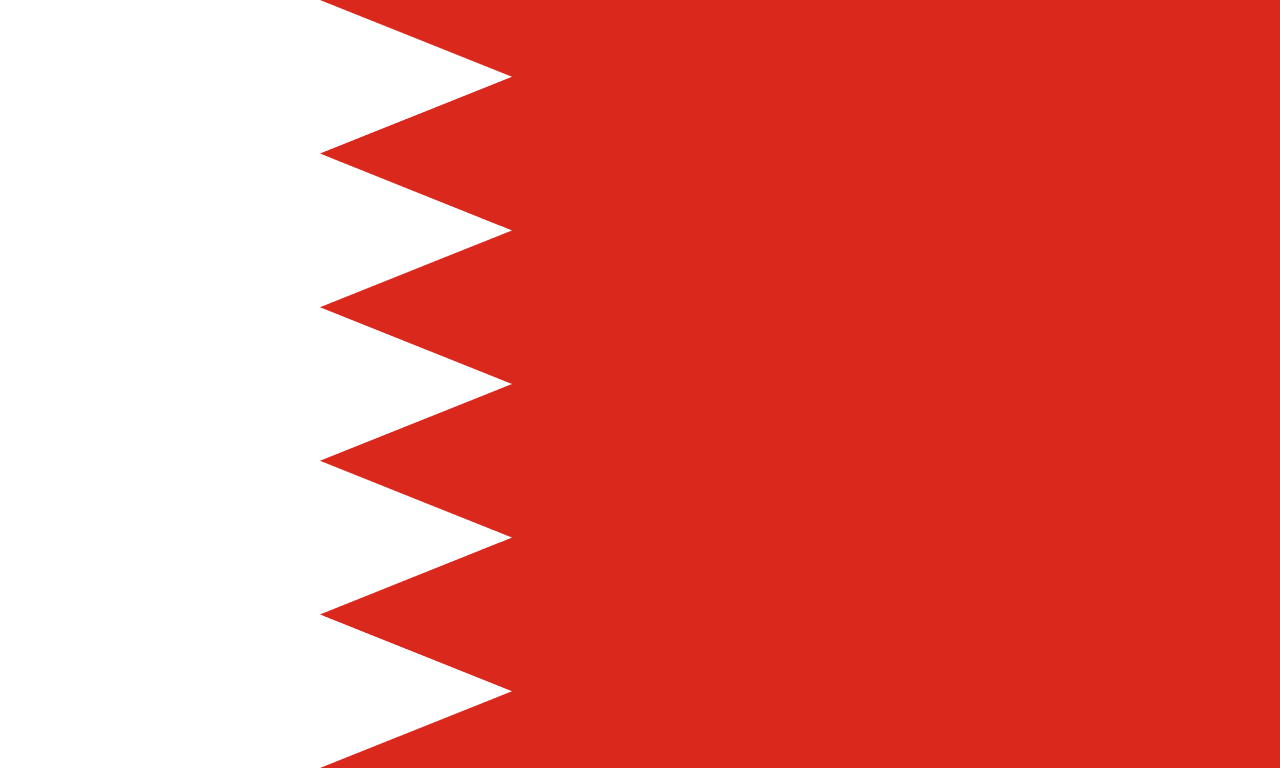
Arabic is the official language of Bahrain, though English is widely spoken in business, education, and daily life. What makes Bahrain especially distinctive is its diversity: a large share of residents are expatriates, drawn by the finance and oil sectors, bringing significant communities who speak Persian, Hindi, Urdu, Tagalog, and Malayalam. This melting pot is reflected in everything from temples and churches standing near mosques to the country's famously varied food scene. The colors and meaning behind the nation's red-and-white banner are explored in our piece on the Bahraini flag.
10. Machboos and Halwa Define the Bahraini Table
Bahraini cuisine is a fragrant blend of Arabian, Persian, and Indian influences, built around fresh Gulf seafood and aromatic spices. The national dish is machboos, a richly spiced rice cooked with fish or meat, saffron, and dried lime, similar to a biryani. Street food favorites include samboosa and freshly baked khubz flatbread. For dessert, nothing beats Bahraini halwa, a sticky, jewel-toned sweet made from cornstarch, sugar, saffron, and nuts, traditionally served with strong Arabic coffee. Fish such as hammour and the local favorite safi feature heavily, a reminder that the sea has always defined life on these islands.
Frequently Asked Questions
What is the capital of Bahrain?
The capital of Bahrain is Manama, located on the northeastern tip of the main island. It is the country's largest city and serves as its political, financial, and cultural center, blending modern skyscrapers with traditional souqs and markets.
What is Bahrain famous for?
Bahrain is famous for being the historic pearl-diving capital of the Gulf, for being the first country on the Arabian side to discover oil, and for hosting the region's first Formula 1 Grand Prix. It is also known for the ancient Dilmun civilization and its UNESCO World Heritage sites.
Why is Bahrain called the land of two seas?
The name "Bahrain" comes from the Arabic word for "two seas." It is traditionally said to refer to the unusual phenomenon of sweet freshwater springs bubbling up through the salty seawater around the islands, a feature that sustained life and pearl oysters for millennia.
Conclusion
From the 4,000-year-old mounds of Dilmun to the roar of Formula 1 engines, Bahrain compresses an astonishing amount of history, culture, and ambition into a tiny Gulf archipelago. It is a place where natural pearls, ancient legends, and gleaming finance towers coexist, proving that small nations can leave an outsized mark. Whether you come for the heritage, the food, or the sheer surprise of it all, Bahrain rewards the curious traveler at every turn.
