
Stretching like a ribbon down the western edge of South America, Chile is a country of impossible geography: more than 4,300 kilometers long but on average just 177 kilometers wide. Squeezed between the towering Andes and the Pacific Ocean, it packs the driest desert on Earth, glacier-carved fjords, smoking volcanoes, and a sliver of fertile valley where most of its people live. Here are ten genuinely fascinating facts about this long, thin land.
1. It's the Longest, Skinniest Country on the Planet
Chile is famous for its extraordinary shape. Running roughly 4,300 kilometers from the Peruvian border in the north to the icy tip of Patagonia in the south, it spans some 38 degrees of latitude, yet rarely exceeds 200 kilometers in width. If you laid Chile across Europe, it would stretch from Norway to North Africa. This bizarre geometry means a single country experiences scorching desert, Mediterranean vineyards, temperate rainforest, and sub-Antarctic ice. Chileans joke that their nation is "the end of the world," and Patagonia's Punta Arenas is indeed one of the southernmost cities on Earth. The Andes mountains form a natural eastern wall along almost the entire length, isolating Chile from the rest of the continent.
2. The Atacama Is the Driest Desert on Earth
In northern Chile lies the Atacama Desert, where some weather stations have never recorded a single drop of rain. Parts of it are so arid and Mars-like that NASA uses the region to test rovers and study how life might survive on other planets. The lack of moisture and light pollution also makes the Atacama one of the world's premier locations for astronomy. The Atacama Large Millimeter Array (ALMA) and the European Southern Observatory's giant telescopes sit on its high plateaus, peering deep into the universe under famously clear skies. Despite the dryness, the desert occasionally bursts into a spectacular "desierto florido," when rare rains coax millions of wildflowers from the dormant soil.
3. Santiago Sits in a Valley Ringed by the Andes
The capital, Santiago, is home to roughly seven million people and is the political, financial, and cultural engine of Chile. Founded by Spanish conquistador Pedro de Valdivia in 1541, the city sits in a central valley with the snow-capped Andes rising dramatically to the east, a backdrop visible on clear days from downtown skyscrapers. Santiago is one of South America's most modern capitals, with the gleaming Gran Torre tower, an efficient metro system, and the leafy hills of Cerro San Cristóbal and Santa Lucía. Within a couple of hours, residents can ski Andean slopes in winter or reach Pacific beaches like Valparaíso, the colorful, hillside port city beloved by poets.
4. Spanish With a Rhythm All Its Own
The official language is Spanish, but Chilean Spanish is notorious across Latin America for being one of the hardest dialects to follow. Chileans speak quickly, drop final consonants, and pepper their sentences with unique slang like "cachai?" (you get it?) and "po," a filler word added to the end of phrases. Several indigenous languages survive too, most notably Mapudungun, spoken by the Mapuche people, and Rapa Nui on Easter Island. Many everyday Chilean words, including place names and the word "poncho," trace back to indigenous roots, a reminder of the cultures that thrived here long before Spanish arrived.
5. The Mapuche Resisted Conquest for Centuries
While Spain quickly subdued much of the Americas, the Mapuche people of southern Chile fought off European domination for more than 300 years. Skilled warriors who adopted horses and adapted their tactics, they held the line at the Bío Bío River, keeping a swath of southern territory effectively independent until the late nineteenth century. The Mapuche remain Chile's largest indigenous group today, and their language, weaving, silverwork, and spiritual traditions continue to shape national identity. Their long resistance is celebrated in Alonso de Ercilla's epic poem La Araucana, one of the great literary works of the colonial era.
6. A Land of Earthquakes and Volcanoes
Chile sits squarely on the Pacific "Ring of Fire," where the Nazca tectonic plate grinds beneath the South American plate. The result is one of the most seismically active countries on Earth. In 1960, the Valdivia earthquake measured a magnitude of about 9.5, the most powerful ever recorded, triggering tsunamis that crossed the Pacific to Japan and Hawaii. Chile also has dozens of active volcanoes, including the perfectly conical Villarrica and the Andean giant Ojos del Salado, the highest active volcano in the world. Because of this constant geological threat, Chile has developed some of the strictest building codes and best earthquake preparedness on the planet.
7. Two Nobel Prize-Winning Poets
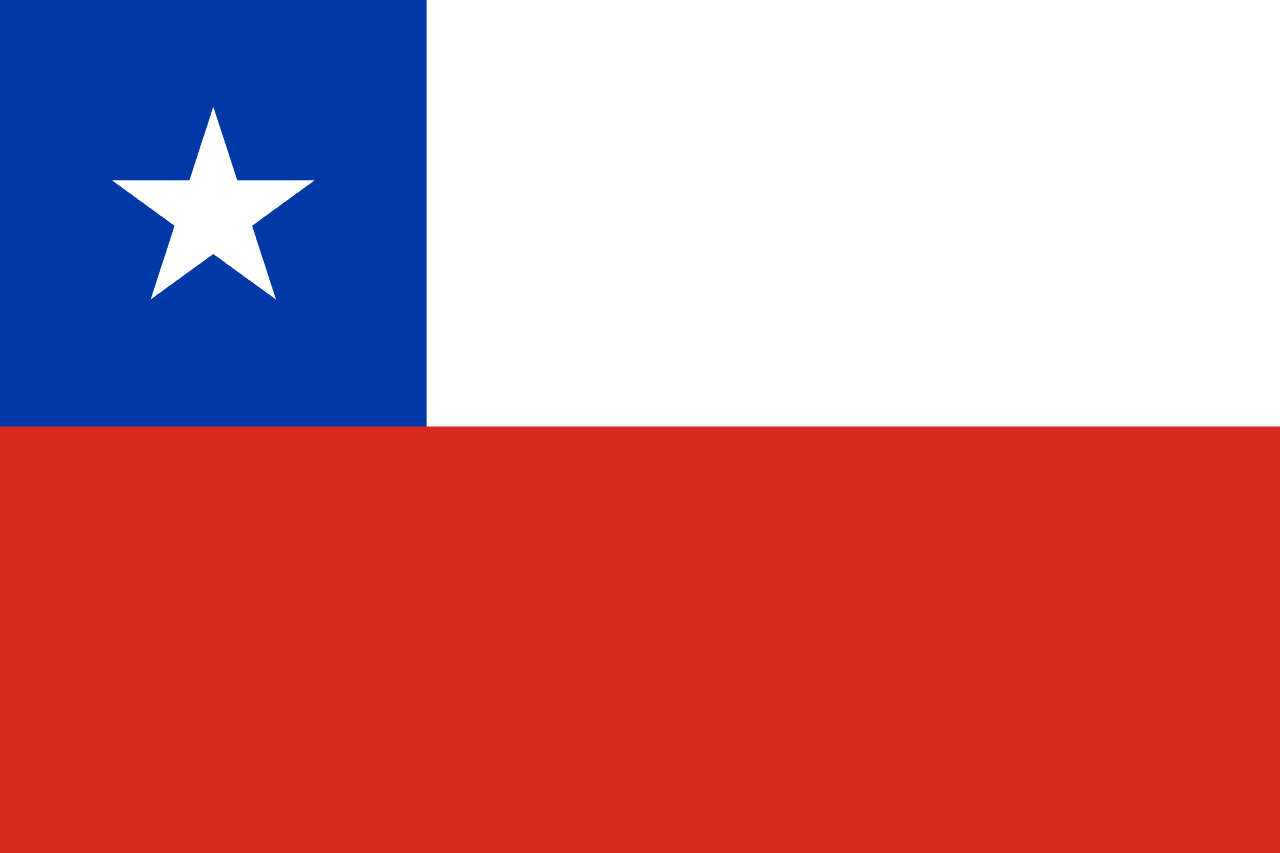
For a country of fewer than 20 million people, Chile has an outsized literary legacy. It produced two Nobel laureates in literature: Gabriela Mistral, the first Latin American woman to win the prize, in 1945, and Pablo Neruda in 1971. Neruda's passionate love poems and political verse made him a global icon, and his quirky seaside houses at Isla Negra and Valparaíso are now beloved museums. Poetry holds a near-sacred place in Chilean culture, and the country's relationship with the written word runs deep. To understand the symbols and colors that unite the nation, you can also read about the flag of Chile.
8. The Copper Capital of the World
Chile is the largest producer of copper on Earth, supplying roughly a quarter of global output. The metal is so central to the economy that Chileans call it "el sueldo de Chile," the salary of Chile. The Chuquicamata and Escondida mines in the north are among the biggest in the world, and the giant open-pit Chuquicamata is one of the largest human-made excavations anywhere. Beyond copper, Chile is a leading exporter of lithium, the critical metal powering electric-vehicle batteries, drawn from the brine beneath its salt flats. Add world-class wine, salmon, and fresh fruit shipped to the Northern Hemisphere during its winter, and you have a remarkably export-driven economy.
9. Easter Island and Its Silent Stone Giants
Some 3,500 kilometers off the coast, in the middle of the Pacific, lies Rapa Nui, better known as Easter Island, a remote Chilean territory and one of the most isolated inhabited places on Earth. It is famous for the moai, nearly 900 monolithic stone heads and figures carved by the Rapa Nui people between roughly 1250 and 1500. Some weigh more than 80 tonnes, and how they were transported across the island remains a subject of fascination and debate. Today the moai are a UNESCO World Heritage site and a global symbol of human ingenuity and mystery. For a deeper dive into the nation's regions and culture, see our full Chile country guide.
10. Wine, Empanadas, and the Asado
Chilean cuisine reflects the country's geography and history. The central valley's Mediterranean climate makes it one of the world's great wine regions, renowned for Cabernet Sauvignon and the once-forgotten Carménère grape, which now thrives in Chile after nearly vanishing in Europe. National favorites include the empanada de pino, a baked pastry stuffed with minced beef, onion, egg, and an olive, and pastel de choclo, a hearty corn-topped casserole. With one of the longest coastlines in the world, Chile also boasts superb seafood, from sea urchins to giant abalone-like locos. And the weekend asado, a leisurely grilled-meat gathering, is a cherished social ritual.
Frequently Asked Questions
What is the capital of Chile?
The capital of Chile is Santiago, a city of about seven million people set in a central valley with the Andes mountains rising to the east. Founded in 1541, it is the country's largest city and its political, financial, and cultural center.
What is Chile famous for?
Chile is famous for its extraordinary long, narrow shape, the ultra-dry Atacama Desert, the moai statues of Easter Island, world-class wine, and being the planet's top copper producer. It is also celebrated for Patagonia's dramatic landscapes and its two Nobel Prize-winning poets.
Why does Chile have so many earthquakes?
Chile lies on the Pacific Ring of Fire, where the Nazca plate slides beneath the South American plate. This tectonic collision builds the Andes and triggers frequent, sometimes massive earthquakes, including the largest ever recorded, the 1960 Valdivia quake at around magnitude 9.5.
Conclusion
From the lifeless dunes of the Atacama to the glaciers of Patagonia, from copper mines to ancient stone giants in the Pacific, Chile is a country defined by extremes and contrasts. Its dramatic geography has shaped a resilient, creative culture that has produced poets, survived earthquakes, and resisted conquest. These ten facts only begin to capture a nation that truly stretches the imagination, and rewards anyone curious enough to explore it.