
China is a country of staggering scale and contradiction, where 3,000-year-old poetry coexists with bullet trains that hit 350 km/h and skylines that rewrite themselves every decade. Stretching from the Himalayas to the Pacific, it packs deserts, rainforests, megacities, and sacred mountains into a single landmass roughly the size of all of Europe. Here are ten facts that capture why this East Asian giant is endlessly fascinating to explore.
1. It Spans Five Geographic Time Zones But Uses Only One
China is geographically wide enough to cover five time zones, yet the entire country officially runs on a single clock: Beijing Time. This means that in the far-western region of Xinjiang, the sun can rise as late as 10 a.m. and set near midnight in summer, putting daily life wildly out of sync with the official schedule. Many locals in the west quietly keep an informal "Xinjiang Time" running two hours behind to make mornings feel normal.
The unified clock was introduced for national cohesion, but it produces one of the strangest everyday quirks on Earth, where workers thousands of kilometres apart clock in at the same official minute despite vastly different daylight.
2. Beijing Has Been a Capital for Over 800 Years
Beijing, the capital, is the political and cultural nerve centre of China and home to more than 21 million people. It has served as an imperial seat on and off since the 13th century, when Kublai Khan made it the heart of the Yuan dynasty. At its core sits the Forbidden City, a sprawling palace complex of nearly 1,000 surviving buildings that housed emperors for roughly five centuries.
Today Beijing fuses that imperial grandeur with hyper-modern ambition. Tiananmen Square, one of the largest public squares on the planet, sits a short walk from glittering financial districts and the futuristic stadiums built for the 2008 and 2022 Olympics, making Beijing the first city ever to host both Summer and Winter Games.
3. It Is Home to Roughly 1.4 Billion People
With about 1.4 billion residents, China holds nearly one in every six people alive. For decades it was the world's most populous nation, though demographers note India has recently edged ahead. The population is famously uneven: the eastern third of the country is densely packed with megacities, while vast western plateaus and deserts remain sparsely inhabited.
An invisible cartographic line called the Heihe-Tengchong Line illustrates this dramatically. Drawn diagonally across the map, it separates a small eastern half holding the overwhelming majority of the population from a huge western half that is largely empty, one of the most lopsided population distributions of any large country.
4. Mandarin Is Spoken by More People Than Any Other Native Language
The official language, Standard Mandarin, has more native speakers than any other language on Earth. But "Chinese" is really an umbrella for dozens of distinct spoken varieties, including Cantonese, Hokkien, and Shanghainese, which can be mutually unintelligible. What binds them together is a shared writing system of characters, meaning two people who cannot understand each other's speech can often read the same newspaper.
Mandarin is also a tonal language, where the same syllable can carry four different meanings depending on pitch. The word "ma," for instance, can mean mother, hemp, horse, or a scolding, depending entirely on how your voice rises or falls.
5. Chinese Civilization Stretches Back Thousands of Years
China boasts one of the world's oldest continuous civilizations, with written records reaching back over 3,000 years and cultural roots even deeper. Inventions that reshaped humanity emerged here: paper, printing, gunpowder, and the compass are collectively celebrated as the "Four Great Inventions." Chinese astronomers were recording solar eclipses and comets, including Halley's Comet, centuries before similar records appeared in Europe.
This deep history is woven into daily life through the philosophy of Confucius, the strategies of Sun Tzu, and dynastic legacies that still echo in art and governance. To dig deeper into this remarkable heritage, explore our country guide.
6. The Great Wall Is Not a Single Wall
The Great Wall is China's most iconic landmark, but the popular image of one continuous barrier is a myth. It is actually a network of walls, fortifications, and natural barriers built and rebuilt by successive dynasties over more than 2,000 years, with surveys putting its total length at over 21,000 kilometres. Much of it has crumbled into ruin, and large stretches are simply earthen ramparts rather than the famous stone battlements.
Another stubborn legend claims it is visible from space with the naked eye, which astronauts have repeatedly debunked. The wall is too narrow to distinguish from orbit, no wider than many highways that are likewise invisible.
7. It Is the World's Manufacturing and Trade Superpower
China has the world's second-largest economy and is by far its biggest manufacturer and exporter. The country produces a colossal share of global electronics, clothing, steel, and consumer goods, earning it the nickname "the world's factory." The city of Shenzhen, a fishing village just decades ago, has exploded into a high-tech metropolis rivalling Silicon Valley.
China is also reshaping the planet's infrastructure. It boasts the largest high-speed rail network in existence, with more track than the rest of the world combined, allowing travellers to cross enormous distances at speeds topping 300 km/h, often more smoothly than a domestic flight.
8. The Giant Panda Is a National Treasure
China is the only place on Earth where giant pandas live in the wild, clustered in the misty bamboo forests of Sichuan and neighbouring provinces. So beloved is this bear that the government practices "panda diplomacy," loaning pandas to foreign zoos as gestures of goodwill, with every cub born abroad technically remaining the property of China.
The panda is far from the only marvel. China's varied terrain shelters the golden snub-nosed monkey, the critically endangered South China tiger, and the Yangtze finless porpoise. Conservation drives have helped panda numbers recover enough that the species was downgraded from "endangered" to "vulnerable," a rare wildlife success story.
9. Its Cuisine Is Wildly Diverse by Region
There is no single "Chinese food." The country recognises eight great culinary traditions, each shaped by local climate and crops. Sichuan cooking delivers numbing, fiery heat from peppercorns; Cantonese cuisine prizes delicate freshness and gave the world dim sum; northern kitchens lean on wheat noodles and the crisp glory of Peking duck.
Food here is deeply social and symbolic. Long noodles represent long life and should never be cut, fish signals abundance at New Year, and dumplings shaped like ancient gold ingots invite prosperity. A proper Chinese meal is built around shared dishes at a round table, turning every dinner into a communal event rather than an individual plate.
10. It Holds Some of Earth's Most Extreme Landscapes
China's geography reads like a planetary highlight reel. It contains part of Mount Everest on its border with Nepal, the scorching Turpan Depression that sinks below sea level, and the otherworldly rainbow mountains of Zhangye, striped in mineral reds and golds. The Yangtze, Asia's longest river, threads more than 6,000 kilometres across the country.
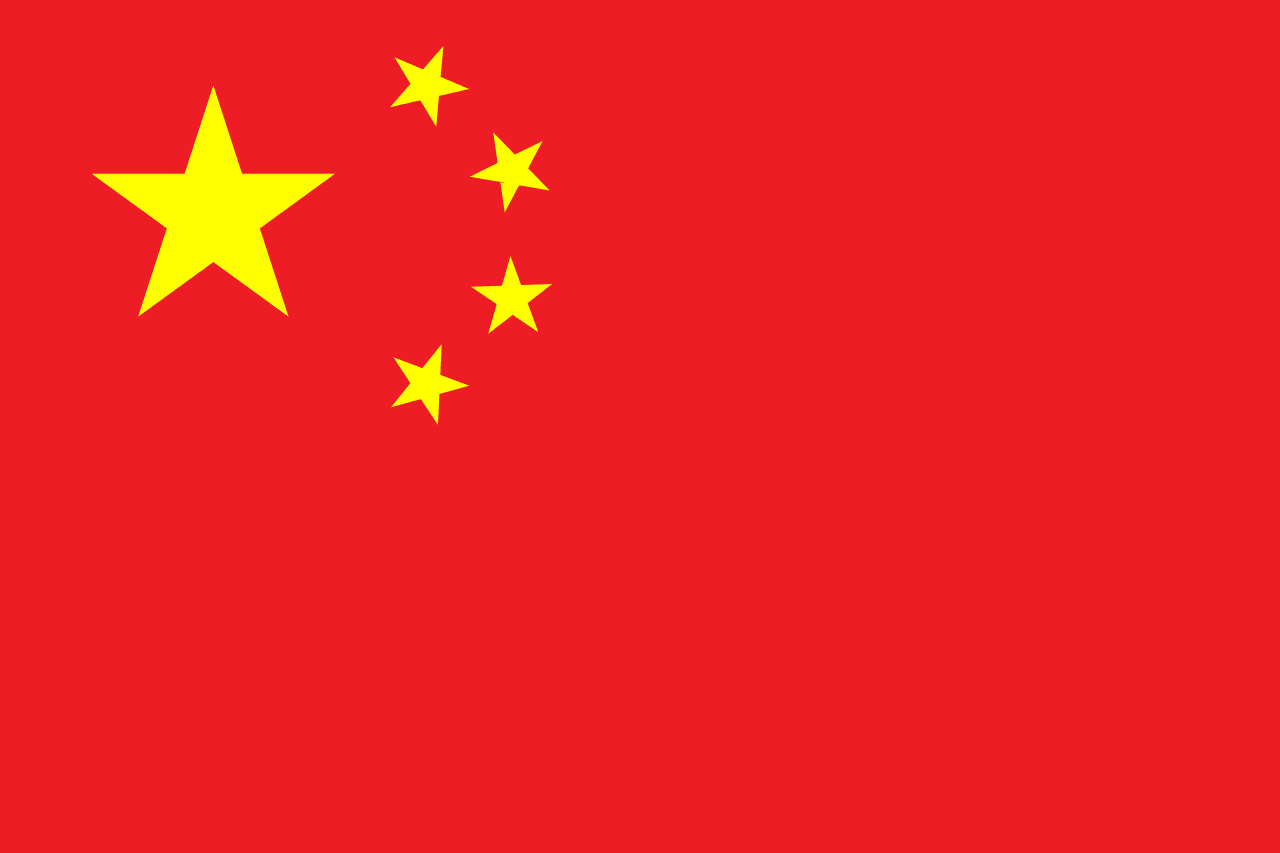
The nation also flies a flag rich with meaning, a bold red field bearing five golden stars. You can read about its symbolism in our piece on the Chinese flag. From karst pinnacles in Guilin to the Gobi Desert's dunes, few countries pack such variety into their borders.
Frequently Asked Questions
What is the capital of China?
The capital of China is Beijing, a city of more than 21 million people that has served as an imperial and political centre for over 800 years. It is home to the Forbidden City, Tiananmen Square, and major modern institutions.
What is China most famous for?
China is famous for the Great Wall, the giant panda, its ancient civilization and inventions like paper and gunpowder, its world-leading manufacturing economy, and its incredibly diverse regional cuisines such as Sichuan and Cantonese cooking.
Why does China use only one time zone?
Although China is wide enough to span five time zones, the entire country officially runs on Beijing Time for national unity. This causes the sun in far-western regions to rise and set hours "later" by the clock, so many westerners informally keep their own unofficial time.
Conclusion
From a single nationwide clock to bamboo forests full of pandas and a wall so long it defies imagination, China rewards anyone curious enough to look closer. These ten facts barely scratch the surface of a country where ancient philosophy and futuristic cities share the same streets. Keep exploring, and you will find that China's story is one of the richest on the planet.