
The Dominican Republic packs an astonishing amount into one corner of a single Caribbean island: the oldest European city in the Americas, the highest mountain in the West Indies, the lowest point too, and a soundtrack of merengue that never seems to stop. Half of the nation's visitors come for the beaches, but the country rewards anyone willing to look deeper. Here are ten facts that reveal why this nation of roughly 11.6 million people is far more surprising than its all-inclusive resorts suggest.
1. It Shares Its Island With Another Country
The Dominican Republic occupies the eastern two-thirds of Hispaniola, the second-largest island in the Caribbean, while Haiti fills the western third. This makes Hispaniola one of only a handful of islands in the world divided between two sovereign nations. The border running between them is more than a line on a map: the two countries speak different languages, use different currencies, and have sharply different histories. Christopher Columbus landed on Hispaniola in 1492, and the island became the launching pad for Spanish expansion across the New World. If you want the full picture of how the country's geography shapes daily life, our country guide goes much deeper into its regions and climate.
2. Santo Domingo Is the Oldest City in the Americas
Founded in 1496, the capital of Santo Domingo holds the title of the first permanent European settlement in the New World. Its colonial core, the Zona Colonial, is a UNESCO World Heritage Site packed with firsts: the first cathedral, the first university, the first paved street, and the first hospital built by Europeans in the Americas. Walking its cobblestoned lanes feels like stepping into the 1500s, with the Alcazar de Colon, the palace built for Christopher Columbus's son Diego, still standing beside the Ozama River. Today Santo Domingo is a metropolis of more than three million people in its greater area, blending five centuries of history with a thoroughly modern Caribbean energy.
3. It Has Both the Highest and Lowest Points in the Caribbean
The country's landscape is dramatically vertical for an island nation. Pico Duarte rises to about 3,098 meters (10,164 feet), making it the highest peak not just in the Dominican Republic but in the entire Caribbean. Adventurous hikers can climb it on multi-day treks through pine forests that look more like the Rocky Mountains than a tropical island. At the other extreme, Lago Enriquillo is a hypersaline lake sitting around 44 meters below sea level, the lowest point in the Caribbean. The lake is saltier than the ocean and home to a population of American crocodiles, a startling sight in a country better known for its palm-fringed shores.
4. Merengue and Bachata Were Born Here
Music is woven into the national identity. Merengue, with its fast two-step rhythm and accordion-driven melodies, originated in the Dominican Republic in the 19th century and is so central to the culture that it was recognized by UNESCO as part of humanity's intangible cultural heritage. Bachata, a more romantic and melancholic guitar-based style, also emerged here in the 20th century and has since conquered dance floors worldwide. You will hear both pouring out of colmados (corner stores), buses, and beach bars across the country. Dominicans dance from childhood, and a wedding or birthday without merengue is almost unthinkable.
5. Baseball Is a National Obsession
Forget soccer: in the Dominican Republic, baseball is king. The country has produced an extraordinary number of Major League Baseball stars, from Pedro Martinez and David Ortiz to Vladimir Guerrero and Juan Soto. The town of San Pedro de Macoris is famous worldwide for the sheer density of professional shortstops it has sent to the majors. Big-league teams run academies on the island to recruit and train young talent, and the winter league games draw passionate crowds. For many Dominican boys, baseball represents not just a pastime but a genuine pathway out of poverty and onto the world stage.
6. It Is the Most Visited Destination in the Caribbean
Tourism is the engine of the Dominican economy, and the country regularly ranks as the most visited nation in the Caribbean, welcoming millions of travelers each year. Punta Cana, on the eastern tip, is the headline draw, with dozens of resorts lining some of the region's finest white-sand beaches. But the appeal extends well beyond the coast to whale-watching in Samana, kitesurfing in Cabarete, and historical tours in the capital. Alongside tourism, the economy rests on free-trade manufacturing zones, agriculture, mining (including significant gold reserves), and remittances sent home by the large Dominican diaspora living abroad.
7. Amber and Larimar Come From Its Mountains
The Dominican Republic is a treasure chest of rare stones. Its amber, fossilized tree resin millions of years old, is prized worldwide and occasionally contains perfectly preserved insects, a detail that famously inspired the premise of Jurassic Park. Even rarer is larimar, a sky-blue volcanic stone found in commercial quantities in only one place on Earth: a single mountainous area in the country's southwest. Its color mimics the Caribbean sea, and it is fashioned into jewelry sold across the island. These geological gifts give the country a niche on the global gemstone map that few visitors expect.
8. Spanish Is Spoken With a Distinctive Flair
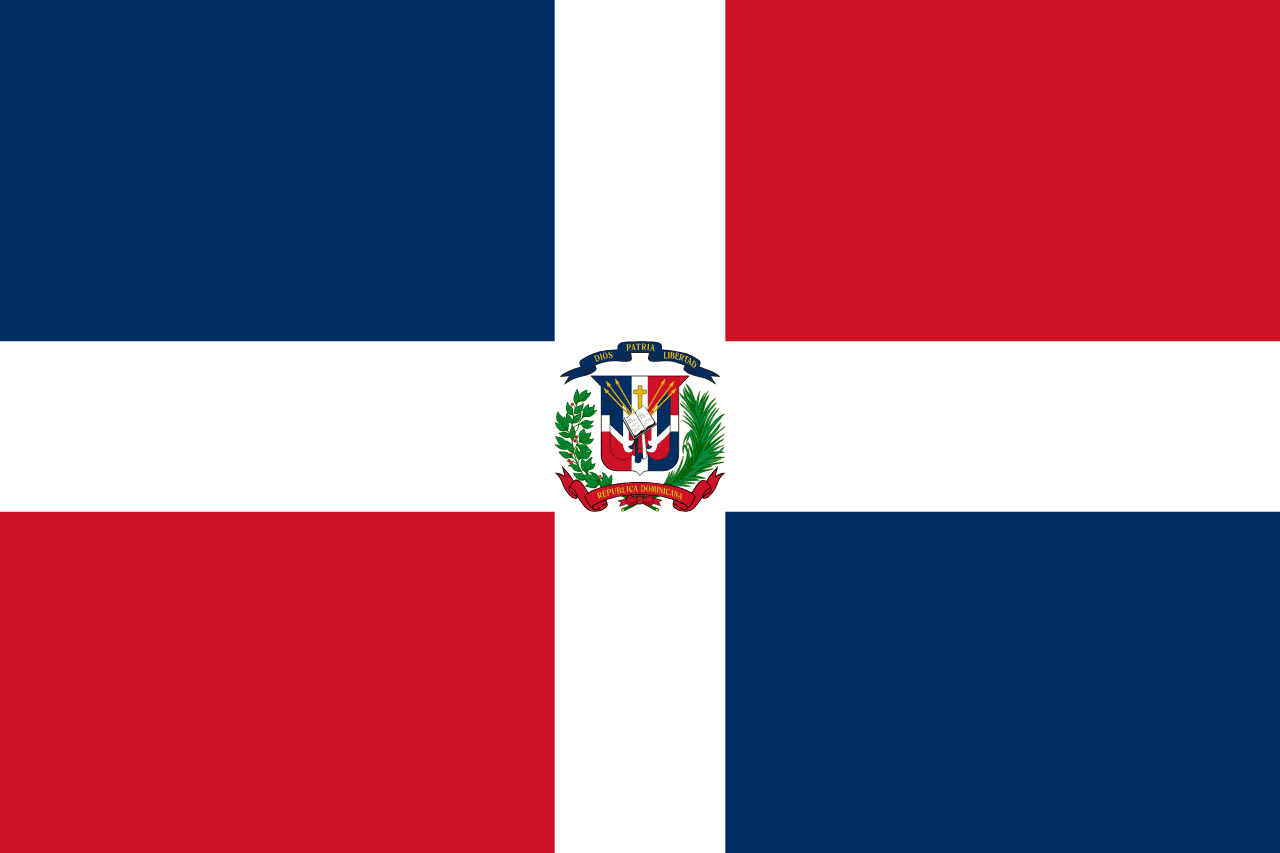
Spanish is the official language, but Dominican Spanish has a personality all its own. Speakers are known for dropping the "s" at the ends of syllables, blending words together, and peppering conversation with uniquely local slang like "que lo que" (a casual "what's up?"). The accent reflects the country's layered heritage of Spanish colonizers, enslaved Africans, and the indigenous Taino people, whose words survive in everyday vocabulary, place names, and foods. This mix of influences is also expressed in the national symbols, including the colors and emblem you can read about in our piece on the flag of the Dominican Republic.
9. La Bandera Is the Heart of Dominican Cuisine
The country's most beloved everyday meal is called "La Bandera," meaning "the flag," because its components echo the national colors. It consists of white rice, red beans, and stewed meat, usually served with a side of salad or fried plantains. This hearty lunch is eaten by millions of Dominicans daily. Other staples include mangu, a creamy mash of boiled green plantains often topped with sauteed onions and served at breakfast, and sancocho, a rich meat-and-root-vegetable stew reserved for celebrations and rainy days. The cuisine is a delicious blend of Spanish, African, and Taino traditions, generous with garlic, citrus, and tropical produce.
10. Humpback Whales Visit Every Winter
Each year between roughly January and March, thousands of North Atlantic humpback whales migrate to the warm waters of Samana Bay and the Silver Bank to mate and give birth. It is one of the most reliable and spectacular whale-watching destinations on the planet, with the giant mammals breaching and singing within sight of tour boats. The country's protected marine sanctuary was among the first established specifically for whales. Beyond the whales, the Dominican Republic shelters diverse ecosystems, from mangrove swamps and dry forests to mountain pine woodlands, and is home to species found nowhere else, including the endangered Hispaniolan solenodon, a venomous insect-eating mammal.
Frequently Asked Questions
What is the capital of the Dominican Republic?
The capital is Santo Domingo, founded in 1496 and recognized as the oldest continuously inhabited European-founded city in the Americas. Its historic Zona Colonial is a UNESCO World Heritage Site, and the greater metropolitan area is home to more than three million people, making it the country's largest urban center and its political, economic, and cultural hub.
What is the Dominican Republic famous for?
The Dominican Republic is famous for its stunning Caribbean beaches, especially around Punta Cana, and as the birthplace of merengue and bachata music. It is also celebrated for producing world-class baseball players, for the colonial history of Santo Domingo, and for natural wonders ranging from Pico Duarte to its winter humpback whale migrations.
Why does the Dominican Republic have crocodiles?
It surprises many visitors, but Lago Enriquillo, the largest lake in the Caribbean and the lowest point in the region, hosts a thriving population of American crocodiles. The lake's hypersaline water and remote setting in the country's southwest provide an ideal habitat, and the crocodiles can sometimes be spotted basking along its shores during boat tours.
Conclusion
From the cobblestones of the Americas' oldest city to the peak of the Caribbean's tallest mountain, the Dominican Republic defies easy summary. It is a place where merengue blends with the crack of a baseball bat, where amber holds ancient insects and bays fill with singing whales. These ten facts only scratch the surface of a nation that rewards the curious traveler again and again. Keep exploring, and you will find that this Caribbean giant has stories enough to last a lifetime.