
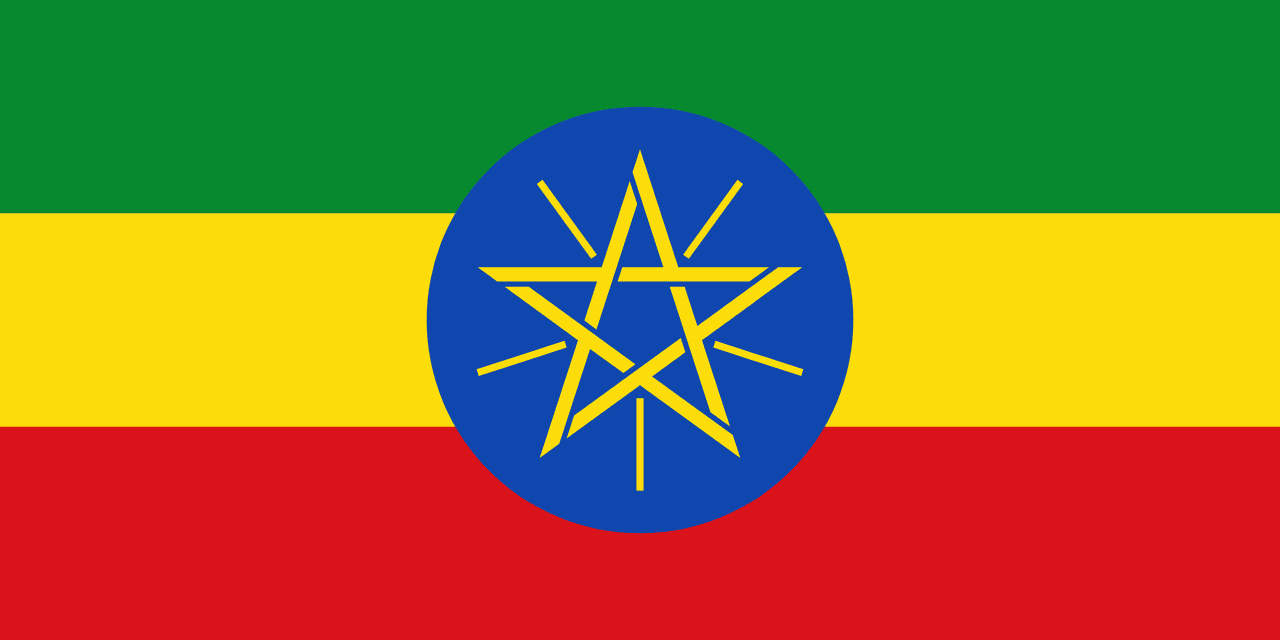
Ethiopia is a country that quietly breaks almost every assumption you bring to it. It runs on its own clock and its own calendar, it gave the world coffee, and it carved entire churches downward into solid rock. With around 138.9 million people and the highland capital of Addis Ababa at its heart, Ethiopia is a place where ancient and modern collide in the most unexpected ways.
1. It Never Fell to European Colonizers
Among all the nations of Africa, Ethiopia holds a singular distinction: it was never permanently colonized by a European power. In 1896, Emperor Menelik II's forces decisively defeated an invading Italian army at the Battle of Adwa, a victory that stunned the world and made Ethiopia a beacon of independence and pride across the continent and the African diaspora. Italy occupied the country briefly under Mussolini between 1936 and 1941, but this was a wartime occupation rather than a colonial conquest, and Ethiopian resistance never ceased. This unbroken sovereignty shaped a fiercely independent national identity, preserved indigenous institutions, and is why Ethiopia's flag colors inspired so many other African nations after independence.
2. The Country Runs Seven to Eight Years "Behind"
If you arrive in Ethiopia expecting it to be 2026, prepare for a surprise. Ethiopia uses its own calendar, which runs roughly seven to eight years behind the Gregorian system used by most of the world. It has 13 months: twelve months of 30 days each, plus a short thirteenth month of five or six days. This is why Ethiopian tourism has cheerfully been promoted with the slogan "13 months of sunshine." Time of day is reckoned differently too, with the clock often starting at dawn rather than midnight. Far from being a mere quirk, the calendar is tied to the ancient Ethiopian Orthodox Church and remains in everyday official and religious use throughout the country.
3. Coffee Was Born Here
Ethiopia is the original homeland of coffee, and the plant Coffea arabica still grows wild in its forests. Legend tells of a goatherd named Kaldi who noticed his goats becoming energetic after nibbling red berries from a certain shrub. Whatever the truth of the tale, coffee is woven into the fabric of daily life. The traditional Ethiopian coffee ceremony is an unhurried ritual of roasting green beans over coals, grinding them by hand, and brewing the coffee in a clay pot called a jebena, served in three rounds to guests. Coffee is also a pillar of the economy, one of the country's most valuable exports. To learn more, see our country guide.
4. Addis Ababa Sits Among the Clouds
Ethiopia's capital, Addis Ababa, is one of the highest capital cities in the world, perched at roughly 2,355 meters (about 7,700 feet) above sea level. Its name means "new flower" in Amharic, chosen by Empress Taytu Betul in the late 19th century. Today it is the largest city in the country and a true diplomatic hub: it hosts the headquarters of the African Union and the UN Economic Commission for Africa, earning it the nickname "the political capital of Africa." The high altitude gives Addis a remarkably mild, spring-like climate year round, despite sitting not far from the equator.
5. A Land of Highlands and the Lowest Place on Earth
Ethiopia's geography is staggeringly varied. The rugged Ethiopian Highlands, sometimes called the "Roof of Africa," contain the largest area of high ground on the continent, with peaks soaring above 4,500 meters. At the opposite extreme lies the Danakil Depression in the Afar region, one of the hottest and lowest places on the planet, dropping below sea level and studded with bubbling sulfur springs, salt flats, and the lava lake of the Erta Ale volcano. The country is also where the Blue Nile begins, flowing out of Lake Tana before joining the White Nile in Sudan. Few nations pack so many landscapes into one territory.
6. The Churches Carved Out of Solid Rock
In the town of Lalibela stand eleven medieval churches, each one chiseled downward into the living volcanic rock rather than built up from blocks. Constructed around the 12th and 13th centuries under King Lalibela, they were intended as a "New Jerusalem" for Ethiopian Christians who could not travel to the Holy Land. The most famous, Bete Giyorgis (the Church of Saint George), is cut in the shape of a cross and remains an active place of worship and pilgrimage. A UNESCO World Heritage Site, Lalibela is one of the great engineering and spiritual achievements of the medieval world and a defining symbol of Ethiopia.
7. Over 80 Languages and a Unique Script
Ethiopia is extraordinarily diverse, home to more than 80 distinct languages spoken across its many ethnic groups. Amharic serves as a federal working language, while Oromo, Tigrinya, Somali, and Afar are spoken by millions more. Remarkably, Amharic and several related languages are written in their own ancient script called Ge'ez (or Fidel), an abugida of more than 200 characters that is one of the few indigenous writing systems still in active use in Africa. This linguistic and cultural mosaic is reflected in the country's federal structure, which is organized largely along ethno-linguistic lines, giving regions significant cultural autonomy.
8. Injera and the Art of Eating Together
No fact list about Ethiopia is complete without its food. The national staple is injera, a large, spongy, slightly sour flatbread made from a tiny indigenous grain called teff. Injera doubles as both plate and utensil: diners tear off pieces and use them to scoop up an array of spicy stews known as wot, often piled directly onto a shared platter. The fiery red doro wot, a chicken stew seasoned with the spice blend berbere, is a celebrated favorite. Meals are communal affairs, and an affectionate gesture called gursha, feeding a morsel to someone else by hand, expresses friendship and respect at the table.
9. Wildlife Found Nowhere Else on Earth
The isolation of Ethiopia's highlands has produced remarkable endemic species. The gelada, sometimes called the "bleeding-heart baboon" for the bright patch of skin on its chest, lives only in the Ethiopian highlands and grazes on grass in herds that can number in the hundreds, a behavior unique among primates. The Ethiopian wolf, found in the Bale and Simien Mountains, is Africa's most endangered carnivore, with only a few hundred individuals remaining. The Walia ibex, a sure-footed wild goat, clings to the cliffs of the Simien Mountains. These creatures make Ethiopia a priority for conservationists worldwide.
10. The Cradle of Humankind and a Famous Ancestor
Ethiopia may be one of the most important places on Earth for understanding our own origins. In 1974, scientists in the Afar region discovered the fossilized remains of a 3.2-million-year-old human ancestor, Australopithecus afarensis, nicknamed "Lucy" (and known locally as Dinkinesh, meaning "you are marvelous"). For decades Lucy was among the most complete early hominin skeletons ever found, reshaping our understanding of how our ancestors walked upright. The region has continued to yield extraordinary finds, cementing Ethiopia's reputation as part of the "cradle of humankind." You can also explore the nation's symbolism through its flag.
Frequently Asked Questions
What is the capital of Ethiopia?
The capital is Addis Ababa, whose name means "new flower" in Amharic. Sitting around 2,355 meters above sea level, it is one of the highest capital cities in the world and serves as the headquarters of the African Union, making it a major diplomatic center for the entire continent.
What is Ethiopia most famous for?
Ethiopia is famous for being the birthplace of coffee, for never being colonized by a European power, and for the rock-hewn churches of Lalibela. It is also renowned for its distinctive cuisine built around injera, its world-class long-distance runners, and the fossil "Lucy," one of humanity's oldest known ancestors.
Why does Ethiopia have a different calendar and time?
Ethiopia follows its own ancient calendar tied to the Ethiopian Orthodox Church, which runs about seven to eight years behind the Gregorian calendar and has 13 months. Many Ethiopians also tell time on a 12-hour clock that begins at dawn, so converting visitors should always double-check both the date and the hour.
Conclusion
From rock churches and endemic wolves to its own calendar and the very origins of coffee, Ethiopia rewards anyone curious enough to look closer. It is a country with a fiercely independent spirit, breathtaking landscapes, and a cultural depth measured not in centuries but in millennia. These ten facts are only a starting point for one of the most fascinating nations on Earth.