
France is the kind of country that seems to have a little of everything: snow-capped Alpine peaks, lavender-scented Mediterranean coastlines, medieval villages, and the busiest tourist city on Earth. It is a place where a 2,000-year-old Roman aqueduct can stand a short drive from a rocket launch site, and where lunch is treated with the seriousness of a national institution. Here are ten genuinely fascinating facts that go far beyond the postcard image of the Eiffel Tower.
1. It Is the Largest Country in the European Union
Measured by total area, metropolitan France covers roughly 551,000 square kilometres, making it the largest nation entirely within the European Union. Its nickname, l'Hexagone (the Hexagon), comes from its roughly six-sided shape, and the French often use the word as shorthand for the country itself. That landmass packs in astonishing variety: the Alps and Pyrenees mountain ranges, the volcanic peaks of the Massif Central, the vineyards of Bordeaux and Burgundy, and a coastline touching both the Atlantic Ocean and the Mediterranean Sea. France also stretches well beyond Europe through its overseas territories, which means the country technically borders Brazil in South America via French Guiana.
2. Paris Is Surprisingly Compact
Paris, the capital, is one of the most densely populated cities in Europe, yet the city proper is tiny compared to sprawling metropolises like London. The historic core fits inside the boulevard périphérique ring road and is divided into 20 spiralling districts called arrondissements, which wind outward from the centre like a snail's shell. Despite its small footprint, Paris contains some of the world's most visited museums, including the Louvre, home to the Mona Lisa. Roughly two million people live within the city limits, but the wider metropolitan region holds well over ten million, making it the beating heart of French political, cultural, and economic life.
3. France Receives More Tourists Than It Has People
France is consistently the most visited country on the planet, welcoming somewhere in the region of 80 to 90 million international visitors in a typical year, comfortably more than its own population of around 67 million people. Visitors come for the Riviera beaches, the chateaux of the Loire Valley, the ski resorts of the Alps, and of course the romance of Paris. Tourism is a huge pillar of the economy, but it also reveals something about French identity: the country sees itself as a custodian of art, beauty, and the good life, and it has spent centuries cultivating that reputation. You can learn more in our country guide.
4. The French Take Their Language Very Seriously
French is the official language, and its guardianship is institutional. The Académie française, founded in 1635, is a council of writers and intellectuals known as les immortels who advise on correct usage and try to keep the language pure, sometimes inventing French alternatives to imported English words. French is spoken by hundreds of millions of people worldwide and is an official language of the United Nations, the European Union, and the Olympic movement. This global reach is a legacy of France's colonial history, and today French remains a first or second language across large parts of Africa, Canada, and the Caribbean.
5. The French Revolution Reshaped the Modern World
In 1789, the storming of the Bastille prison in Paris ignited the French Revolution, one of the most consequential events in modern history. Out of the upheaval came the Declaration of the Rights of Man and of the Citizen and the enduring national motto, Liberté, Égalité, Fraternité (Liberty, Equality, Fraternity). The Revolution toppled the monarchy, introduced ideas about citizenship and human rights that spread across Europe and beyond, and even reformed the calendar and the system of measurement, giving the world the metric system. Bastille Day, celebrated every 14 July with fireworks and a grand military parade down the Champs-Élysées, remains France's national holiday.
6. Cheese Is Almost a National Religion
France produces an enormous variety of cheeses, with estimates ranging from several hundred to over a thousand distinct types depending on how you count. President Charles de Gaulle once famously quipped about the difficulty of governing a country with so many cheeses. From creamy Brie and pungent Roquefort to the Alpine Comté and the soft Camembert of Normandy, cheese is woven into daily life and is traditionally served as its own course at the end of a meal, before dessert. French gastronomy as a whole was so revered that UNESCO added the "gastronomic meal of the French" to its list of intangible cultural heritage, recognising the rituals of dining as much as the food itself.
7. Wine Country on a Grand Scale
France is one of the world's largest and most prestigious wine producers, and its regions read like a list of the most famous labels on Earth: Bordeaux, Burgundy, Champagne, the Rhône Valley, and the Loire. The very word Champagne is legally protected, meaning only sparkling wine produced in that specific northern region using traditional methods can carry the name. French winemakers pioneered the concept of terroir, the idea that a wine expresses the unique soil, climate, and geography of the place it comes from. Wine is so embedded in the culture that it appears at family dinners, business lunches, and celebrations alike.
8. The Mont Blanc Crowns Western Europe
Straddling the border between France and Italy, Mont Blanc rises to roughly 4,800 metres, making it the highest mountain in the Alps and in Western Europe. Its name means "White Mountain," a nod to its permanent snow and ice. The surrounding region around Chamonix is the spiritual home of mountaineering and hosted the very first Winter Olympic Games in 1924. France's landscapes are remarkably diverse for a single nation: alongside Alpine glaciers you will find the wild wetlands of the Camargue, where pink flamingos, black bulls, and famous white horses roam, and the lavender fields of Provence that turn vast stretches of the south purple each summer.
9. An Engineering and Aerospace Power
France has one of the largest economies in the world and is a leader in high technology and engineering. It is a key partner in Airbus, the aircraft manufacturer that rivals Boeing, and it operates Europe's main spaceport in French Guiana, from which the Ariane rockets launch. France is also one of the most nuclear-powered nations on Earth, generating a very large share of its electricity from nuclear plants. Its high-speed TGV trains can travel at over 300 kilometres per hour, knitting distant cities together in just a few hours. From luxury fashion houses to pharmaceuticals, the French economy blends old-world craftsmanship with cutting-edge industry.
10. The Tricolour and Its Symbolism
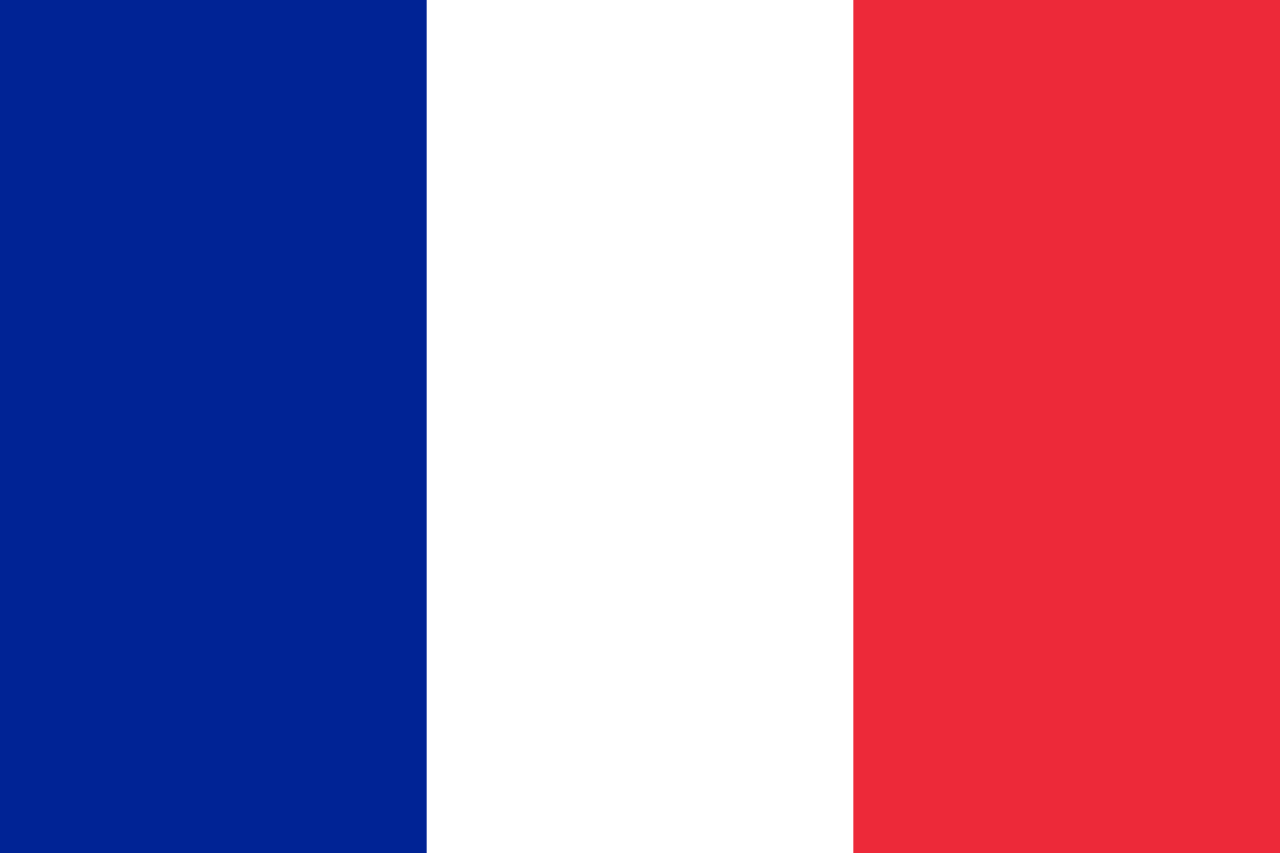
The French national flag, known as the Tricolore, features three vertical bands of blue, white, and red. It emerged during the French Revolution, combining the white of the royal house with the blue and red traditionally associated with the city of Paris, symbolising the union of the monarchy and the people. The design has since influenced the flags of many other nations around the world. You can read more about its history and meaning in our piece on the flag of France. The rooster, or coq gaulois, is another beloved national emblem, often seen on French sports jerseys.
Frequently Asked Questions
What is the capital of France?
The capital of France is Paris, located in the north-central part of the country on the River Seine. It is the nation's political, economic, and cultural centre, home to landmarks such as the Eiffel Tower, the Louvre, and Notre-Dame Cathedral, and it is the most visited city in the world.
What is France most famous for?
France is famous for an extraordinary range of things: the Eiffel Tower and the city of Paris, its world-class cuisine and wine, high fashion and luxury brands, art museums and historic chateaux, the French Revolution, and beautiful landscapes ranging from the Alps to the Mediterranean Riviera.
Why does France have so many cheeses?
France's huge diversity of cheeses comes from its varied geography and long farming traditions. Different regions developed their own cheeses based on local climate, soil, and the milk of cows, goats, or sheep raised there. Strict regional protections, similar to those for wine, help preserve these traditional methods.
Conclusion
France is far more than the romantic clichés suggest. It is a country of soaring mountains and sun-baked coastlines, of revolutionary ideas and ancient traditions, of rocket launches and centuries-old cheese caves. Whether you are fascinated by its history, drawn to its cuisine, or simply dreaming of a stroll along the Seine, France rewards every bit of curiosity you bring to it. These ten facts are only the beginning of a much larger story waiting to be explored.