
Ghana is a country that wears its history and its hospitality on its sleeve, a place where the name itself was borrowed from a medieval empire and where strangers are greeted with the phrase "akwaaba" — you are welcome. Stretching from sun-baked northern savannah to humid Atlantic surf, it packs gold, cocoa, drumming, kente cloth, and a deep well of pan-African pride into a relatively compact corner of West Africa. Here are ten genuinely interesting facts that go far beyond the textbook.
1. It Was the First Sub-Saharan Nation to Break Free
On 6 March 1957, Ghana became the first country in sub-Saharan Africa to win independence from colonial rule, led by the charismatic Kwame Nkrumah. The moment was electric: Nkrumah stood before a midnight crowd in Accra and declared that Ghana's freedom was "meaningless" unless linked to the total liberation of the African continent. That speech turned the new nation into a beacon for the wider independence movement, and leaders and activists from across Africa and the diaspora flocked to Accra in the years that followed. Ghana also deliberately took its name from the ancient Ghana Empire — a powerful medieval trading state that actually lay further north and west — as a proud nod to a great African past predating European arrival.
2. It Sits Closer to the "Centre of the World" Than Anywhere Else
Look at a globe and you'll find that the Prime Meridian (0° longitude) and the Equator (0° latitude) intersect in the Atlantic Ocean just off Ghana's southeastern coast, near the city of Tema. Because of this, Ghana is often playfully described as the country nearest to the geographical "centre" of the world, where latitude and longitude both read zero. The Greenwich meridian runs right through the country, so when you stand in parts of Ghana you are standing on the line from which the world measures its time and longitude. For a deeper dive into the nation's landscapes and regions, see our country guide.
3. Lake Volta Is One of the Largest Man-Made Lakes on Earth
When the Akosombo Dam was completed across the Volta River in 1965, it created Lake Volta — by surface area one of the largest reservoirs ever built by humans, sprawling across a huge swathe of eastern Ghana. The lake transformed the country, supplying hydroelectric power that helped industrialise the young nation and powering aluminium smelting. It also reshaped daily life: ferries now glide where farmland once stood, and fishing communities thrive along its enormous, branching shoreline. The lake stretches hundreds of kilometres from south to north, making boat travel a practical way to move between regions that road networks struggle to connect.
4. Accra Is a Buzzing, Coastal Capital
Accra, Ghana's capital, hugs the Gulf of Guinea and is the country's political, commercial, and cultural engine. It's a city of contrasts — sleek office towers and bustling markets, beachfront nightlife and quiet colonial-era forts. The sprawling Makola Market is a sensory overload of traders, textiles, and street food, while Independence Square (Black Star Square) hosts national celebrations beneath a giant arch crowned with a black star, Ghana's enduring symbol of African emancipation. Accra is also a magnet for the global African diaspora, especially around the annual "Year of Return" style homecoming events that draw visitors tracing their ancestry back to West Africa.
5. Home to Around 35 Million People and Dozens of Ethnic Groups
Ghana is home to roughly 35 to 36 million people drawn from more than 70 ethnic groups, each with its own customs, festivals, and dialects. The Akan peoples — including the Ashanti and Fante — form the largest grouping, followed by the Mole-Dagbani in the north, the Ewe in the southeast, and the Ga-Dangme around Accra. Despite this diversity, Ghana is widely regarded as one of West Africa's most stable and peaceful democracies, with peaceful transfers of power between rival parties. Ghanaians are also famously friendly: visitors routinely remark on the warmth of greetings and the genuine ease of striking up conversation.
6. English Unites a Country That Speaks Many Tongues
English is Ghana's official language, a legacy of British colonial rule that now serves as the practical glue binding together dozens of indigenous languages. In everyday life, though, you'll hear Akan (especially Twi) spoken widely, alongside Ewe, Ga, Dagbani, and many others. Twi in particular functions almost as a national lingua franca in markets and on the street. This multilingual reality means many Ghanaians comfortably switch between three or four languages in a single day. Language is closely tied to identity here, and proverbs — often delivered in Akan — carry deep cultural weight in storytelling, governance, and everyday wisdom.
7. The Golden Stool Is a Sacred Symbol No One May Sit On
Among the Ashanti, the Golden Stool (Sika Dwa Kofi) is the most sacred object in the kingdom — believed to embody the very soul of the Ashanti nation. According to tradition, it descended from the sky into the lap of the first Asantehene (king). It is so revered that no one, not even the king, is permitted to sit upon it; it rests on its own throne. When a British governor demanded to sit on it in 1900, it sparked the War of the Golden Stool, a fierce uprising led by the legendary Queen Mother Yaa Asantewaa. The story shows how powerfully symbolism and sovereignty intertwine in Ghanaian culture.
8. Cocoa and Gold Built the Modern Economy
Ghana is one of the world's largest producers of cocoa, the raw ingredient of chocolate, and cocoa beans remain a cornerstone of the rural economy and national exports. The crop was introduced in the late 19th century and quickly became central to Ghanaian farming life. Equally important is gold — so much so that under colonial rule the territory was literally called the "Gold Coast." Ghana ranks among Africa's top gold producers, and more recently offshore oil discoveries have added another pillar to the economy. Together, cocoa, gold, and oil have helped make Ghana one of the more dynamic economies in the region.
9. Kente Cloth and Festivals Showcase a Vibrant Culture
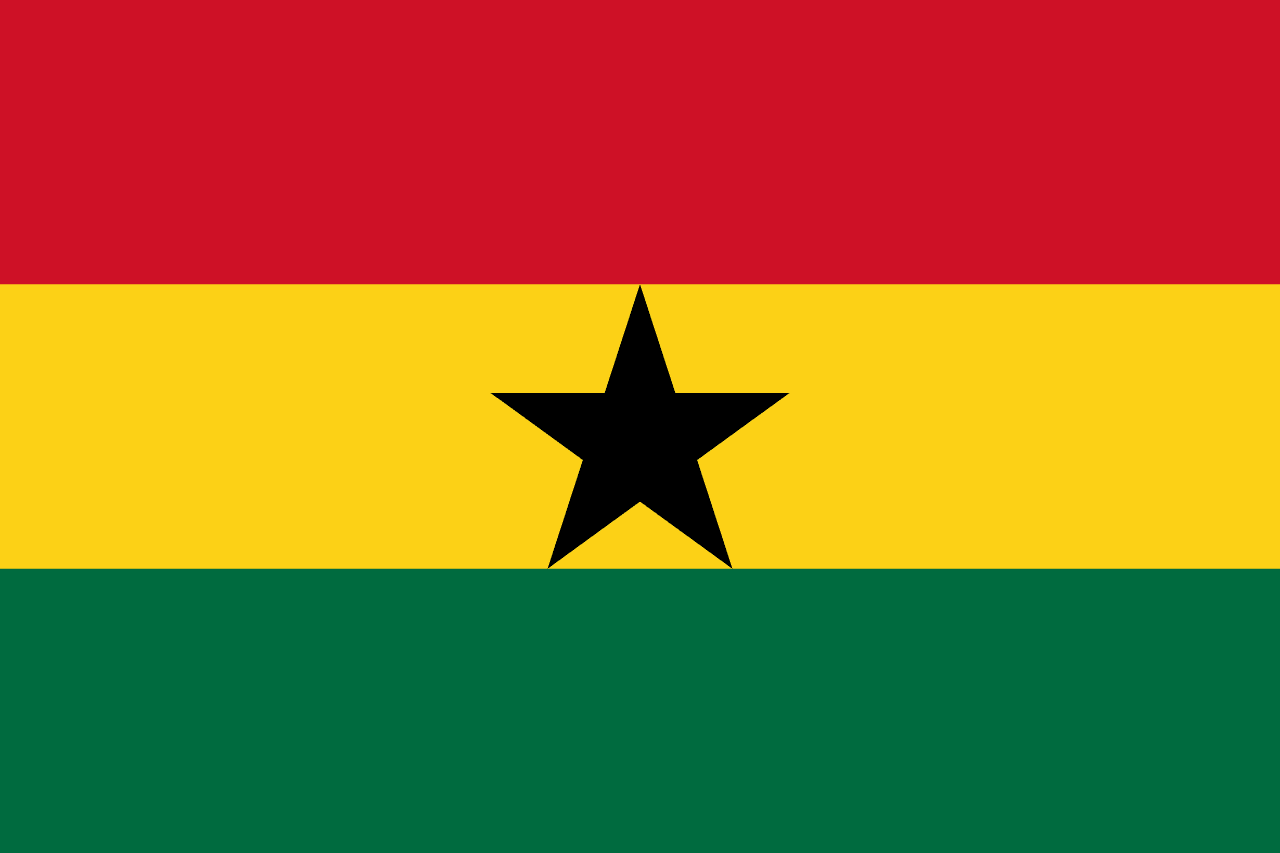
Few textiles are as instantly recognisable as kente — the dazzling, handwoven cloth of bold geometric patterns originally reserved for Ashanti royalty. Each colour and pattern carries meaning, and kente has become a global emblem of African heritage, worn at graduations and celebrations far beyond Ghana's borders. The culture also pulses with festivals: Homowo "hoots at hunger" among the Ga, while Akwasidae honours ancestors in the Ashanti calendar. Drumming and dance are woven into ceremony and celebration alike. You can see how these colours echo in the nation's striking red, gold, green, and black banner in our piece on the Ghanaian flag.
10. Jollof Rice and a Friendly Football Rivalry
Ask any Ghanaian about jollof rice and you'll spark a passionate debate — the "Jollof Wars" with Nigeria over who makes the best version of the spiced, tomato-rich one-pot dish are legendary and entirely good-natured. Ghanaian cuisine also champions fufu (pounded cassava and plantain) dipped in rich soups, and kelewele, spicy fried plantain cubes seasoned with ginger and pepper. Beyond the kitchen, football is a national obsession. The Black Stars, Ghana's national team, have thrilled the world at multiple World Cups, most memorably reaching the quarter-finals in 2010 — among the best-ever runs by an African side and a source of immense national pride.
Frequently Asked Questions
What is the capital of Ghana?
The capital of Ghana is Accra, a lively coastal city on the Gulf of Guinea. It is the country's largest urban centre and the hub of its government, business, and cultural life, known for landmarks like Black Star Square and the sprawling Makola Market.
What is Ghana most famous for?
Ghana is famous for being the first sub-Saharan African country to gain independence (in 1957), for its gold and cocoa, for vibrant kente cloth, and for its warm hospitality. It's also celebrated for Lake Volta, the Ashanti kingdom's traditions, and the Black Stars football team.
Why is Ghana called the country closest to the centre of the world?
Because the Prime Meridian (0° longitude) and the Equator (0° latitude) cross in the Atlantic Ocean just off Ghana's coast near Tema. The point where both lines read zero lies closer to Ghana than to any other nation, earning it this fun geographical nickname.
Conclusion
From the midnight birth of African independence to the sacred Golden Stool, from Lake Volta's vast shimmering waters to the simmering pot of jollof rice, Ghana brims with stories that surprise and inspire. It is a nation proud of its past and confident in its identity — welcoming, colourful, and endlessly worth exploring. These ten facts are only an invitation; the real adventure begins when you dig deeper.