
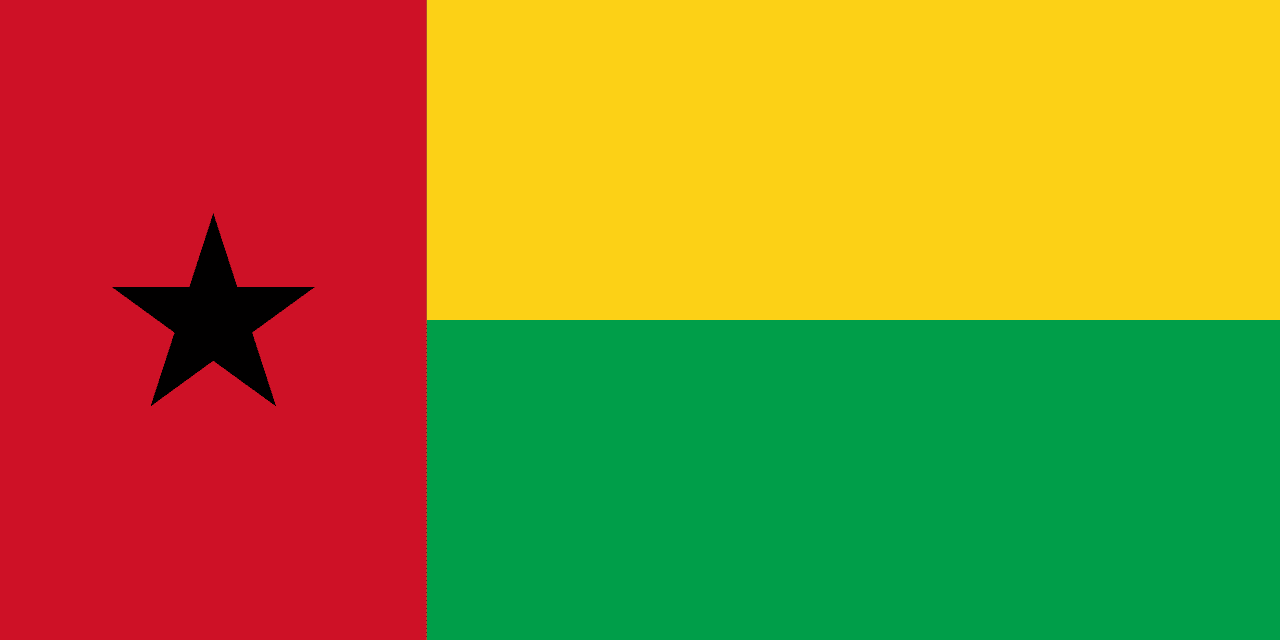
Tucked into the Atlantic coast of West Africa, Guinea-Bissau is one of the continent's smallest and least-visited nations, yet it packs a startling amount of natural beauty, cultural energy, and turbulent history into its modest borders. It is a country of mangrove labyrinths, sacred islands, hippos that swim in the ocean, and a music scene that punches far above its weight. Here are ten genuinely fascinating facts that reveal why this overlooked corner of Africa deserves a second look.
1. It Is Best Known for a Spectacular Maze of Islands
Guinea-Bissau's most defining geographic feature is the Bijagós Archipelago, a scatter of roughly 88 islands and islets just off its low-lying coast. Only about 20 are permanently inhabited, and the entire archipelago was declared a UNESCO Biosphere Reserve in 1996. Tangled with mangroves, palm groves, and tidal flats, these islands shift shape with the tides and have remained remarkably isolated from the modern world.
The waters here support saltwater hippos, sea turtles, dolphins, and one of West Africa's most important wintering grounds for migratory birds. For the curious traveler, the Bijagós feel like a living time capsule of pre-colonial coastal Africa, accessible mostly by boat and largely off the tourist map.
2. Bissau Is the Capital and a Faded Colonial Port
The capital and largest city, Bissau, sits on the estuary of the Geba River and serves as the nation's political, commercial, and cultural heart. Once a fortified Portuguese trading post, the city still wears its colonial past in the crumbling pastel facades of the Bissau Velho (Old Town) district, where weathered Portuguese architecture leans against bustling markets.
Bissau is home to the national government, the main port, and the country's only international airport. It is a low-rise, unhurried city where everyday life spills into the streets. To explore more about the nation's geography and practical details, see our full country guide.
3. Around 2 Million People Call It Home
Guinea-Bissau has a population of roughly 2 million, making it one of West Africa's smaller nations by headcount. The population is strikingly young, with a median age in the late teens, and growth remains rapid. Most people live in rural areas or in and around Bissau, while the interior and the islands remain sparsely settled.
This is a deeply communal society where extended family and village ties shape daily life. Despite economic hardship, Guineans are widely known for warmth and hospitality, and the rhythms of community celebration, shared meals, and music run through both city neighborhoods and remote island villages.
4. Portuguese Is Official, but Almost Everyone Speaks Creole
Although Portuguese is the official language, only a minority speak it fluently in daily life. The true lingua franca is Kriol (Guinea-Bissau Creole), a Portuguese-based creole that emerged from centuries of trade and contact and now binds together the country's many ethnic groups.
Alongside Kriol, dozens of African languages are spoken, including Balanta, Fula, Mandinka, Manjaco, and Papel. This linguistic richness mirrors the nation's ethnic mosaic. Guinea-Bissau is one of only a handful of African countries with Portuguese roots, and it belongs to the global community of Lusophone nations, a legacy still visible in its names, music, and architecture.
5. It Fought One of Africa's Most Influential Independence Wars
Guinea-Bissau's path to nationhood was forged through a long and bloody liberation struggle against Portugal. Led by the revolutionary thinker Amílcar Cabral and his party, the PAIGC, the war became a model studied by independence movements across Africa. Cabral was assassinated in 1973, just months before the country unilaterally declared independence.
Portugal formally recognized that independence in 1974, after a coup in Lisbon. Cabral remains a national hero and an intellectual icon of African liberation. Sadly, the decades since have been marked by coups, political instability, and military interference, giving Guinea-Bissau a reputation as one of the world's most coup-prone states.
6. Cashews Are the Lifeblood of the Economy
Guinea-Bissau is one of the world's largest producers and exporters of cashew nuts, and this single crop dominates the entire economy. Cashews account for the overwhelming majority of export earnings, and for hundreds of thousands of small farmers, the cashew harvest is the year's defining event.
This dependence is a double-edged sword: when global cashew prices are strong, rural incomes rise, but a single bad season can ripple across the whole country. Agriculture, fishing, and subsistence farming sustain most households, and rice remains both a dietary staple and a cultural cornerstone. Diversifying beyond cashews is one of the nation's great economic challenges.
7. The Bijagós Hold Living Animist Traditions
The people of the Bijagós Islands, the Bijagó, maintain one of the most distinctive cultures in West Africa. Their society has historically been semi-matrilineal, with women playing powerful roles in choosing husbands, owning property, and presiding over important rituals.
Animist beliefs remain strong here, woven into elaborate initiation ceremonies, sacred forests, and masked dances featuring carved ox and shark headdresses. These rites mark the passage from youth to adulthood and can span years. While Islam and Christianity are present elsewhere in the country, the islands have preserved their ancestral spiritual world with remarkable resilience, making the Bijagós a treasure of intangible cultural heritage.
8. Rice and Fresh Fish Define the Cuisine
Guinea-Bissauan food is built around rice, palm oil, fresh seafood, and bold West African flavors. The unofficial national dish is jollof-style rice and a rich, slow-simmered caldo, a hearty stew of fish or meat with vegetables. Given the long coastline and river estuaries, fish, oysters, and shrimp feature heavily.
Peanuts and palm oil add depth to many sauces, while tropical fruits like mangoes and cashew apples (the fleshy fruit attached to the cashew nut) are abundant in season. Meals are typically shared from a communal bowl, reinforcing the social bonds at the center of Guinean life. Strong, sweet coffee and locally brewed palm wine round out the table.
9. Hippos That Swim in the Ocean
One of Guinea-Bissau's most astonishing natural wonders lives in Orango National Park within the Bijagós: rare saltwater hippopotamuses. Unlike their freshwater cousins, these hippos have adapted to swim between islands through ocean channels and brackish lagoons, a behavior found in only a few places on Earth.
The country's protected areas also shelter manatees, green sea turtles nesting on island beaches, chimpanzees in the southern forests, and vast flocks of migratory shorebirds. With several national parks covering both coastal and inland habitats, Guinea-Bissau quietly preserves some of the most ecologically significant wetlands in all of West Africa.
10. A Musical Powerhouse Called Gumbe
For such a small nation, Guinea-Bissau has an outsized musical identity. Its signature genre, gumbe, blends roughly ten of the country's folk music traditions into an infectious, polyrhythmic sound that became the soundtrack of independence and national pride.
Music here is inseparable from celebration, protest, and storytelling, often sung in Kriol so that everyone can join in. Carnival in Bissau, with its drumming, masks, and dance, showcases this living tradition every year. The flag of the nation, with its black star and pan-African colors, often appears in these festivities; learn more in our guide to the flag of Guinea-Bissau.
Frequently Asked Questions
What is the capital of Guinea-Bissau?
The capital is Bissau, a port city on the Geba River estuary. It is the country's largest city and its political, commercial, and cultural center, known for the faded Portuguese colonial architecture of its Old Town and its lively street markets.
What is Guinea-Bissau famous for?
Guinea-Bissau is best known for the stunning Bijagós Archipelago and its UNESCO Biosphere Reserve, for being one of the world's top cashew exporters, and for its rich music tradition of gumbe. It is also remembered for Amílcar Cabral's influential independence struggle against Portugal.
Is it true that hippos in Guinea-Bissau swim in the sea?
Yes. In Orango National Park in the Bijagós Islands, rare saltwater-adapted hippopotamuses swim through ocean channels and brackish lagoons between islands. This unusual behavior makes them one of the only known populations of marine-swimming hippos in the world.
Conclusion
Guinea-Bissau may be small and rarely make headlines, but it rewards anyone willing to look closer. From ocean-swimming hippos and labyrinthine islands to a revolutionary history, a cashew-driven economy, and the irresistible beat of gumbe, this West African nation brims with surprises. It stands as a reminder that some of the world's most remarkable stories are found in its most overlooked places.
