
Haiti is a country that defies easy summary: it gave the world the first successful slave revolution, the only nation born from one, yet it remains one of the most misunderstood places in the Western Hemisphere. Occupying the western third of the island of Hispaniola, it is a land of dramatic mountains, vibrant art, and a history so bold it terrified empires. These ten facts go far beyond the headlines to reveal a nation of remarkable resilience and culture.
1. The Name "Haiti" Means "Land of High Mountains"
When the indigenous Taino people called their island Ayiti, they were describing exactly what they saw: a rugged, mountainous landmass dominating the Caribbean. Mountains cover roughly two-thirds of Haiti, and the name proved fitting. The Massif de la Selle in the south rises to Pic la Selle, the country's highest point at about 2,680 meters (8,793 feet). This vertical terrain has shaped everything from settlement patterns to farming, with steep slopes making large-scale agriculture difficult. To learn more about how geography defines the nation, see our Haiti country guide. The mountains also create striking microclimates, where cool highland villages sit just kilometers from sweltering coastal plains.
2. It Was the First Black-Led Republic and the First to Permanently Abolish Slavery
In 1804, after a 13-year revolution led by formerly enslaved Africans, Haiti declared independence from France, becoming the first nation in the world founded by people who had liberated themselves from slavery. Leaders like Toussaint Louverture and Jean-Jacques Dessalines defeated Napoleon's army, an extraordinary feat that sent shockwaves through every slaveholding society in the Americas. Haiti was the second independent nation in the Western Hemisphere after the United States, and the only one created by a successful slave uprising. This revolutionary legacy is a source of profound national pride, though Haiti paid an enormous price: France later demanded crushing reparations that burdened the economy for over a century.
3. Port-au-Prince Sits in a Dramatic Natural Amphitheater
The capital, Port-au-Prince, sprawls across a bay on the Gulf of Gonave, with the city climbing up surrounding hills into neighborhoods like Petionville. Founded in 1749 under French colonial rule, it became the capital in 1770 and today anchors a metropolitan area of several million people. The city's setting is genuinely beautiful, ringed by mountains and facing the sea, but it also sits near a major fault line. The devastating 2010 earthquake reshaped the city, and rebuilding continues. Port-au-Prince remains the cultural and economic engine of the country, home to the iron market, art galleries, and the rhythms of street life that define Haitian urban energy.
4. Haitians Speak a Language Born from Revolution
While French is one official language, the heartbeat of daily life is Haitian Creole (Kreyol Ayisyen), spoken by virtually the entire population of around 12 million. Creole emerged during the colonial era as enslaved Africans from many language groups blended French vocabulary with West African grammar and structures. For centuries it was dismissed as mere dialect, but in 1987 it became an official language alongside French. Today Creole has its own standardized spelling, literature, newspapers, and radio. It is one of the most widely spoken creole languages on Earth, and learning even a few phrases instantly reveals the warmth of Haitian culture.
5. Vodou Is a Religion, Not a Hollywood Caricature
Few faiths are as misrepresented as Haitian Vodou. Far from the "voodoo dolls" of pop culture, it is a sophisticated spiritual system blending West African traditions, particularly from the Fon and Yoruba peoples, with Catholic elements absorbed during slavery. Practitioners honor lwa (spirits) who serve as intermediaries to a distant creator god. Vodou played a documented role in rallying enslaved people before the revolution, giving it deep patriotic significance. Recognized as an official religion in 2003, it coexists with Catholicism and a growing Protestant presence. Its ceremonies, drumming, and vibrant ritual art form a cornerstone of Haitian cultural identity.
6. The Citadelle Laferriere Is the Largest Fortress in the Americas
Perched atop a 900-meter mountain in northern Haiti, the Citadelle Laferriere is a breathtaking feat of engineering and a UNESCO World Heritage Site. Built between 1805 and 1820 after independence, it was designed to defend the young nation against a feared French re-invasion that never came. The massive stone fortress could house thousands of soldiers and still bristles with hundreds of cannons. Together with the nearby Sans-Souci Palace, it stands as a monument to Haitian determination to remain free. The climb to reach it rewards visitors with sweeping views and a tangible sense of the ambition that fueled the world's first free Black nation.
7. Haitian Art Is World-Famous for Its Color and Energy
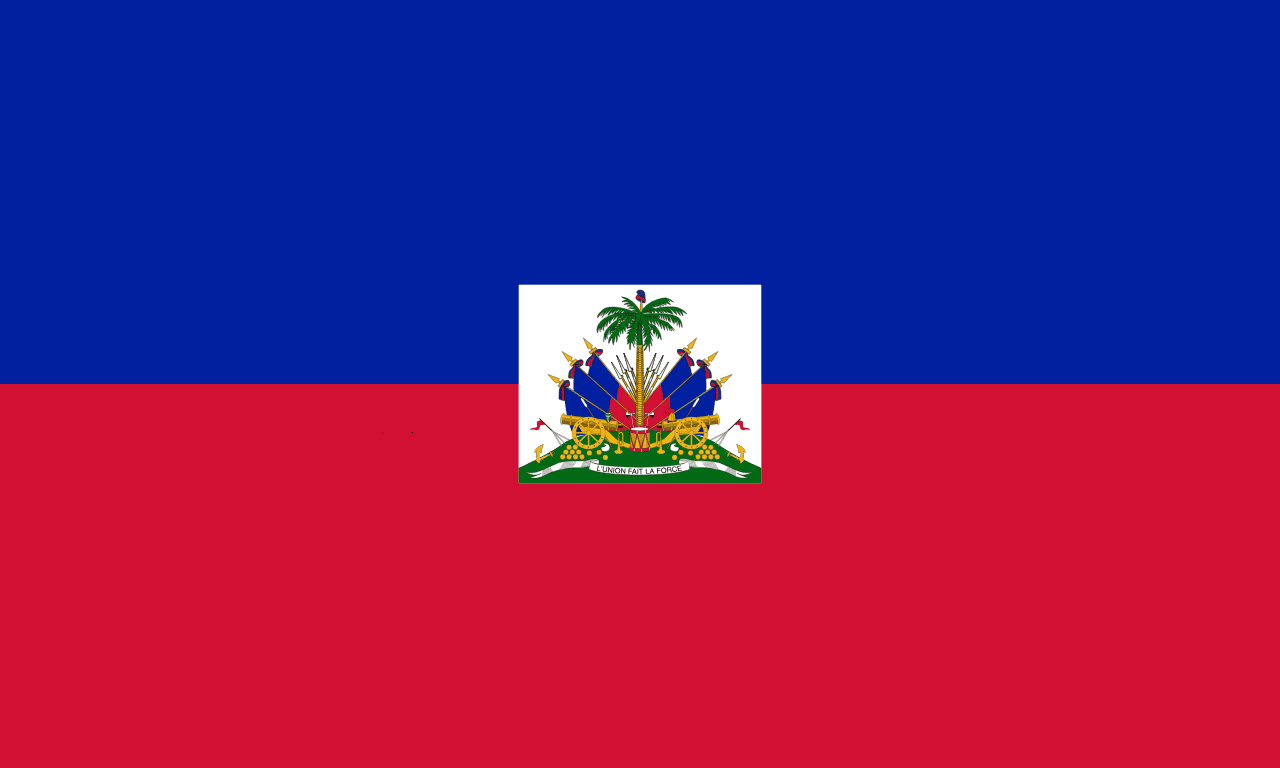
Haiti punches far above its weight in the art world. A distinctive "naive" or "primitive" painting movement flourished from the mid-20th century, producing brilliantly colored canvases of village life, markets, and spiritual scenes that now hang in museums worldwide. Equally celebrated are the metalwork sculptures of Croix-des-Bouquets, where artisans hammer recycled oil drums into intricate flattened-steel art, and the dazzling sequined Vodou flags called drapo. Haiti's artistic tradition extends to its flag, whose blue and red bands symbolize unity between Haitians of African and mixed descent. Creativity here is not a luxury; it is a national language of resilience.
8. Griot and Pikliz Define a Bold, Spicy Cuisine
Haitian food is one of the Caribbean's most flavorful and underrated cuisines. The unofficial national dish, griot, features chunks of pork marinated in citrus and spices, then braised and fried until crisp. It is almost always served with pikliz, a fiery pickled slaw of cabbage, carrots, and Scotch bonnet peppers that delivers serious heat. Other staples include diri ak djon djon (rice cooked with rare black mushrooms that turn it dark and earthy), savory soup joumou (pumpkin soup), and fritters called akra. Soup joumou carries special meaning: once forbidden to the enslaved, it is now eaten every January 1st to celebrate independence.
9. The Country Faces Severe Deforestation, but Hope Persists
Decades of charcoal production, fuel needs, and farming have left Haiti with a fraction of its original forest cover, a stark contrast vividly visible from the air along the border with the Dominican Republic. This deforestation worsens erosion, flooding, and landslides on the steep terrain. Yet the story is not only one of loss. Pockets of biodiversity survive in protected zones like Pic Macaya and La Visite national parks, home to rare birds, frogs, and the Hispaniolan endemic plants found nowhere else. Grassroots reforestation and conservation efforts, often led by Haitian communities and farmers, are working to restore the green landscapes the Taino once admired.
10. Soccer and Compas Music Unite the Nation
Two passions bind Haitians together: football and music. Haiti famously qualified for the 1974 FIFA World Cup, and striker Manno Sanon scored a stunning goal against Italy's legendary goalkeeper Dino Zoff, ending his record shutout streak, a moment still treasured nationally. On the airwaves, kompa (compas) reigns supreme. This smooth, danceable genre, pioneered by saxophonist Nemours Jean-Baptiste in the 1950s, blends merengue rhythms with jazz and big-band flair. Whether at a street party or a packed stadium, the combination of football fervor and irresistible kompa beats captures the joyful, communal spirit that endures through every challenge Haiti faces.
Frequently Asked Questions
What is the capital of Haiti?
The capital of Haiti is Port-au-Prince, located on the Gulf of Gonave. Founded in 1749, it became the capital in 1770 and is the country's largest city and main economic, political, and cultural center, with a metropolitan population in the millions.
What is Haiti famous for?
Haiti is most famous for being the world's first independent Black republic and the only nation born from a successful slave revolution, declaring independence in 1804. It is also renowned for its vibrant art, Haitian Creole language, Vodou spiritual traditions, the Citadelle Laferriere fortress, and spicy cuisine like griot.
Why do Haitians eat pumpkin soup on New Year's Day?
Soup joumou (pumpkin soup) was once a delicacy enslaved Haitians were forbidden to eat under French rule. After independence on January 1, 1804, free Haitians made it a tradition to eat the soup every New Year's Day, transforming it into a powerful symbol of freedom and dignity.
Conclusion
Haiti is a nation of firsts, of fierce pride, and of extraordinary creativity carved out of difficult terrain and an even more difficult history. From the mountains that gave it its name to the kompa beats that fill its streets, Haiti rewards anyone willing to look past the headlines. These ten facts only begin to capture a country whose story changed the course of human freedom, and whose culture continues to inspire the world.