
India is a country that refuses to be summarized. In a single afternoon you can travel from snow-dusted Himalayan passes to palm-fringed tropical beaches, hear a dozen mutually unintelligible languages, and eat food so regionally distinct it feels like crossing borders without moving. Here are ten facts that capture why this South Asian giant is one of the most endlessly fascinating places on Earth.
1. It Is the World's Most Populous Country
In 2023, India officially overtook China to become the most populous nation on the planet, home to roughly 1.4 to 1.5 billion people. That means more than one in every six humans alive today is Indian. What makes this even more striking is how young the country is: a large share of the population is under 30, giving India one of the largest workforces and consumer markets in history. This "demographic dividend" is reshaping global economics, technology, and culture. Managing the needs of so many people, across cities, villages, and everything in between, is one of the great administrative challenges and achievements of the modern world.
2. It Is the World's Largest Democracy
India holds the title of the largest democracy on Earth, and its general elections are a logistical marvel. Hundreds of millions of voters cast ballots across the country, with electronic voting machines carried to the most remote corners, sometimes by foot, boat, or even elephant, so that no eligible citizen is left out. Election rules require that no voter should have to travel more than two kilometers to reach a polling station, leading to famous cases where officials trek for days to set up a booth for a single voter. The sheer scale and inclusiveness of the process make Indian elections a genuine wonder of civic organization.
3. New Delhi Sits Inside an Ancient Layered City
New Delhi, the capital, is technically a planned city designed under British rule in the early 20th century, but it is wrapped around Old Delhi and centuries of earlier settlements. Historians often say Delhi has been built and rebuilt many times over, with successive empires leaving forts, tombs, and monuments scattered across the metropolis. You can stand near the colonial-era India Gate, then drive minutes to the Mughal-era Red Fort or the 12th-century Qutub Minar. To dig deeper into the country's regions and cities, see our country guide.
4. It Has 22 Official Languages and Hundreds More
India does not have a single national language. Instead, the constitution recognizes 22 scheduled languages, including Hindi, Bengali, Tamil, Telugu, Marathi, and Urdu, while English serves as an associate official language widely used in business, courts, and education. Beyond these, hundreds of other languages and thousands of dialects are spoken across the country. Indian currency notes famously display denominations in numerous languages to reflect this diversity. For a traveler, this means the script on a shop sign can change completely from one state to the next, a constant reminder that India is less a single culture than a continent's worth of cultures sharing one nation.
5. The Taj Mahal Was Built for Love
The Taj Mahal in Agra is one of the New Seven Wonders of the World and arguably the most famous building in Asia. It was commissioned in the 17th century by Mughal emperor Shah Jahan as a mausoleum for his beloved wife, Mumtaz Mahal, who died in childbirth. Made of gleaming white marble inlaid with semiprecious stones, the monument is renowned for its perfect symmetry and the way its color appears to shift from soft pink at dawn to dazzling white at midday and golden under the moon. Tens of thousands of artisans and laborers worked on it for over two decades, creating a masterpiece that draws millions of visitors every year.
6. Indian Cuisine Is a Universe of Regional Flavors
There is no single "Indian food." The cuisine splinters into countless regional traditions shaped by climate, religion, and history. In the north you find rich, creamy dishes like butter chicken and breads such as naan, cooked in tandoor ovens. The south leans on rice, coconut, and fermented staples like dosa and idli, often fiery with spice. The west gives you Gujarati thalis and Goan seafood; the east, Bengali fish curries and an obsession with sweets. India is also one of the world's great vegetarian cultures, with a huge portion of the population eating no meat. Spices like turmeric, cardamom, and cumin, traded for millennia, are woven into nearly every meal.
7. It Is the Birthplace of Major World Religions
India is the cradle of four major faiths: Hinduism, Buddhism, Jainism, and Sikhism. Hinduism, one of the oldest living religions, shapes much of Indian art, philosophy, and daily ritual, while Buddhism spread from India across much of Asia. The country is also home to enormous Muslim and Christian populations and significant communities of many other faiths, making it one of the most religiously diverse places on the planet. This spiritual heritage is visible everywhere, from the ghats of Varanasi on the Ganges, where pilgrims have bathed for thousands of years, to the Golden Temple in Amritsar and countless village shrines.
8. Its Landscapes Span the Himalayas to Tropical Coasts
Few countries pack in such geographic extremes. To the north rise the Himalayas, the tallest mountain range on Earth, forming a natural wall along the border. Down the middle flow the great rivers, the Ganges, Brahmaputra, and Indus, feeding fertile plains that have supported civilization for millennia. To the west lies the arid Thar Desert, while the south tapers into a peninsula bordered by the Arabian Sea, Indian Ocean, and Bay of Bengal, fringed with beaches and backwaters. India even includes lush tropical islands and one of the rainiest places on Earth in the northeast, where annual rainfall is measured in meters.
9. Cricket Is Practically a Religion
If you want to understand modern Indian passion, watch a cricket match. The sport, introduced during the colonial era, has become a national obsession that unites a famously diverse country. The Indian Premier League is one of the richest and most-watched sporting competitions in the world, and top players enjoy a level of fame comparable to film stars. Streets empty during major India-Pakistan matches, and children play impromptu games in alleys, fields, and rooftops everywhere. Alongside cricket, India has a deep heritage in field hockey, in which it once dominated the Olympics, as well as traditional sports like kabaddi.
10. It Is a Powerhouse of Technology and Cinema
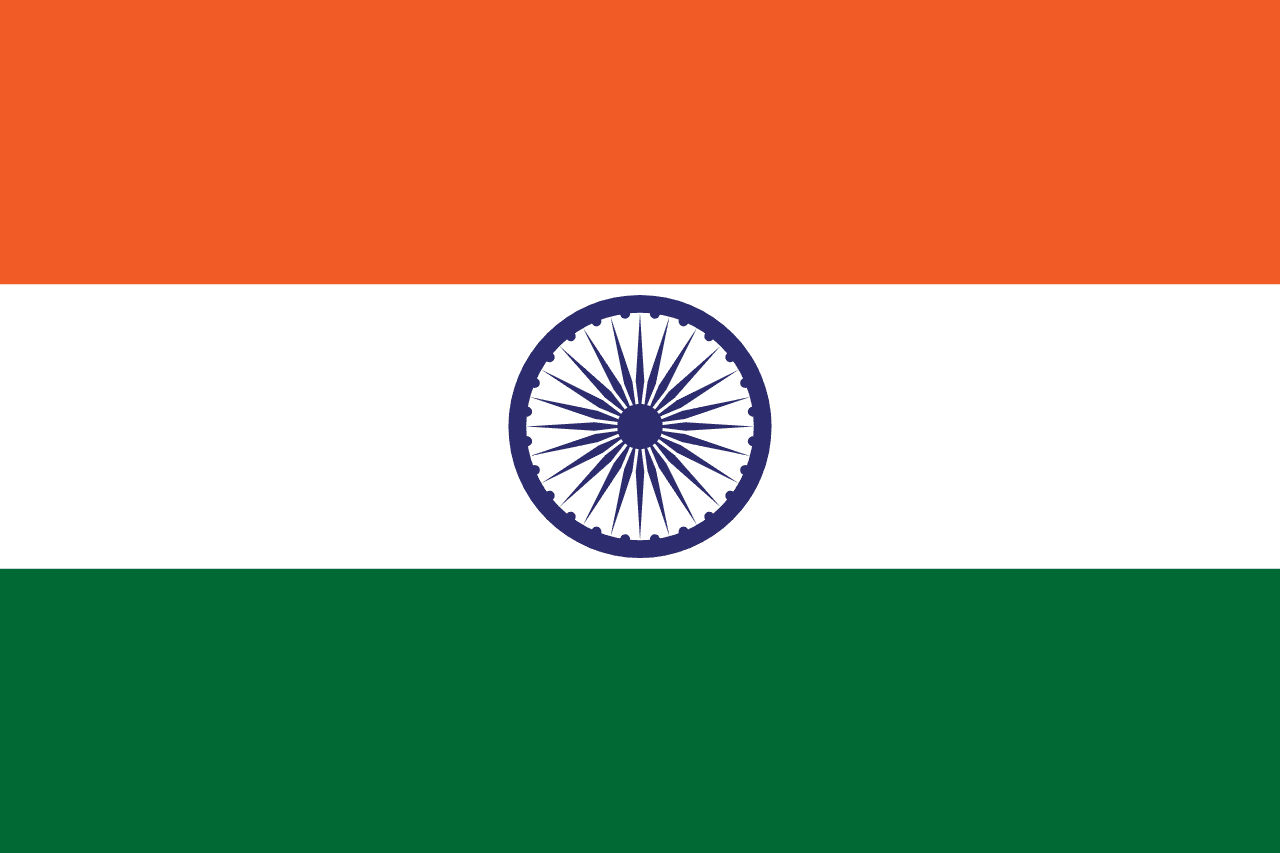
Modern India is a global hub for information technology and software services, with cities like Bengaluru earning the nickname "India's Silicon Valley." Indian engineers and entrepreneurs lead companies and innovations worldwide. The country also runs an ambitious space program and has reached the Moon and Mars on remarkably modest budgets. On the cultural front, India produces more films per year than any other country. Its Hindi-language film industry, Bollywood, is world famous, but it is just one of several thriving regional cinemas. To see the colors and symbolism of the nation in one image, explore the meaning behind the Indian flag.
Frequently Asked Questions
What is the capital of India?
The capital of India is New Delhi, which sits within the larger metropolitan area of Delhi. It serves as the political center of the country, housing the parliament, government offices, and major historical landmarks spanning several empires.
What is India most famous for?
India is famous for many things: the Taj Mahal, its incredibly diverse cuisine, its status as the world's most populous democracy, its rich tapestry of religions and languages, Bollywood cinema, yoga, and a history stretching back to the ancient Indus Valley Civilization.
Why does India have so many languages on its banknotes?
Because no single language is spoken by everyone in India, banknotes display the denomination in numerous languages so that people across different states can read them. It is a small but powerful symbol of the country's commitment to its enormous linguistic diversity.
Conclusion
India is less a single country to learn about than an entire world to explore. From the Himalayas to tropical shores, from ancient temples to cutting-edge tech hubs, and from quiet vegetarian kitchens to roaring cricket stadiums, it rewards curiosity at every turn. These ten facts only scratch the surface, so let them be the start, not the end, of your journey into one of the most remarkable nations on Earth.