
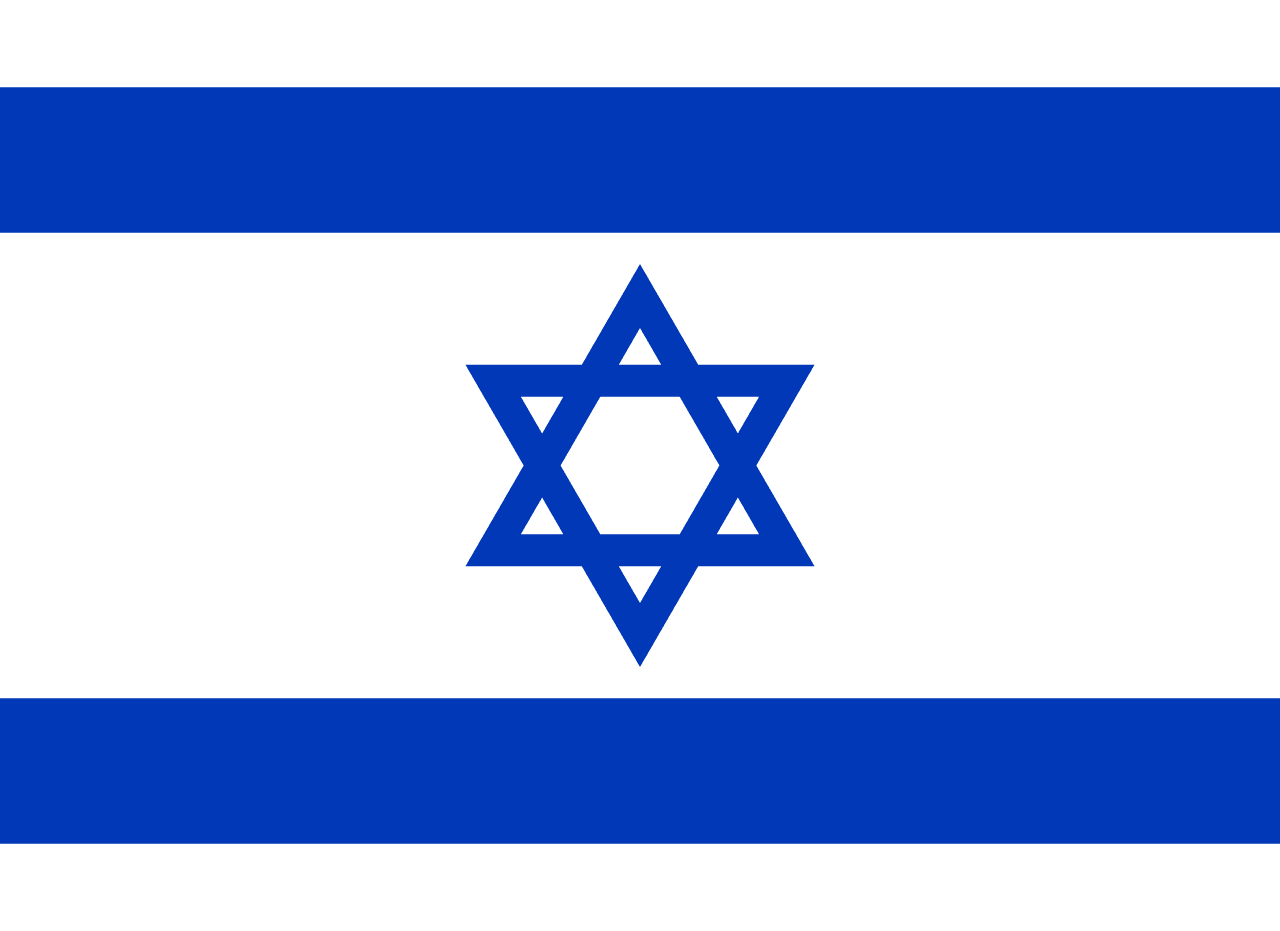
Squeezed into a sliver of land smaller than the U.S. state of New Jersey, Israel packs in snow-capped mountains, scorching deserts, the lowest point on Earth, and three thousand years of layered history. It is a place where ancient stone alleys sit minutes from glass-tower tech campuses, and where the menu, the language, and the landscape can change completely in a single afternoon's drive. Here are ten facts that capture just how remarkable this small, intense, endlessly fascinating country really is.
1. It Borders the Lowest Point on the Planet
The Dead Sea, shared by Israel and Jordan, sits roughly 430 meters (about 1,410 feet) below sea level, making its shoreline the lowest dry land on the surface of the Earth. Its water is so saturated with salt and minerals, around ten times saltier than the ocean, that swimmers cannot sink and instead bob effortlessly on the surface while reading a newspaper. The mineral-rich black mud is harvested for cosmetics, and visitors travel from around the world to float in its waters. Sadly, the Dead Sea is shrinking by more than a meter each year as the Jordan River is diverted upstream, a slow environmental drama unfolding in real time.
2. Jerusalem Is Sacred to Three Major Religions
Jerusalem, Israel's declared capital and seat of government, is one of the oldest continuously inhabited cities on Earth and holds deep significance for Judaism, Christianity, and Islam simultaneously. Within the walls of the Old City you can walk from the Western Wall, the holiest accessible site in Judaism, to the Church of the Holy Sepulchre, traditionally believed to mark the site of Jesus's crucifixion and resurrection, to the Dome of the Rock and Al-Aqsa Mosque, among the most revered sites in Islam, all within a few hundred meters. Few places on the planet concentrate so much spiritual weight into such a compact, walkable space. You can learn more in our country guide.
3. Hebrew Is a Language Brought Back from the Dead
Modern Hebrew is the only example of a once-"dead" language being successfully revived as the everyday spoken tongue of millions. For roughly two thousand years, Hebrew survived mainly as a written and liturgical language, used in prayer and study but not in ordinary conversation. Beginning in the late 19th century, the lexicographer Eliezer Ben-Yehuda spearheaded an extraordinary effort to modernize and resurrect it, coining new words for telephones, ice cream, and newspapers that did not exist in biblical times. Today Hebrew is the mother tongue of a thriving literary, technological, and pop-culture scene, an achievement with no real parallel in human history.
4. It's Nicknamed the "Start-Up Nation"
For a country of roughly 9.6 million people, Israel has an outsized presence in global technology. It hosts one of the highest densities of start-ups and venture capital per capita in the world, and major firms like Intel, Google, and Microsoft run substantial research centers there. Israeli engineers helped develop technologies woven into daily life worldwide, from instant-messaging concepts to USB flash-drive innovations and advanced navigation apps. This innovation culture is fueled by world-class universities, significant defense-related research, and a national temperament that prizes improvisation, informally captured by the Hebrew word chutzpah, a bold, questioning audacity.
5. A Country Where the Weekend Falls on Friday and Saturday
In Israel, the standard workweek runs from Sunday through Thursday, and the weekend lands on Friday and Saturday. This reflects the Jewish Shabbat (Sabbath), which begins at sundown on Friday and ends at nightfall on Saturday. During this time many shops close, public transport in much of the country pauses, and a noticeable calm settles over Jewish neighborhoods. Families gather for festive Friday-night dinners with candles, wine, and braided challah bread. For visitors, the rhythm can be disorienting at first, but it offers a rare glimpse of a modern society that still structures its entire week around an ancient day of rest.
6. Falafel, Hummus, and a Melting-Pot Cuisine
Israeli food is a vibrant fusion shaped by Jewish immigrants who arrived from more than a hundred countries, blending Middle Eastern, North African, Eastern European, and Mediterranean traditions. Street-food staples like falafel and creamy hummus are practically national obsessions, debated and ranked with serious passion. Beyond them you will find shakshuka (eggs poached in spiced tomato sauce), sabich, fragrant Yemenite breads, and a famous abundance of fresh produce at markets like Tel Aviv's Carmel and Jerusalem's Mahane Yehuda. The result is one of the world's most exciting and fast-rising food scenes, celebrated by chefs and travelers alike.
7. From Beaches to Ski Slopes in One Country
Despite its small size, Israel offers astonishing geographic variety. In the far north, Mount Hermon receives enough winter snow to host the country's only ski resort, while a few hours south the Negev Desert stretches across more than half the nation's land area in arid, sculpted beauty. Along the Mediterranean coast, cities like Tel Aviv enjoy warm beaches and a buzzing nightlife, and the Red Sea resort of Eilat draws divers to vivid coral reefs. This compression of climates means an adventurous traveler can theoretically ski in the morning and swim in the sea by afternoon.
8. One of the World's Youngest Modern States
Although the land holds millennia of history, the modern State of Israel is remarkably young, established in 1948. Its founding followed the rise of the Zionist movement, waves of Jewish immigration, the catastrophe of the Holocaust, and a contested British Mandate period. In the decades since, Israel has absorbed millions of immigrants, fought several wars with neighboring states, and developed from a fragile agricultural society into a prosperous, technologically advanced nation. This dramatic and often turbulent transformation within a single human lifetime gives the country a distinctive sense of urgency and reinvention that visitors quickly sense.
9. Pioneering Agriculture in the Desert
Israel turned a serious shortage of water and fertile land into a source of global expertise. Israeli scientists pioneered modern drip irrigation, a method that delivers water directly to plant roots drop by drop, dramatically reducing waste and now used on farms around the world. The country also recycles a remarkably high share of its wastewater for agriculture and operates large desalination plants that convert Mediterranean seawater into drinking water. Thanks to these innovations, the famously dry landscape produces an abundance of fruits, vegetables, and flowers, much of it exported, proving that scarcity can spark some of humanity's most useful ingenuity.
10. The Bahai Gardens Are a Hillside Masterpiece
In the port city of Haifa, the Bahai Gardens cascade down the slopes of Mount Carmel in nineteen meticulously manicured terraces surrounding a golden-domed shrine. A UNESCO World Heritage Site, the gardens are a place of pilgrimage for followers of the Bahai faith and a stunning sight for everyone else, with geometric flowerbeds, fountains, and sweeping views over the bay. They are one of many landmarks that reveal Israel's surprising religious and cultural diversity, which extends well beyond the headlines. The striking colors of the country's banner also carry meaning, explored in our piece on the Israeli flag.
Frequently Asked Questions
What is the capital of Israel?
Israel designates Jerusalem as its capital and the seat of its government, parliament (the Knesset), and supreme court. Jerusalem is also among the oldest and most spiritually significant cities in the world. Tel Aviv, on the Mediterranean coast, serves as the country's main commercial, financial, and cultural hub.
What is Israel famous for?
Israel is famous for the holy city of Jerusalem, the floatable salt water of the Dead Sea, and a thriving "Start-Up Nation" technology sector. It is also known for revived Hebrew, beloved foods like hummus and falafel, pioneering desert agriculture, and a landscape that ranges from Mediterranean beaches to genuine ski slopes.
Can you really float in the Dead Sea?
Yes. The Dead Sea's extreme salt concentration makes the water far denser than your body, so you float effortlessly without any effort to stay up. Bathers are warned not to splash the water in their eyes or shave beforehand, since the briny, mineral-rich water stings intensely on broken skin.
Conclusion
From the lowest point on Earth to snow on Mount Hermon, from a resurrected ancient language to a global tech powerhouse, Israel compresses an extraordinary amount of geography, history, and culture into a tiny footprint. It is a country of contrasts and contradictions, ancient and modern, sacred and secular, where nearly every stone has a story. These ten facts are only the beginning of what makes this small but unforgettable nation so endlessly worth exploring.