
Stretching across the vast steppe of Central Asia, Kazakhstan is the kind of country that defies easy summary. It is enormous, wildly diverse, and dotted with futuristic cities, ancient trade routes, and landscapes that range from frozen mountains to baking desert. Here are ten genuinely fascinating facts that reveal why this Central Asian giant deserves a closer look.
1. It Is the Largest Landlocked Country on Earth
Kazakhstan sprawls across roughly 2.7 million square kilometres, making it the ninth-largest country in the world and, remarkably, the biggest nation with no access to an ocean. To put that in perspective, it is larger than all of Western Europe combined. The country spans two continents, with a small portion west of the Ural River sitting in Europe and the rest in Asia.
This immense size means dramatic variety: snow-capped peaks in the southeast near the Tian Shan range, endless grassy steppe in the centre, and arid deserts in the south. You can read more in our country guide, which maps out the regions in detail.
2. The Capital Is a Futuristic City Rebuilt From Scratch
Kazakhstan moved its capital from Almaty to Astana in 1997, transforming a modest northern town into a gleaming showcase of modern architecture. The city has been renamed several times, most notably to Nur-Sultan and back again to Astana, but its skyline of glass towers and bold designs is unmistakable.
Landmarks include the Bayterek Tower, shaped like a tree holding a golden egg from Kazakh mythology, and the Khan Shatyr, a vast tent-shaped shopping centre that is one of the largest tensile structures in the world. Astana endures brutally cold winters, ranking among the coldest capital cities on the planet.
3. Home to the World's First and Largest Space Launch Site
The Baikonur Cosmodrome, located in southern Kazakhstan, is the oldest and largest operational space launch facility in the world. It was from here that the Soviet Union launched Sputnik, the first artificial satellite, in 1957, and Yuri Gagarin, the first human in space, in 1961.
Although it sits on Kazakh soil, the cosmodrome is leased to and operated by Russia. For decades it served as the sole launch point for crews heading to the International Space Station, cementing Kazakhstan's surprising and outsized role in the history of human spaceflight.
4. A Mosaic of More Than 100 Ethnic Groups
With a population of around 20 million, Kazakhstan is strikingly multi-ethnic. Ethnic Kazakhs form the majority, but the country is also home to large Russian, Uzbek, Ukrainian, Uyghur, Tatar, German, and Korean communities, among many others.
This diversity is partly a legacy of the Soviet era, when entire populations were deported to the Kazakh steppe. Today that mix shapes everyday life, from the languages heard on the street to the food on the table. The country officially promotes harmony among its many groups, and it is common for people to speak several languages fluently.
5. Two Official Languages and a New Alphabet
Kazakh, a Turkic language, is the state language, while Russian holds official status and is widely spoken in business and government. Many citizens move easily between the two, and English is increasingly taught in schools.
In a major cultural shift, Kazakhstan announced plans to transition the Kazakh language from the Cyrillic alphabet to a Latin-based script. The change, intended to strengthen national identity and ease international connection, is being rolled out gradually over years. It is a rare example of a nation deliberately reshaping how it writes its own language in the modern era.
6. The Steppe Was the Birthplace of the Domesticated Horse
Archaeological evidence suggests that horses were first domesticated on the Kazakh steppe more than 5,000 years ago, by the Botai culture. Traces of mare's milk found on ancient pottery point to early herding and even milking of horses.
That deep equestrian heritage still defines Kazakh culture. Horses remain central to traditional life, sport, and cuisine. Nomadic skills are celebrated in fast-paced games like kokpar, a fierce mounted contest fought over a goat carcass, which can feel like a wild fusion of rugby and polo on horseback.
7. A Cuisine Built Around Meat, Milk, and Hospitality
Traditional Kazakh food reflects centuries of nomadic life. The national dish, beshbarmak, meaning "five fingers," is boiled meat, usually horse or lamb, served over flat noodles and traditionally eaten by hand. Kazy, a horse-meat sausage, is a prized delicacy at celebrations.
Equally important are fermented dairy drinks: kumis, made from mare's milk, and shubat, from camel's milk. Hospitality is a sacred value, and guests are often welcomed with tea and a generous spread. Refusing food can be considered impolite, so visitors quickly learn to arrive hungry.
8. The Tragic Shrinking of the Aral Sea
Once one of the largest inland bodies of water on Earth, the Aral Sea, shared with Uzbekistan, has shrunk dramatically since the 1960s after Soviet irrigation projects diverted the rivers feeding it. Whole fishing towns were left stranded miles from the water, with rusting ships marooned on dry seabed.
It stands as one of the planet's worst human-caused environmental disasters. Yet there is hope: a dam project in the northern section has helped restore part of the Kazakh side, bringing back water and fish to areas long given up for lost.
9. Rich in Natural Resources and Rare Wildlife
Kazakhstan is one of the world's leading producers of uranium and holds vast reserves of oil, gas, coal, and minerals. These resources have driven much of its economic growth since independence in 1991, making it the largest economy in Central Asia.
The wild steppe is also home to the saiga antelope, an ancient, snout-nosed creature that survived alongside woolly mammoths. After near-collapse, conservation efforts have helped saiga numbers rebound dramatically. Kazakhstan also shelters snow leopards in its mountains, an animal so revered it appears on the national emblem and currency.
10. The Golden Man and a Symbol on the Flag
One of Kazakhstan's most treasured archaeological finds is the "Golden Man," a Scythian warrior discovered in a burial mound near Almaty, clad in thousands of gold ornaments dating back more than 2,000 years. The figure has become a powerful national symbol.
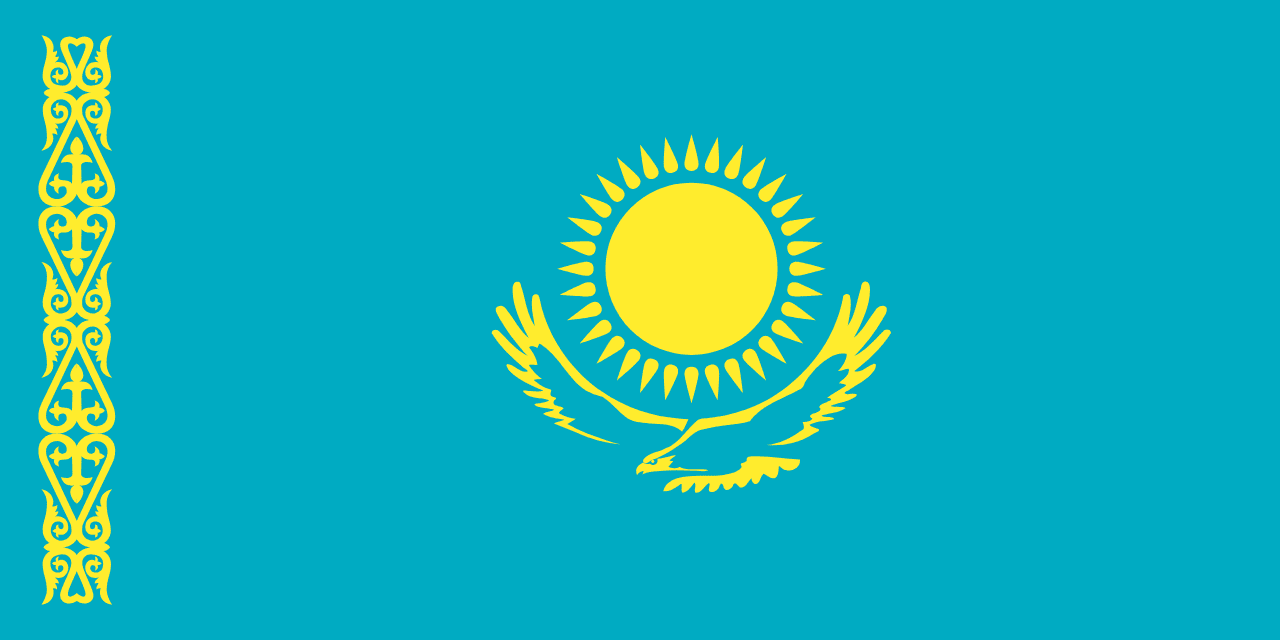
The country's sky-blue banner, featuring a golden sun and a soaring steppe eagle, reflects this heritage and the openness of the land. You can explore its design and meaning in our piece on the flag of Kazakhstan, where the colours and symbols are unpacked in full.
Frequently Asked Questions
What is the capital of Kazakhstan?
The capital is Astana, located in the north of the country. It became the capital in 1997 and has been transformed into a city of striking modern architecture. It is also one of the coldest capital cities in the world, with harsh winter temperatures.
What is Kazakhstan famous for?
Kazakhstan is best known for being the largest landlocked country on Earth, the home of the Baikonur Cosmodrome where the first human spaceflight launched, and its vast steppe landscapes. It is also famous for its nomadic horse culture, rich oil and uranium reserves, and remarkable ethnic diversity.
What is a surprising fact about Kazakhstan?
One of the most surprising facts is that horses were likely first domesticated on the Kazakh steppe over 5,000 years ago. Another is that the country was the launch site for both the first satellite and the first human in space, giving a landlocked nation an enormous role in space exploration.
Conclusion
From cosmonauts and golden warriors to wild antelope and ancient horsemen, Kazakhstan is a country of astonishing contrasts and depth. It bridges Europe and Asia, blends dozens of cultures, and pairs futuristic ambition with deep nomadic roots. These ten facts only begin to scratch the surface of a nation that rewards every bit of curiosity you bring to it.
