
Tucked between the towering Tian Shan and Pamir ranges, Kyrgyzstan is a landlocked Central Asian republic where snow-capped peaks meet turquoise alpine lakes and nomadic traditions still shape daily life. It is a country where herders pitch felt tents in summer pastures, where horseback games draw roaring crowds, and where more than 90 percent of the land sits above 1,500 meters. Here are ten genuinely fascinating facts that reveal why Kyrgyzstan is one of Asia's most underrated destinations.
1. It Is One of the Most Mountainous Countries on Earth
Kyrgyzstan is overwhelmingly defined by its mountains. Roughly 90 percent of the country lies above 1,500 meters, and the Tian Shan range, whose name means "Celestial Mountains," dominates the landscape. The highest point, Jengish Chokusu (Victory Peak), soars to 7,439 meters on the border with China, making it the northernmost peak above 7,000 meters in the world. Because so much terrain is high and rugged, only a small fraction of the land is suitable for farming. This vertical geography shapes everything from climate to settlement patterns, and it has earned Kyrgyzstan the affectionate nickname "the Switzerland of Central Asia" from travellers drawn to its dramatic, glacier-carved scenery.
2. Lake Issyk-Kul Never Freezes Despite the Snow
Issyk-Kul, in the northeast, is the second-largest mountain lake in the world after Lake Titicaca and one of the deepest lakes anywhere, plunging beyond 600 meters. Its name translates to "warm lake," and despite sitting at over 1,600 meters surrounded by snowy peaks, it never freezes in winter thanks to its mild salinity and geothermal activity. The lake was a strategic stop on the Silk Road, and underwater archaeologists have found the remains of ancient settlements beneath its surface. Today it is Kyrgyzstan's premier holiday spot, ringed by beaches, hot springs, and resorts where Central Asians come to swim in summer.
3. Bishkek Is a Green, Grid-Planned Capital
The capital, Bishkek, sits at the foot of the Kyrgyz Ala-Too mountains and is known as one of the greenest cities in Central Asia, laid out in a tidy Soviet-era grid lined with poplar and oak trees. Formerly named Frunze during the Soviet period, it was renamed after independence. Home to roughly a million people, Bishkek blends wide boulevards, leafy parks, sprawling bazaars like Osh Market, and Soviet monuments with a growing café culture. You can learn more in our country guide. On a clear day, snow-capped peaks rise dramatically right at the end of the city streets.
4. Around 7 Million People Live Here, Most Under 30
Kyrgyzstan has a population of roughly 7 million, and it is a strikingly young nation, with a median age in the mid-20s. The largest ethnic group is the Kyrgyz, who make up the majority, alongside significant Uzbek and Russian minorities and smaller communities of Dungans, Uyghurs, and others. The south, around the historic city of Osh, has a notably different cultural flavour from the more Russified north. Many families maintain ties to both city apartments and rural villages, and labour migration, especially to Russia, has long been an economic lifeline, with remittances forming a substantial share of household income across the country.
5. The Epic of Manas Is Longer Than the Odyssey and Iliad Combined
One of Kyrgyzstan's greatest cultural treasures is the Epic of Manas, a vast oral poem about a legendary hero who united the Kyrgyz tribes. With around half a million lines in its fullest versions, it is one of the longest epic poems in the world, dwarfing the combined length of Homer's Iliad and Odyssey. For centuries it was preserved entirely through memory by specialist reciters called manaschi, who can perform for hours from memory. UNESCO recognises the tradition as part of humanity's intangible cultural heritage. The epic remains a powerful symbol of national identity, and Manas appears on streets, statues, and the country's main international airport.
6. The National Sport Is Played on Horseback With a Goat Carcass
Horse culture runs deep in Kyrgyzstan, and the most spectacular expression of it is kok-boru (also called ulak-tartysh), a fierce equestrian game in which mounted riders compete to grab a headless goat carcass and hurl it into the opposing team's goal. Think of it as a rugged blend of polo and rugby on horseback. Other traditional horse games include at chabysh (long-distance racing) and kyz kuumai, a flirtatious "catch the girl" chase. These sports feature prominently at the World Nomad Games, an international festival Kyrgyzstan helped launch in 2014 to celebrate nomadic heritage on a global stage.
7. Families Live in Felt Tents Called Yurts Each Summer
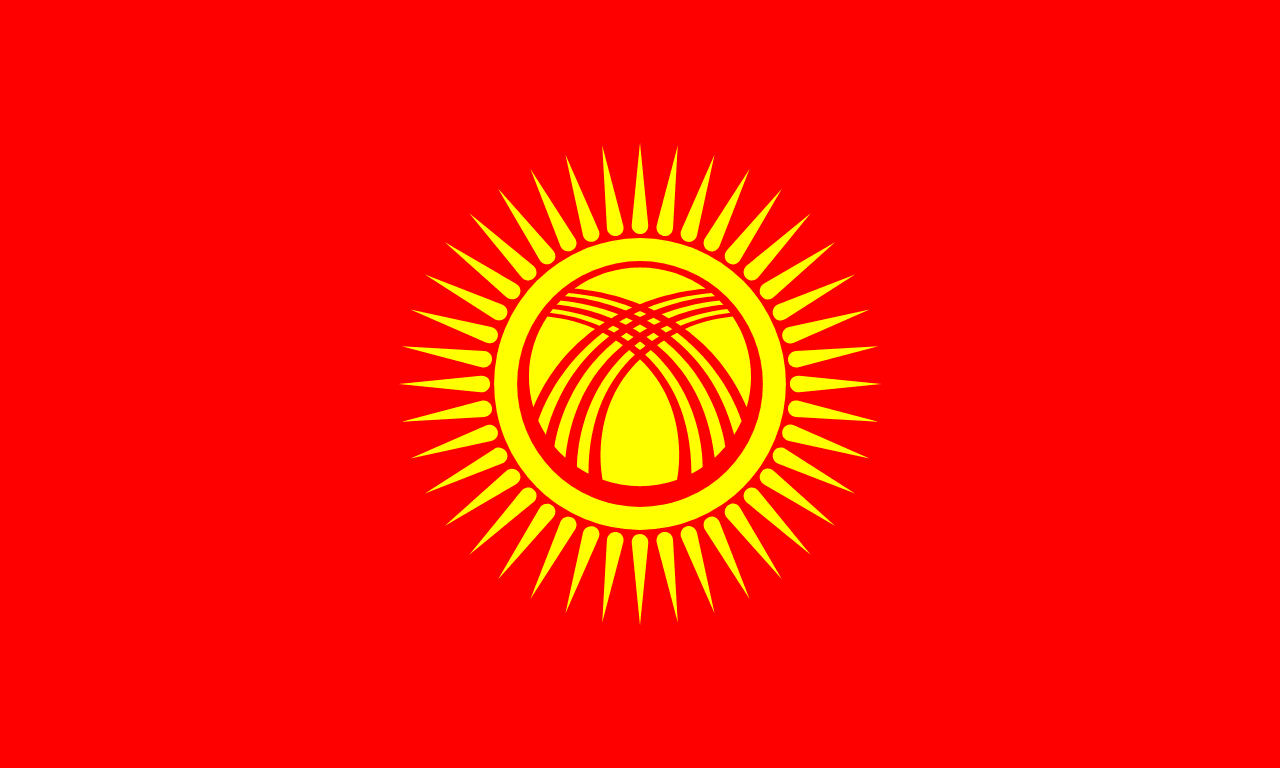
The yurt, a portable round tent made of a wooden lattice frame covered in felt, is so central to Kyrgyz identity that its crown-like roof opening, the tunduk, sits at the centre of the national flag. Each summer, many herding families move their livestock to high mountain pastures called jailoo and live in yurts just as their ancestors did. The dwellings are warm, surprisingly spacious, and can be assembled or dismantled in a couple of hours. Yurt-making and the surrounding nomadic knowledge are recognised by UNESCO, and travellers can now stay in yurt camps for an authentic taste of Kyrgyz pastoral life.
8. The Cuisine Is Built Around Meat, Noodles, and Fermented Mare's Milk
Kyrgyz food reflects a nomadic, meat-loving heritage. The national dish, beshbarmak, meaning "five fingers," is boiled meat (usually horse or mutton) served over flat noodles and traditionally eaten by hand at celebrations. Other staples include plov (rice pilaf), laghman (hand-pulled noodles), manty (steamed dumplings), and samsa baked in clay ovens. The most distinctive drink is kumis, lightly fermented mare's milk with a tangy, slightly fizzy kick, traditionally consumed in spring and summer. Bread, or nan, is treated with great respect and never placed upside down, reflecting deep-rooted customs around hospitality and the sharing of food.
9. It Was the First Central Asian Republic to Become a Democracy
After gaining independence from the Soviet Union in 1991, Kyrgyzstan stood out for its early embrace of political pluralism, earning a reputation as the most open society in the region during the 1990s. Its modern history has been turbulent, marked by two popular uprisings, the Tulip Revolution of 2005 and the 2010 revolution, that toppled sitting presidents. The country has experimented with parliamentary and presidential systems, making it a closely watched case study in Central Asian politics. Beneath this lies a far older history as a crossroads of the Silk Road, where Turkic, Mongol, Persian, and Chinese influences mingled for over a thousand years.
10. Gold Mining Drives the Economy from a Single High-Altitude Mine
Kyrgyzstan's economy leans heavily on natural resources, agriculture, and remittances. Its single most important industrial asset is the Kumtor gold mine, one of the highest-altitude gold operations in the world at over 4,000 meters, which has at times accounted for a large share of the country's exports and economic output. Beyond gold, the rivers tumbling down from the mountains give Kyrgyzstan significant hydropower potential, and agriculture, especially livestock herding, remains a way of life for much of the rural population. The nation is also a member of the Eurasian Economic Union, linking its trade closely with neighbours across the former Soviet space.
Frequently Asked Questions
What is the capital of Kyrgyzstan?
The capital is Bishkek, located in the north at the foot of the Kyrgyz Ala-Too mountains. With around a million residents, it is the country's largest city and its political, cultural, and economic centre, known for its tree-lined boulevards and Soviet-era architecture.
What is Kyrgyzstan famous for?
Kyrgyzstan is famous for its stunning Tian Shan mountains, the vast alpine Lake Issyk-Kul, its enduring nomadic culture of yurts and horseback games, and the monumental Epic of Manas. It is widely regarded as one of the best destinations in Central Asia for trekking and authentic cultural immersion.
Why is there a yurt symbol on the Kyrgyz flag?
The red flag features a yellow sun whose centre shows the tunduk, the crossed wooden roof opening of a yurt. It symbolises the home, the family, and the unity of the nation, reflecting how deeply the nomadic yurt is woven into Kyrgyz identity and history.
Conclusion
From its sky-high peaks and a lake that refuses to freeze to half-a-million-line epics and goat-grabbing horsemen, Kyrgyzstan packs an extraordinary amount of wonder into a relatively small, mountainous country. It is a place where ancient nomadic traditions remain genuinely alive rather than merely preserved for tourists. These ten facts are only the beginning, and anyone curious about Central Asia will find Kyrgyzstan endlessly rewarding to explore.
