
Lithuania is one of Europe's quiet overachievers: a Baltic nation that was once the largest country on the continent, the last corner of Europe to abandon paganism, and the place where a self-declared bohemian "republic" hands out citizenship from a Vilnius bar. Behind its forests, lakes, and cobbled old towns lies a story of survival, reinvention, and surprising firsts. Here are ten facts that reveal why this small country punches far above its weight.
1. It Was Once the Biggest Country in Europe
Today Lithuania covers roughly 65,000 square kilometers, but in the 14th and 15th centuries the Grand Duchy of Lithuania stretched from the Baltic Sea almost to the Black Sea, swallowing huge swaths of present-day Belarus, Ukraine, Poland, and Russia. At its peak it was the largest state in Europe. Its rulers, especially Vytautas the Great, played the medieval power game brilliantly, and in 1410 a combined Polish-Lithuanian army crushed the Teutonic Knights at the Battle of Grunwald, one of the largest battles of medieval Europe. For a nation now home to fewer than three million people, that imperial past is a remarkable historical inheritance.
2. The Last Pagan Nation in Europe
While most of Europe converted to Christianity in the early Middle Ages, Lithuania held out far longer, officially adopting Catholicism only in 1387. For centuries Lithuanians worshipped a rich pantheon of gods tied to thunder, forests, and the sun, and revered sacred groves and oak trees. Echoes of that old faith still linger in folk songs, place names, and midsummer rituals. This deep pagan heritage gives Lithuanian culture a distinctive earthy, nature-centered streak that sets it apart from many of its neighbors and survives today in the country's love of woodland, herbs, and seasonal celebrations.
3. Vilnius and Its Bohemian Breakaway "Republic"
Vilnius, the capital, boasts one of the largest and best-preserved medieval old towns in Eastern Europe, a UNESCO World Heritage Site full of baroque churches and winding lanes. But its quirkiest feature is Užupis, a small district that declared itself an independent "republic" in 1997. Run by artists, it has its own flag, anthem, president, and a tongue-in-cheek constitution posted on mirrored plaques in dozens of languages, with clauses like "Everyone has the right to be happy" and "A dog has the right to be a dog." You can explore more in our Lithuania country guide.
4. The Geographic Center of Europe Is Here
According to a calculation made by the French National Geographic Institute in 1989, the precise geographical center of the European continent sits just north of Vilnius, near the village of Purnuškės. A modest monument and a small park mark the spot, complete with a crown of stars. While other countries dispute the title (the center shifts depending on which islands and territories you include), Lithuania happily claims the honor. It is a neat reminder that this often-overlooked Baltic state sits, quite literally, at the heart of Europe rather than on its eastern fringe.
5. One of the Oldest Living Languages in Europe
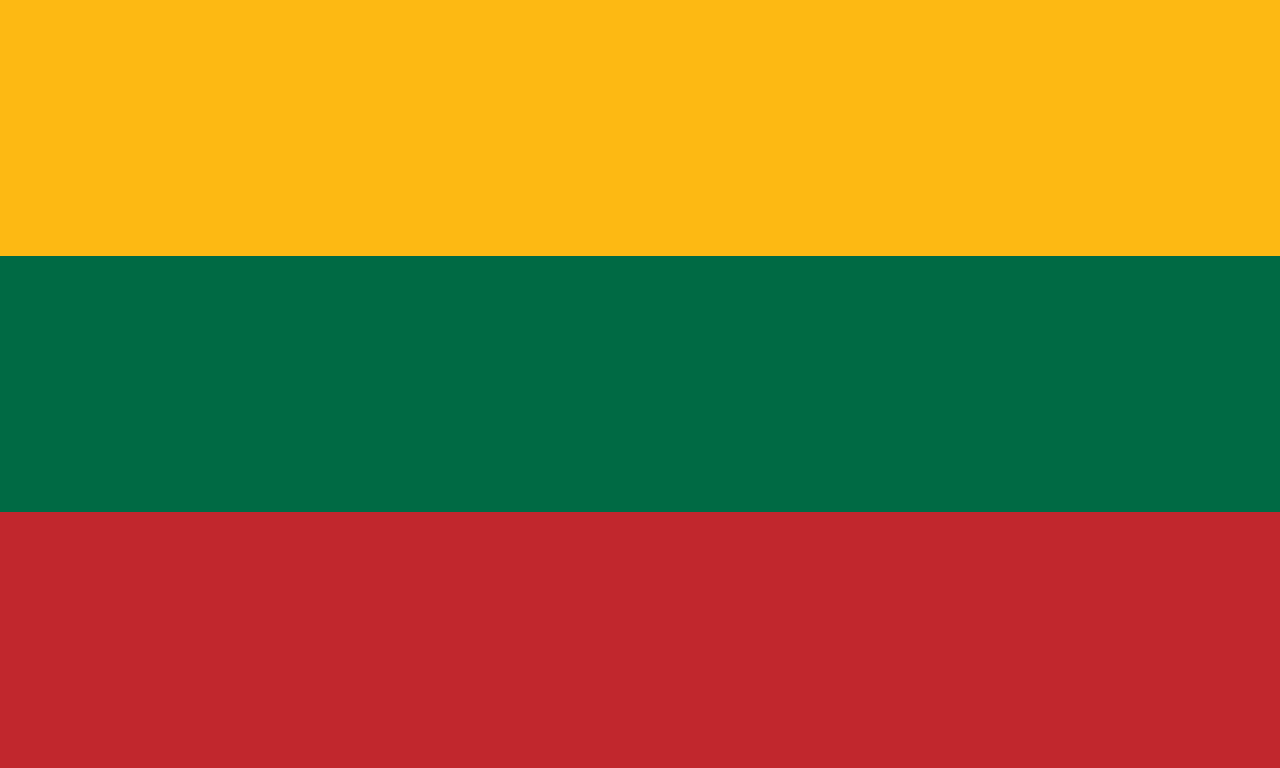
Lithuanian is a linguistic time capsule. It belongs to the Baltic branch of the Indo-European family and is considered one of the most archaic living languages, preserving sounds and grammatical forms that linguists believe were spoken thousands of years ago. Scholars studying the roots of European languages often turn to Lithuanian because it retains features close to reconstructed Proto-Indo-European. With its complex system of seven grammatical cases and melodic intonation, it is notoriously difficult for outsiders to learn. You can see the national colors and symbolism in our guide to the Lithuanian flag.
6. The Hill of Crosses Keeps Growing
About 12 kilometers north of the city of Šiauliai stands one of Lithuania's most haunting and beloved sites: the Hill of Crosses. For more than two centuries, pilgrims have planted crosses here, and today the mound bristles with well over 100,000 of them, ranging from towering wooden crucifixes to tiny rosaries. Soviet authorities bulldozed the site repeatedly during the occupation, but locals defiantly replanted crosses each time, turning it into a powerful symbol of national and religious resilience. Pope John Paul II visited in 1993, cementing its status as a place of peace and quiet defiance.
7. A Land of Forests, Lakes, and Amber
Lithuania is strikingly green and watery: forests cover roughly a third of the country, and there are some 3,000 lakes scattered across the landscape, many concentrated in the lake-dotted Aukštaitija National Park. Along the Baltic coast lies the Curonian Spit, a slender, dune-covered sandbar shared with Russia and protected as a UNESCO site, with shifting sand dunes nicknamed the "Sahara of Lithuania." The Baltic also gives Lithuania its signature treasure: amber, fossilized tree resin millions of years old. Known as "Baltic gold," it washes up on the shore and fills the country's jewelry shops and museums.
8. Basketball Is the Second Religion
Ask Lithuanians about their national passion and many will only half-jokingly say basketball is the country's second religion. The national team is a genuine global power, having won the EuroBasket championship multiple times and claimed three consecutive Olympic bronze medals in the 1990s after independence, often funded in part by the rock band Grateful Dead. Lithuanians like Arvydas Sabonis and Šarūnas Marčiulionis became NBA stars and household names. In a country of fewer than three million, the fervor for the sport rivals anything in far larger nations, and big games can feel like national holidays.
9. Hearty Food Built for Cold Winters
Lithuanian cuisine is warm, filling, and proudly potato-based. The national dish is cepelinai ("zeppelins"), large dumplings made of grated potato stuffed with meat, named for their resemblance to airships and typically smothered in sour cream and bacon. In summer, locals devour šaltibarščiai, a vivid pink cold beet soup made with kefir that looks almost too bright to be real. Another beloved curiosity is šakotis, a spiky, tree-shaped cake baked layer by layer on a rotating spit, often served at weddings and celebrations. Rye bread, smoked meats, and forest mushrooms round out a cuisine shaped by long, hard winters.
10. A Pioneer in Breaking from the Soviet Union
Lithuania holds a proud place in modern history as the first Soviet republic to declare independence, doing so on March 11, 1990, well before the USSR collapsed. The road there ran through one of history's most extraordinary protests: the Baltic Way of 1989, when around two million people across Lithuania, Latvia, and Estonia joined hands in a continuous human chain stretching roughly 675 kilometers. The peaceful push for freedom, sometimes called the Singing Revolution, made the Baltic states a global emblem of nonviolent resistance. Lithuania is now a member of the EU, NATO, and the eurozone.
Frequently Asked Questions
What is the capital of Lithuania?
The capital of Lithuania is Vilnius, a city of around half a million people known for its sprawling baroque old town, a UNESCO World Heritage Site. It also contains the self-proclaimed artists' "Republic of Užupis," giving the capital both deep historical roots and a playful, creative edge.
What is Lithuania famous for?
Lithuania is famous for its medieval history as the heart of a once-vast Grand Duchy, its archaic and ancient language, its Baltic amber, and its near-religious devotion to basketball. It is also celebrated for the Hill of Crosses, the Curonian Spit, and its leading role in peacefully breaking away from the Soviet Union.
Why does Lithuania claim to be the center of Europe?
In 1989, the French National Geographic Institute calculated that the continent's geographical center lies just north of Vilnius, near the village of Purnuškės. A monument marks the spot today. Although the claim is disputed by other countries, Lithuania proudly embraces its position at the literal heart of Europe.
Conclusion
From a medieval empire and Europe's last pagans to a pink soup and a basketball-mad population at the continent's geographic center, Lithuania is a country full of surprises that defy its small size. Its blend of ancient language, resilient spirit, and natural beauty makes it one of Europe's most rewarding places to discover. These ten facts are only an invitation to dig deeper into a nation that has reinvented itself again and again.
