
Adrift in the Indian Ocean off the southeast coast of Africa, Madagascar is a world unto itself: a continent-sized island where roughly nine out of ten plants and animals exist nowhere else on Earth. It is a place of spiny forests, baobab avenues, and a culture that owes as much to Southeast Asia as it does to mainland Africa. Here are ten facts that capture just how singular this island nation really is.
1. It Is the Fourth-Largest Island on the Planet
Madagascar stretches about 1,580 kilometers from north to south, making it the fourth-largest island in the world after Greenland, New Guinea, and Borneo. It split from the Indian subcontinent roughly 88 million years ago, drifting into isolation in the Indian Ocean. That long separation is the secret behind its astonishing biodiversity. Geographically, the island is divided into a central highland spine, a humid eastern escarpment that catches the trade winds, and a drier west. The highest point, Maromokotro in the Tsaratanana Massif, rises to 2,876 meters. You can learn more about its place in the world in our country guide.
2. Around 90% of Its Wildlife Lives Nowhere Else
Madagascar is one of the planet's great biodiversity hotspots. Lemurs, the wide-eyed primates found only here, have diversified into roughly 100 species, from the tiny mouse lemur to the dancing sifaka and the eerie aye-aye. The island is also home to two-thirds of the world's chameleon species, including some of the smallest vertebrates ever discovered. Add to that the fossa, a cat-like predator unique to the island, and countless endemic frogs, geckos, and orchids. Sadly, this richness is fragile: deforestation and habitat loss have made many species critically endangered, and conservation is now a national and global priority.
3. The Baobab Is Its Most Iconic Tree
Of the world's eight baobab species, six grow only in Madagascar. The most photographed spot is the Avenue of the Baobabs near Morondava, where towering, bottle-shaped Grandidier's baobabs line a dirt road, some of them more than 800 years old. Malagasy people call the baobab renala, meaning "mother of the forest," and the trees feature heavily in local folklore. Their swollen trunks store water to survive the dry season, and their silhouettes at sunset have become an unofficial emblem of the country, appearing on postcards, currency designs, and tourism campaigns the world over.
4. Antananarivo Is a City of Hills and Stairs
The capital, Antananarivo, sits high in the central highlands at around 1,280 meters above sea level. Often shortened to "Tana," its name means "City of the Thousand," a reference to the soldiers once said to guard it. The city sprawls across a dozen hills, and its older quarters are laced with steep cobbled staircases connecting terraced neighborhoods of red-brick houses. Crowning the highest hill is the Rova of Antananarivo, the royal palace complex of the former Merina monarchy. With well over three million people in its metropolitan area, Tana is the political, cultural, and economic heart of the nation.
5. The People Trace Their Roots to Borneo
One of Madagascar's most surprising facts is that its first settlers arrived not from nearby Africa but from across the Indian Ocean. Seafarers from Borneo, in modern Indonesia, reached the island roughly 1,500 to 2,000 years ago, bringing outrigger canoes, rice cultivation, and an Austronesian language. Later waves of Bantu Africans, Arab traders, and others added to the mix. Today the Malagasy people are usually grouped into around 18 ethnic groups, including the highland Merina and Betsileo and the coastal Sakalava and Betsimisaraka, all sharing a common cultural identity despite their diverse origins.
6. Malagasy Is Closely Related to a Language Spoken in Indonesia
The official languages are Malagasy and French, the latter a legacy of French colonial rule that lasted from 1896 until independence in 1960. Malagasy belongs to the Austronesian family, and its closest relative is Ma'anyan, a language spoken in southern Borneo more than 7,000 kilometers away. This linguistic link is one of the strongest pieces of evidence for the island's Southeast Asian heritage. The Malagasy language is spoken nationwide in numerous dialects, uniting the population, while French remains common in business, government, and higher education.
7. Rice Is Life, and It Is Eaten Three Times a Day
Malagasy cuisine revolves around rice, or vary, which is so central that the verb "to eat" literally means "to eat rice." Most people enjoy it at all three meals, typically paired with a side dish called laoka such as romazava, a beef-and-greens stew considered the national dish, or ravitoto, made from pounded cassava leaves. Zebu, the humped cattle that hold deep cultural and economic value, often feature in celebratory meals. Madagascar is also the world's leading producer of natural vanilla, and the spice perfumes many desserts and drinks across the island.
8. A Famous Ritual Honors the Ancestors
Among the highland Merina and Betsileo peoples, the dead are never far from daily life. The famadihana, or "turning of the bones," is a celebrated ancestral ritual in which families exhume the remains of relatives from family tombs, rewrap them in fresh silk shrouds, and dance with them to live music before returning them to rest. Far from somber, it is a joyful reunion that strengthens family bonds and honors the ancestors, who are believed to remain active members of the community. The ceremony reflects the deep Malagasy reverence for lineage and the fihavanana, the spirit of kinship and solidarity.
9. Vanilla and Cloves Power Much of the Economy
Madagascar is an overwhelmingly agricultural country, and its economy leans heavily on cash crops. It supplies the majority of the world's natural vanilla, grown mostly in the lush northeast around the Sava region, and is also a major exporter of cloves, lychees, and coffee. Beyond farming, the island has significant mineral wealth, including nickel, cobalt, graphite, and gemstones such as sapphires. Tourism, drawn by the unique wildlife, is a growing sector. Despite these riches, Madagascar remains one of the world's poorer nations, and developing its resources sustainably is a central challenge.
10. The Flag Tells a Story of Independence and Heritage
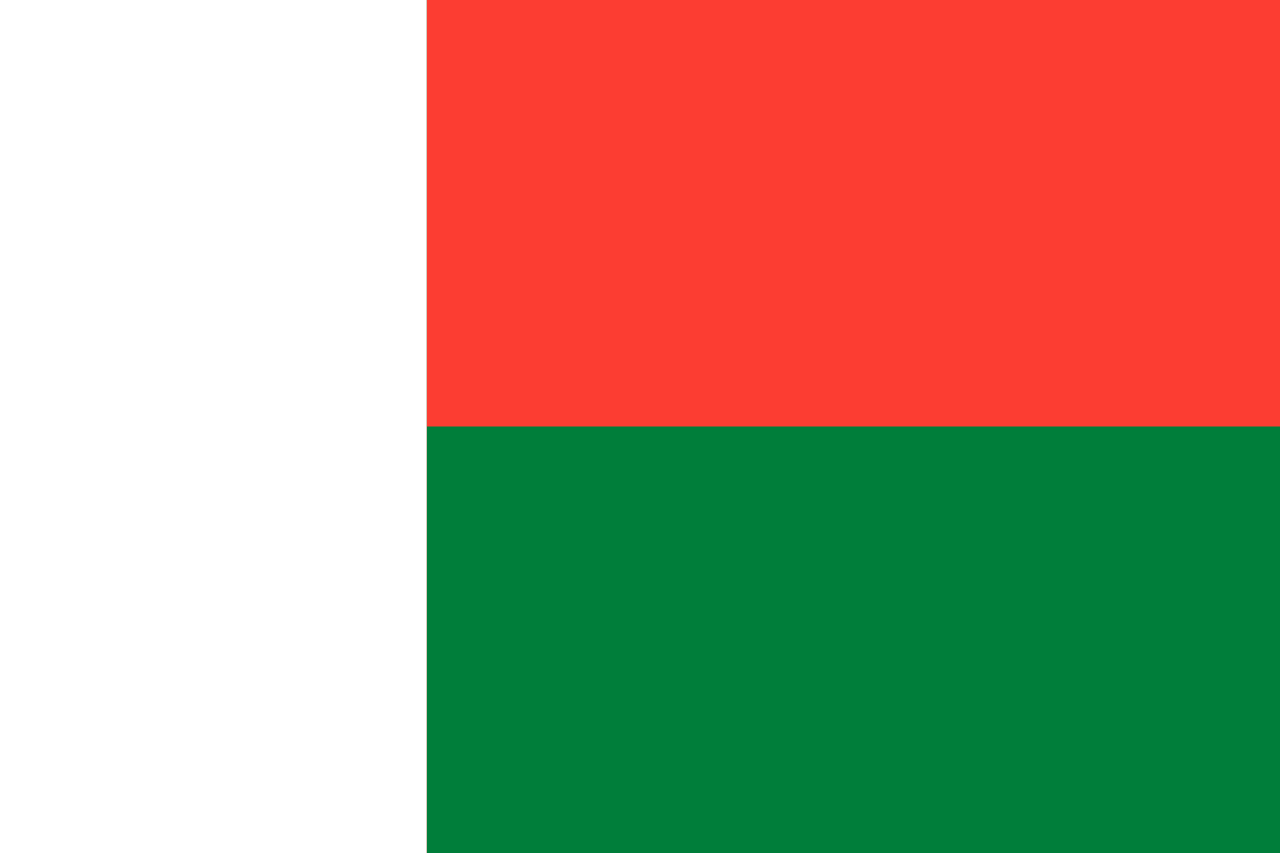
Adopted in 1958, two years before independence, the Malagasy flag features a vertical white band beside horizontal red and green stripes. The red and white are said to recall the colors of the historic Merina kingdom and the Southeast Asian roots of the people, while the green is often linked to the coastal populations and the island's lush land. The design's simplicity belies its meaning, blending memories of ancient monarchies with the hopes of a young nation. You can read more about its symbolism in our piece on the flag of Madagascar.
Frequently Asked Questions
What is the capital of Madagascar?
The capital is Antananarivo, often called Tana, located in the central highlands at about 1,280 meters above sea level. It is the country's largest city and its political, cultural, and economic center, home to the historic Rova royal palace and a metropolitan population of several million.
What is Madagascar famous for?
Madagascar is best known for its extraordinary wildlife, especially lemurs, chameleons, and baobab trees found nowhere else on Earth. It is also the world's top producer of natural vanilla and is celebrated for its unique blend of African and Southeast Asian culture, language, and cuisine.
Why do people in Madagascar dig up their ancestors?
The custom is called famadihana, or "turning of the bones." Families periodically exhume deceased relatives, rewrap them in fresh silk, and celebrate with music and dancing before reburial. It is a joyful ritual that honors ancestors and reinforces family ties, reflecting the deep Malagasy respect for lineage.
Conclusion
Madagascar is far more than a faraway island; it is a living laboratory of evolution and a crossroads of cultures, where Asian heritage meets African soil and species found nowhere else still roam. From the baobab-lined avenues to the bone-turning festivals and vanilla-scented kitchens, every corner of this nation reveals something unexpected. These ten facts only begin to capture its wonder, and the more you explore, the more remarkable Madagascar becomes.