
Few countries pack as much variety into their borders as Malaysia, a nation split across two landmasses, three of the world's great cultures, and some of the oldest rainforests on the planet. It is a place where gleaming skyscrapers rise within sight of jungle older than the dinosaurs, and where breakfast might be a banana-leaf curry eaten with your fingers. Here are ten facts that reveal just how remarkable this Southeast Asian country really is.
1. It's a Country Split in Two by a Sea
Malaysia is one of the few nations on Earth divided into two non-contiguous halves separated by water. Peninsular Malaysia sits on the mainland Malay Peninsula, sharing a border with Thailand, while East Malaysia occupies the northern third of the island of Borneo, alongside Indonesia and the tiny sultanate of Brunei. Roughly 640 kilometres of the South China Sea lie between the two. This geographic split shapes everything from politics to identity: the Borneo states of Sabah and Sarawak negotiated special autonomy when they joined the federation, retaining greater control over immigration and land rights even today. The peninsula holds most of the population and industry, while Borneo holds most of the wild, roadless interior.
2. Kuala Lumpur Grew Out of a Muddy Tin-Mining Camp
The capital's name literally means "muddy confluence" in Malay, marking the spot where the Klang and Gombak rivers meet. Kuala Lumpur began in the 1850s as a rough-and-tumble settlement for Chinese tin miners, plagued by floods, fires, and disease. Within a century it transformed into a soaring metropolis. Today it is anchored by the Petronas Twin Towers, which at 452 metres were the tallest buildings in the world from 1998 to 2004 and remain the tallest twin towers anywhere. You can read more about the city and its surroundings in our country guide. The greater KL area now houses several million people and serves as the country's financial and cultural engine.
3. Three Cultures Live Side by Side
Malaysia is one of the most genuinely multicultural societies in Asia. Its roughly 36 million people are broadly made up of Malays and other indigenous groups (together called Bumiputera), a large ethnic Chinese community, and a significant ethnic Indian population, mostly Tamil. This diversity is the legacy of centuries of trade and colonial-era migration. It means that Hindu Deepavali, Chinese New Year, Muslim Hari Raya, and Christmas are all public holidays, and a single street can hold a mosque, a Chinese temple, and a Hindu shrine. The blending of these communities has produced unique hybrid cultures, such as the Peranakan (Straits Chinese), with their own language, dress, and cuisine.
4. The National Language Has Many Voices
The official language is Bahasa Malaysia (Malay), but daily life hums with many tongues. English is widely spoken and a legacy of British rule, while Mandarin and various Chinese dialects like Cantonese and Hokkien fill Chinese communities, and Tamil is common among Indian Malaysians. Many Malaysians switch effortlessly between several languages in a single conversation, sometimes within a single sentence, a phenomenon affectionately called "rojak" after the mixed-fruit salad. In Borneo, dozens of indigenous languages add even more variety, with Sabah and Sarawak together home to scores of distinct ethnic groups, from the Iban to the Kadazan-Dusun.
5. Its Rainforests Are Older Than the Amazon
The tropical rainforests of Borneo are estimated to be around 130 million years old, making them some of the oldest on Earth, predating even the Amazon. These ancient jungles are extraordinarily biodiverse, sheltering thousands of plant species in a single hectare. Malaysia's Taman Negara national park on the peninsula protects another stretch of primeval forest. Within these green worlds grows the Rafflesia, which produces the largest individual flower in the world, sometimes a metre across, and famously smells of rotting flesh to attract pollinating flies. Conservation here is a constant tug-of-war against palm-oil plantations and logging.
6. Home to Orangutans and the World's Largest Cave Chamber
Malaysian Borneo is one of only two places on Earth where wild orangutans still swing through the trees, alongside the bizarre long-nosed proboscis monkey, the pygmy elephant, and the elusive Malayan tiger found on the peninsula. Sabah's Mount Kinabalu, at 4,095 metres, is the highest peak in Malaysia and a UNESCO World Heritage Site bursting with endemic species. Sarawak's Gunung Mulu park hosts the Sarawak Chamber, the largest known cave chamber in the world by area, vast enough to hold several jumbo jets. Each evening, millions of bats stream out of Mulu's Deer Cave in a ribbon visible for miles.
7. The World Runs on Malaysian Electronics and Palm Oil
Malaysia has one of Southeast Asia's most dynamic economies, transformed in a single generation from a rubber-and-tin exporter into a modern industrial power. It is a global hub for semiconductor assembly and electronics, with Penang earning the nickname "Silicon Island." The country is also, alongside Indonesia, one of the two dominant producers of palm oil, an ingredient hidden in a staggering share of the world's packaged foods and cosmetics. Add significant petroleum and natural gas reserves, exported through the state energy giant Petronas, and you have an economy that touches kitchens, phones, and factories worldwide far more than its size suggests.
8. A Crossroads of Empires and Trade
For centuries the Strait of Malacca, the narrow sea lane between the peninsula and Sumatra, was one of the most important shipping routes on Earth, linking China and India. Whoever controlled it controlled the spice trade. The port of Malacca rose as a powerful sultanate in the 15th century before being seized in turn by the Portuguese, the Dutch, and the British, each leaving architectural fingerprints still visible today. Malaysia gained independence from Britain on 31 August 1957, and the modern federation, joining the peninsula with Sabah and Sarawak, was formed in 1963. Singapore was briefly part of it before separating in 1965.
9. Street Food Worth Crossing the World For
Malaysian cuisine is a delicious collision of Malay, Chinese, and Indian traditions, and food is something close to a national obsession. The unofficial national dish is nasi lemak: fragrant coconut rice served with spicy sambal, fried anchovies, peanuts, cucumber, and egg, often wrapped in banana leaf. Other icons include laksa (a tangy or coconut-rich noodle soup), skewered and grilled satay, and the flaky, buttery roti canai flatbread served with curry. Bustling open-air hawker centres and night markets are the beating heart of social life, where a feast can cost just a few ringgit and locals happily debate which stall does it best.
10. Badminton Is a National Passion
While many Asian nations love football, Malaysia's true sporting heart belongs to badminton. The country has produced world-class players and consistently contends for honours at the Thomas Cup and the Olympics, where shuttlers like Lee Chong Wei became national heroes. Matches draw enormous television audiences, and courts are a fixture in parks and community halls nationwide. Malaysia is also the only Southeast Asian country to host a Formula 1 Grand Prix for nearly two decades, at the Sepang circuit, and its passion for the racing-mad world of motorsport runs surprisingly deep alongside the thwack of the shuttlecock.
Frequently Asked Questions
What is the capital of Malaysia?
The capital is Kuala Lumpur, home to the iconic Petronas Twin Towers. Interestingly, the federal administrative centre and seat of government was moved to the purpose-built city of Putrajaya in the late 1990s, though Kuala Lumpur remains the official capital and the country's commercial heart.
What is Malaysia famous for?
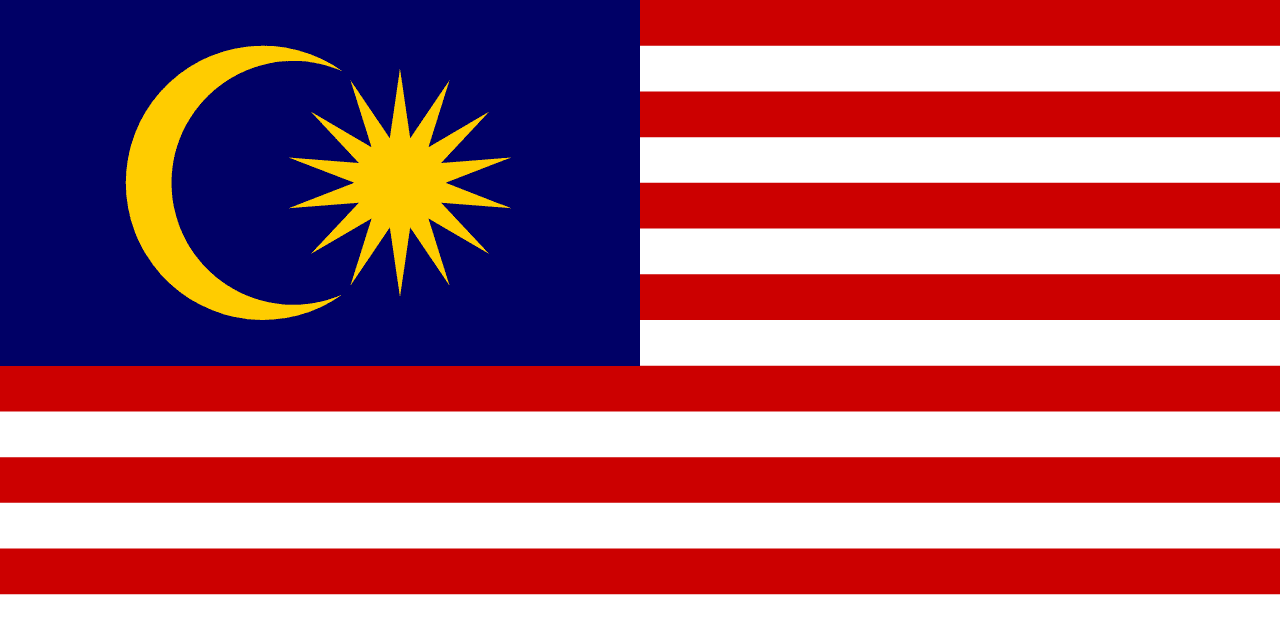
Malaysia is famous for the towering Petronas Twin Towers, its incredibly diverse multicultural society, world-renowned street food like nasi lemak and laksa, and the ancient rainforests of Borneo with their orangutans. It is also a major global producer of electronics and palm oil. You can learn the story behind the national flag and its 14 stripes too.
Why is Malaysia split into two parts?
Malaysia is divided because the modern nation was formed in 1963 by uniting Peninsular Malaysia on the mainland with Sabah and Sarawak on the island of Borneo, which are separated by the South China Sea. The two regions had shared British colonial ties but were never physically joined, so the federation simply spans the gap of open ocean.
Conclusion
Malaysia is a country defined by coexistence: of cultures, of ancient nature and modern industry, of two landmasses bridged by a single national identity. From the muddy origins of Kuala Lumpur to the 130-million-year-old jungles of Borneo, it rewards every traveller and student who looks closer. These ten facts are only an invitation to keep exploring one of Southeast Asia's most fascinating nations.