
Here are 25 interesting facts about Switzerland: it has four official languages, has stayed neutral in every war since 1815, eats more chocolate per person than any nation on Earth (around 10 kg a year), and quietly invented the World Wide Web at CERN near Geneva. This small Alpine republic of roughly 8.8 million people, with its capital at Bern, packs an astonishing amount of innovation, scenery, and quirk into just 41,285 square kilometers.
Surprising Geography Facts
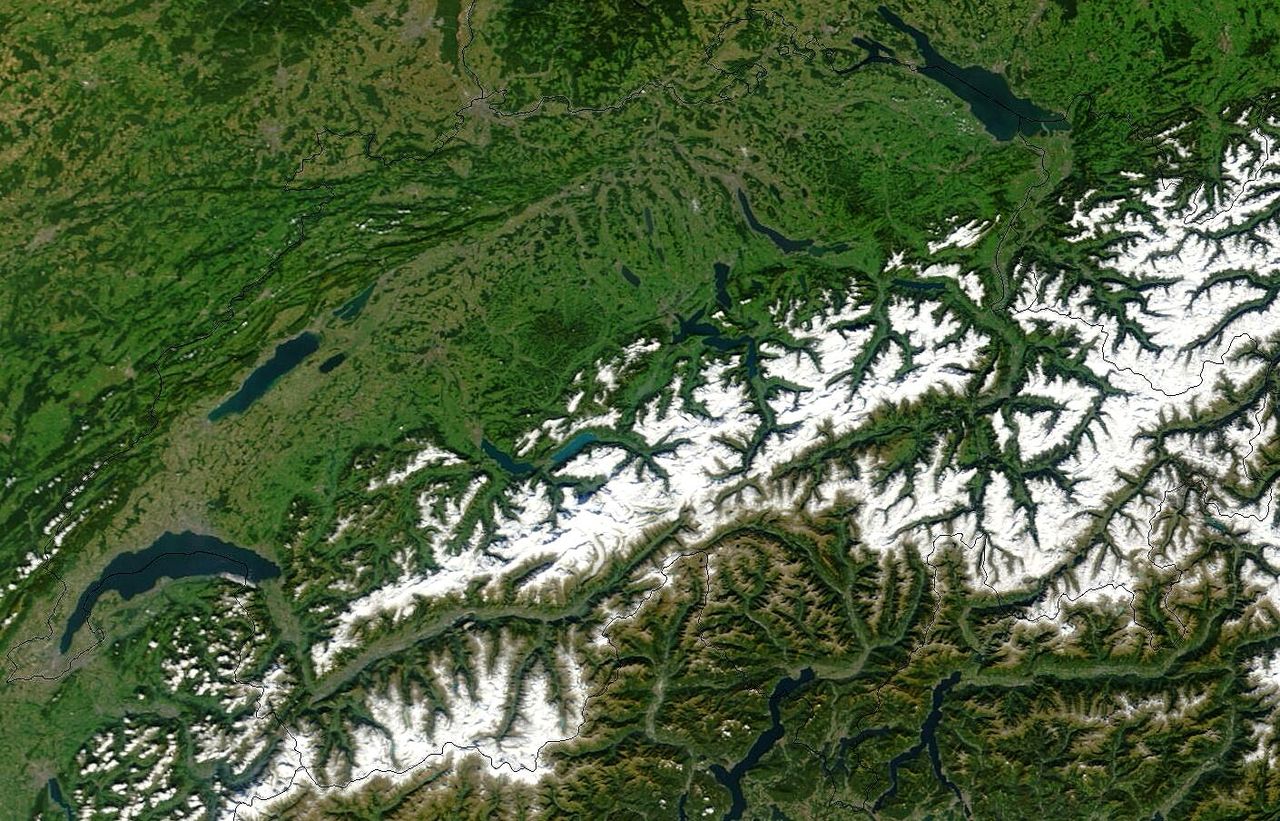
Switzerland is landlocked in Central Europe, yet it is often called the "water tower of Europe" because six major rivers, including the Rhine and the Rhone, rise in its mountains. A few facts capture how dramatic its terrain is:
- The Alps cover roughly 60% of the country and contain 48 peaks above 4,000 meters, crowned by the instantly recognizable Matterhorn at 4,478 meters.
- Lake Geneva is the largest lake in Western Europe and one of the deepest in the Alps at around 310 meters; its Jet d'Eau fountain throws water 140 meters into the air.
- The Gotthard Base Tunnel, opened in 2016 after 17 years of work, is the world's longest and deepest rail tunnel at 57.1 kilometers.
- For such a compact nation, the variety is extreme: glaciated peaks, vineyard terraces, and palm-lined lakeshores with a near-Mediterranean climate in the south.
Facts About Swiss History and Neutrality
Switzerland's most famous trait is its neutrality, formally recognized at the Congress of Vienna in 1815. It has not fought an international war since, and that long stability turned the country into a natural home for global diplomacy. The Red Cross was founded in Geneva in 1863 by Henry Dunant, and its emblem, a red cross on white, is a deliberate inverse of the Swiss flag. Geneva today hosts major United Nations offices and dozens of international organizations.
Despite this progressive diplomatic image, some history is surprising. Switzerland did not grant women the right to vote in federal elections until 1971, one of the last countries in Europe to do so, and the small canton of Appenzell Innerrhoden held out until 1991. The country also famously stayed outside many international clubs, only joining the United Nations in 2002 and remaining outside the European Union to this day.
Fascinating Facts About Language and Culture
One of the most distinctive facts about Switzerland is that it has four official languages. German is spoken by about 63% of the population, French by roughly 23%, Italian by around 8%, and Romansh, a Romance language descended from Latin, by less than 1%. Many Swiss are fluent in two or more, and banknotes carry all four languages.
Just as unusual is Swiss direct democracy. Citizens can launch popular initiatives to amend the constitution and can force a national referendum to challenge laws passed by parliament. As a result, the Swiss head to the ballot box several times a year, voting on everything from immigration policy to the price of public transport, an unmatched level of citizen control over government.
Facts About Swiss Food, Money, and Industry
Switzerland punches far above its size economically, with a GDP per capita exceeding $90,000, placing it among the wealthiest nations in the world. Zurich and Geneva regularly top lists of the most expensive cities on the planet. The country's industries are equally outsized:
- Watches: Swiss makers produce the majority of the world's luxury watches, including Rolex, Omega, Patek Philippe, and Swatch.
- Chocolate: The Swiss eat roughly 10 kilograms per person each year, the highest rate anywhere, and brands like Lindt and Toblerone are global names.
- Multinationals: Nestle is the world's largest food company, while Novartis and Roche are pharmaceutical giants.
- Banking: Switzerland has long managed a huge share of the world's cross-border private wealth, though banking secrecy has been scaled back by international agreements.
At the dinner table, fondue, melted cheese shared from a communal pot, is the national dish, and tradition says dropping your bread earns a playful penalty. The holes in Emmental cheese, by the way, come from carbon dioxide released by bacteria during aging, not from mice.
The Quirkiest Swiss Facts
Some of the best facts about Switzerland are simply strange. It is effectively illegal to own a single guinea pig because the animals are considered too social to live alone, and companies will rent out a companion if one dies. Switzerland also has enough nuclear bunker space to shelter its entire population, the highest such ratio in the world. Male citizens keep their military-issued rifles at home after service, yet the country has one of the lowest rates of gun crime anywhere. And punctuality is almost sacred, which is why Swiss trains run famously on time and being even a few minutes late can be seen as rude. For more on this remarkable nation, see our switzerland country guide.
Frequently Asked Questions
What is Switzerland most famous for?
Switzerland is best known for the Alps, precision watches, chocolate, banking, neutrality, and as the headquarters of the Red Cross and many United Nations agencies. It is also where CERN scientists invented the World Wide Web in 1989.
What language do they speak in Switzerland?
Switzerland has four official languages: German, French, Italian, and Romansh. German is the most widely spoken, but the language you hear depends on which region or canton you visit.
Is Switzerland part of the European Union?
No. Switzerland is not a member of the European Union, and it only joined the United Nations in 2002. It maintains close trade ties with the EU through a series of bilateral agreements while staying outside the bloc.
Why is Switzerland so wealthy?
Switzerland combines a stable, neutral political system with high-value industries like banking, pharmaceuticals, luxury watchmaking, and food multinationals such as Nestle. This concentration of skilled, high-earning sectors gives it one of the highest incomes per person in the world.