
Straddling the line where the Sahara Desert dissolves into the Atlantic Ocean, Mauritania is one of Africa's most overlooked and least visited nations, yet it hides ancient libraries in the sand, a geological bullseye visible from space, and one of the most dangerous train journeys on Earth. This is a country where camel caravans still cross dunes that swallow towns whole. Here are ten fascinating facts that reveal why Mauritania deserves a far closer look.
1. It Is Overwhelmingly Desert
Roughly three quarters of Mauritania is covered by the Sahara Desert, making it one of the most arid countries on the planet. The terrain ranges from vast seas of shifting sand dunes to rocky plateaus and gravel plains, with only a thin band of semi-arid Sahel grassland clinging to the south near the Senegal River. The desert is not a static backdrop here; it actively advances, and entire settlements have been partially buried by encroaching sand over the decades. This relentless geography shapes everything in Mauritania, from where its people live to how its economy functions, and it explains why the population clusters along the coast and the country's narrow fertile southern fringe.
2. Nouakchott Was Built From Almost Nothing
The capital, Nouakchott, is one of the largest cities in the Sahara, yet it barely existed before independence. When Mauritania became independent from France in 1960, the chosen capital was little more than a small village of a few hundred people. Planners designed a brand new city to govern the vast new nation, and Nouakchott has since exploded into a sprawling metropolis of roughly a million residents. Much of that growth came from devastating droughts in the 1970s and 1980s that drove nomadic herders into the city after they lost their livestock. Today Nouakchott is a low, sandy, fast-changing capital where modern ministries sit beside bustling fish markets on the Atlantic shore.
3. Most People Live Without Settling Down — Traditionally Nomadic
Mauritania has roughly 5 million people, and for much of its history a huge share of them were nomads who roamed the desert with herds of camels, goats, and cattle. Within living memory the majority of Mauritanians lived this mobile lifestyle, following seasonal grazing across the Sahara and Sahel. Drought and urbanization have dramatically reduced nomadism, and today most people live in towns and cities, but the cultural memory of the desert nomad remains central to national identity. The tradition of hospitality, the importance of the camel, and the reverence for tents and open space all flow directly from this heritage that still defines how many Mauritanians see themselves.
4. Arabic Is Official, but Many Languages Are Spoken
The official language of Mauritania is Arabic, and the most widely spoken variety is Hassaniya, a distinctive Arabic dialect heavily influenced by Berber. But the linguistic landscape is far richer than a single tongue. Several African languages, including Pulaar, Soninke, and Wolof, are spoken by communities in the south and are recognized as national languages. French also remains widely used in business, media, and education, a lingering legacy of the colonial period. This layered mix of Arabic, Berber, and Sub-Saharan African languages reflects Mauritania's unique position as a cultural bridge between the Arab world to the north and Black Africa to the south.
5. The Sahara Hides Ancient Libraries of Timbuktu's Rival Cities
Deep in the desert lie the ancient caravan towns of Chinguetti, Ouadane, Tichitt, and Oualata, collectively recognized as a UNESCO World Heritage Site. Founded between the 11th and 12th centuries, these towns were thriving trading and religious centers along the trans-Saharan routes that carried salt, gold, and ideas across Africa. Chinguetti in particular became a celebrated center of Islamic scholarship and is sometimes called the seventh holiest city of Islam. Its dusty homes still guard libraries containing thousands of fragile medieval manuscripts on subjects from astronomy and mathematics to law and the Quran, preserved for centuries against the advancing sands that now threaten to bury the towns entirely.
6. The Eye of the Sahara Is Visible From Space
One of Mauritania's most astonishing natural features is the Richat Structure, better known as the Eye of the Sahara. This enormous circular formation in the Adrar region measures about 40 kilometers across and consists of concentric rings of rock that, from above, look uncannily like a giant bullseye staring up from the desert. Astronauts on early space missions used it as a landmark because it was so striking and recognizable from orbit. For years it was thought to be an impact crater, but geologists now believe it is a deeply eroded geological dome of uplifted rock layers. Whatever its origin, it remains one of the most surreal landscapes on the entire planet.
7. Mauritania Runs on Iron and Fish
For a desert nation, Mauritania's economy leans heavily on two unlikely pillars: iron ore dug from the northern desert and fish pulled from its Atlantic waters. The country sits on some of the largest iron ore reserves in Africa, mined near the town of Zouerat, and this metal is its leading export. Meanwhile, the cold, nutrient-rich currents off the Mauritanian coast support some of the most productive fishing grounds in the world, drawing fleets from across the globe. The nation also has growing gold and copper mining and has begun developing offshore natural gas. You can learn more in our country guide.
8. It Has One of the Longest and Most Dangerous Trains on Earth
To move its iron ore from the desert mines to the coast, Mauritania operates a legendary railway that runs hundreds of kilometers across the Sahara. The trains here are among the longest in the world, sometimes stretching well over two kilometers with hundreds of ore wagons hauled by powerful locomotives. What makes it famous, though, is that travelers and locals ride for free atop the open wagons, perched on heaps of iron ore as the train crosses the empty desert. It is hot, freezing at night, choked with iron dust, and utterly unforgettable. Riding the iron ore train has become a bucket-list adventure for hardy travelers seeking one of the rawest journeys in Africa.
9. Tea Is a Three-Glass Ritual
In Mauritania, the preparation and sharing of green tea is a cherished daily ceremony rather than a quick drink. Strong, sweet, and frothy tea is brewed over coals and poured from a height to create foam, then served in three successive rounds. Mauritanians describe the three glasses with a famous saying: the first is bitter like life, the second is sweet like love, and the third is gentle like death. Refusing or rushing the ritual would be considered rude, because it is fundamentally about slowing down and sharing time with others. Alongside tea, communal meals built around rice, fish, dates, and camel or goat milk reflect the deep tradition of hospitality at the heart of Mauritanian culture.
10. It Was the Last Country to Abolish Slavery
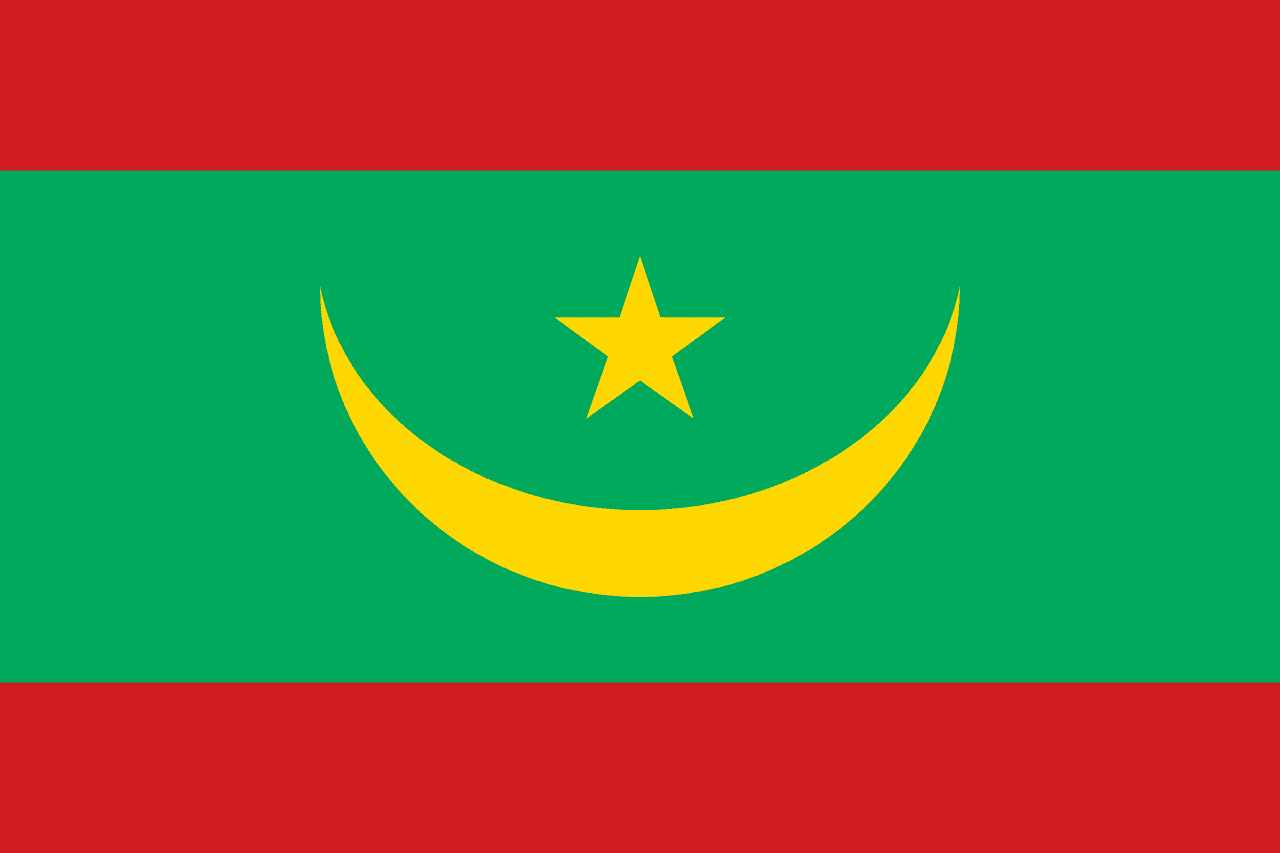
Mauritania carries the sobering distinction of being the last country in the world to formally abolish slavery, which it did not officially outlaw until 1981, with criminal penalties only added decades later in the 2000s. Hereditary slavery, rooted in centuries-old social hierarchies, has been notoriously difficult to eradicate, and human rights organizations continue to highlight the issue today. This complicated history exists alongside the country's rich traditions, striking flag, and proud cultural heritage. You can explore the symbolism of its green banner with its golden crescent and star in our piece on the flag of Mauritania.
Frequently Asked Questions
What is the capital of Mauritania?
The capital of Mauritania is Nouakchott, a coastal city on the Atlantic that was purpose-built around the time of independence in 1960. It grew from a tiny village into one of the largest cities in the Sahara, home to roughly a million people, and serves as the nation's political, commercial, and cultural center.
What is Mauritania famous for?
Mauritania is best known for its vast Sahara Desert landscapes, the otherworldly Eye of the Sahara, ancient caravan towns and manuscript libraries like Chinguetti, its enormous iron ore train, and its rich nomadic and Islamic heritage. It is also famous as a meeting point between Arab North Africa and Sub-Saharan Africa.
Can you really ride on top of the iron ore train?
Yes. Mauritania's iron ore train is one of the longest in the world, and travelers as well as locals routinely ride for free atop the open ore wagons across the desert. It is a harsh, dusty, and freezing overnight journey, but it has become a celebrated adventure and a symbol of the country itself.
Conclusion
Mauritania may sit quietly off most travelers' radar, but it rewards anyone willing to look closer with desert libraries, a bullseye carved into the Earth, marathon trains, and a tea ceremony steeped in meaning. It is a land of contrasts, both ancient and newly built, harsh and hospitable, where the Sahara and the Atlantic meet. These ten facts only begin to capture a country that remains one of Africa's most fascinating frontiers.