
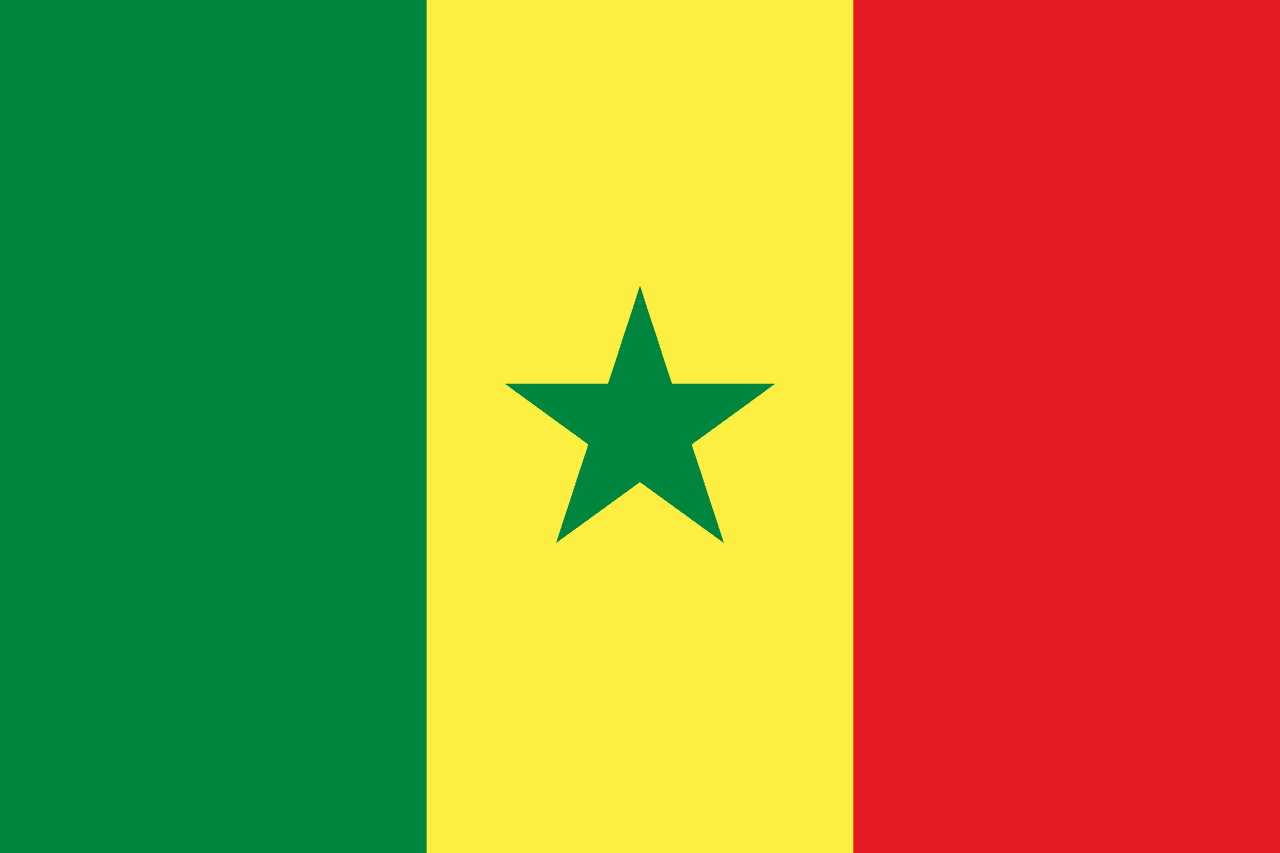
Snap a photo of the Senegalese flag fluttering over a market in Dakar and, at a glance, you might mistake it for the banner of a few of its West African neighbors. Three vertical bands of green, gold, and red have a familiar Pan-African rhythm to them. But look at the center, and one detail settles the question instantly: a single five-pointed green star, glowing against the yellow stripe like a beacon. That star is the signature of Senegal, and it carries a story that reaches back to the dissolution of a short-lived federation and the birth of an independent nation in 1960.
This article walks through what each color means, how the design is arranged, where the flag came from, and why it still matters to Senegalese identity today. Along the way you'll see why the resemblance to other African flags is no accident at all.
The Three Colors and Their Meaning
Senegal's flag uses the classic Pan-African palette of green, yellow, and red, but each band carries its own layered significance for the nation. Green, on the hoist side, speaks to two things at once: it represents Islam, the faith of the great majority of Senegalese people, and it stands for hope and the promise of growth. It is a color of both spirituality and renewal.
The central yellow band evokes wealth and the fruits of labor — the natural riches of the land and the prosperity that comes from working it. Yellow is also a color of the arts and learning in the region, the warm tone of the savanna under a high sun.
The trailing red stripe honors sacrifice. It is a tribute to those who gave their lives in the long struggle for liberty and independence, a reminder that the freedoms the flag represents were not freely given. Together the trio reads as a compact national creed: faith and hope, abundance, and the price paid for self-rule.
How the Flag Is Designed
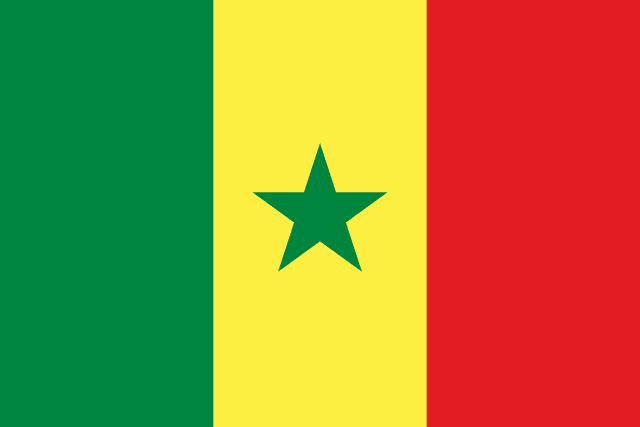
The layout is a vertical triband — three equal-width bands running top to bottom rather than the horizontal stripes you find on many flags. From the flagpole outward the order is green, yellow, then red. Centered in the middle yellow band sits a single five-pointed star, and crucially that star is green, matching the hoist-side stripe rather than standing out in a contrasting tone.
That green star is the heart of the design's symbolism. It represents unity and the hope of the nation, and its placement dead-center makes it the visual anchor of the whole flag. The five points are commonly read as openness to the world and the radiance of a young country looking outward. The clean geometry — three crisp bands, one star — gives the flag an uncluttered, confident look that reproduces well at any size, from a lapel pin to a stadium banner.
From Federation to Independence
To understand why Senegal's flag looks the way it does, you have to rewind to the months just before independence. In 1959, Senegal joined with the territory then known as French Sudan to form the Mali Federation, a union meant to carry both partners into sovereignty together. The federation adopted its own flag: a green-yellow-red vertical tricolor with a black human figure, called a kanaga, in the center.
The federation was brief. In 1960 it broke apart, and the two members went their separate ways — French Sudan became the Republic of Mali, while Senegal became an independent republic in its own right. Senegal kept the green-yellow-red tricolor it had grown attached to but replaced the central kanaga figure with the green five-pointed star it flies today. The flag was adopted in 1960, the year of independence, and it has remained essentially unchanged ever since.
This shared origin explains the striking family resemblance among West African flags. The neighboring country of Mali carries the same three vertical bands without any central emblem at all, which is why the two banners are nearly identical except for Senegal's star. If you want the wider context of the country, its regions, and its culture, our senegal country guide picks up where the flag's story leaves off.
A Symbol of National Identity
For a country that emerged from colonial rule with a strong sense of its own intellectual and cultural traditions, the flag became more than administrative bunting. Senegal's first president, the poet Léopold Sédar Senghor, was a central figure in the philosophy of Négritude, which celebrated African heritage and dignity. The green star captured something of that spirit: a young, proud nation choosing its own emblem rather than inheriting a foreign one.
The Pan-African colors also tie Senegal to a broader continental story. Green, yellow, and red trace back to the flag of Ethiopia, the one African nation that resisted lasting colonization, and they were adopted by independence movements across the continent as a shared visual language of liberation. By flying these colors, Senegal placed itself within that wider movement while marking its own identity with the star.
The Flag in Modern Life
Today the flag is woven into the rhythms of Senegalese public life. It flies over government buildings and schools, appears on official documents, and is hoisted with particular pride each April 4, Independence Day, when Dakar hosts parades and ceremonies commemorating the events of 1960.
Sport gives the flag some of its most joyful outings. Senegal's national football team, the Lions of Teranga, sends a sea of green, yellow, and red into stadiums whenever they play, and the colors painted on faces and waved on banners turn matches into national celebrations. The flag also appears at religious gatherings, cultural festivals, and the music events for which the country is famous, where it signals collective belonging more than formal officialdom.
Interesting Facts at a Glance
- The flag was adopted in 1960, the same year Senegal gained independence.
- It is nearly identical to Mali's flag — the green star is the key difference.
- The design grew directly out of the Mali Federation flag, which featured a human figure instead of a star.
- Green, yellow, and red are the Pan-African colors shared by many countries on the continent.
- The central star is green, not yellow or white, deliberately echoing the hoist-side band.
- Each color carries a distinct meaning: faith and hope, wealth, and sacrifice.
Frequently Asked Questions
When was the flag of Senegal adopted?
Senegal adopted its flag in 1960, the year it became an independent republic following the breakup of the Mali Federation. It has remained essentially unchanged since then.
What do the colors of the Senegal flag mean?
Green represents Islam and hope, yellow stands for wealth and the riches of the land, and red honors the sacrifice of those who fought for independence. The central green star symbolizes unity.
What continent is Senegal on, and why does its flag look like Mali's?
Senegal is in West Africa. Its flag closely resembles Mali's because both began as members of the short-lived Mali Federation in 1959–1960 and kept the same green-yellow-red tricolor. The difference is Senegal's green five-pointed star, which sits where the federation flag once carried a human figure.
What does the green star on the flag represent?
The five-pointed green star in the center band represents unity and the hope of the nation. Its central placement makes it the focal point of the flag and the feature that distinguishes Senegal's banner from those of its neighbors.