
Tucked into the warm waters of the Indian Ocean, roughly 2,000 kilometres off the southeast coast of Africa, Mauritius is a volcanic island that punches far above its size. It is famous for turquoise lagoons and luxury resorts, but the real story is one of dramatic geology, a vanished dodo, and a population woven together from four continents. Here are ten fascinating facts about this small but extraordinary nation.
1. It Is an Indian Ocean Island, Not Mainland Africa
Despite often being grouped politically with Africa, Mauritius sits alone in the Indian Ocean, about 900 kilometres east of Madagascar. The main island covers roughly 1,865 square kilometres and is the eroded remnant of an ancient volcano. Together with the islands of Rodrigues, Agalega and the Cargados Carajos shoals, it forms the Republic of Mauritius. Mark Twain reportedly quipped that "Mauritius was made first, and then heaven; and that heaven was copied after Mauritius." Surrounded almost entirely by one of the world's third-largest coral reefs, the island enjoys calm, shallow lagoons that have made it one of the planet's most celebrated beach destinations. To dig deeper into its geography, see our country guide.
2. Port Louis Is the Capital and Beating Heart
Port Louis, on the island's northwest coast, is the capital, largest city, and main port of Mauritius. Founded by the French in 1735 and named after King Louis XV, it grew into a strategic harbour on the trade route between Europe and Asia. Today it is the country's financial and commercial engine, home to the central business district, the Stock Exchange of Mauritius, and the bustling Central Market. The historic Caudan Waterfront, the Aapravasi Ghat immigration depot, and Fort Adelaide overlooking the city all sit within Port Louis. Despite being the capital, it is not the most populous urban area when surrounding towns are combined, and many residents commute in from the central plateau towns.
3. The Dodo Lived Here And Nowhere Else
Mauritius is the only place the dodo ever existed. This flightless bird, a giant relative of the pigeon, evolved on the island with no natural predators and grew to about a metre tall. When Dutch sailors arrived in the late 1500s, the trusting, ground-nesting birds were easy prey, and introduced animals like pigs and rats devoured their eggs. By around 1681, less than a century after contact, the dodo was extinct, becoming the textbook symbol of human-caused extinction. The phrase "as dead as a dodo" entered the English language. The dodo remains a national emblem, appearing on the coat of arms, currency, and countless souvenirs across the island.
4. A Population Born From Four Continents
Mauritius is home to roughly 1.3 million people, and few nations are as diverse for their size. Because the island had no indigenous human population, everyone descends from settlers and labourers: French and British colonists, enslaved Africans and Malagasy, Indian indentured workers brought after slavery's abolition, and Chinese traders. Today Indo-Mauritians form the majority, alongside Creole, Sino-Mauritian, and Franco-Mauritian communities. This blend makes Mauritius one of the most densely populated countries in Africa and a genuine cultural crossroads where Hindu temples, mosques, churches, and pagodas often stand within sight of one another.
5. A Country With No Official Language
Curiously, the Mauritian constitution names no official language. English is used in government and the legal system, French dominates media and business, but the language heard on the street is Mauritian Creole (Kreol Morisien), an French-based creole spoken by the vast majority as a mother tongue. On top of that, ancestral languages like Bhojpuri, Hindi, Urdu, Tamil, Telugu, and Mandarin are still spoken within communities. Most Mauritians are comfortably multilingual, switching effortlessly between Creole, French, and English in a single conversation. This linguistic flexibility reflects the island's layered colonial history and its remarkably mixed heritage.
6. Sugar Cane Shaped the Island
For much of its modern history, Mauritius was essentially one giant sugar plantation. Fields of sugar cane once blanketed around 90 percent of the cultivated land, and the industry drove the importation of enslaved and later indentured labour that built today's population. While sugar still matters, the economy has transformed dramatically since independence. Mauritius diversified into textiles, tourism, financial services, and information technology, becoming one of Africa's most prosperous and stable nations, often praised as an economic success story. You can still tour historic sugar estates and visit L'Aventure du Sucre, a museum housed in a former mill that tells the story of how this single crop reshaped an entire society.
7. The Mysterious Seven Coloured Earths
In the southwest near Chamarel lies one of Mauritius's strangest sights: the Seven Coloured Earths. Here, undulating dunes of sand glow in distinct shades of red, brown, violet, blue, green, purple, and yellow, the result of volcanic rock weathering into different mineral compounds. Remarkably, if you mix the differently coloured sands together, they naturally separate back into their layers over time. Nearby, the Chamarel Waterfall plunges around 100 metres, one of the island's tallest. The region sits within a landscape of volcanic peaks and gorges that feels worlds away from the coastal resorts most visitors picture when they imagine Mauritius.
8. An Underwater Waterfall Illusion
Off the southwestern tip of the island near Le Morne, an astonishing natural illusion appears from the air: what looks like a giant waterfall cascading off the edge of the island into the ocean depths. In reality, it is a trick of light and sediment. Sand and silt are pushed by ocean currents over an underwater shelf where the seabed drops steeply, creating the dramatic impression of falling water. Best seen from a helicopter or drone, this "underwater waterfall" has become one of the most photographed phenomena in the Indian Ocean and a symbol of how Mauritius constantly surprises those who think they have seen every kind of tropical scenery.
9. A Flavour-Packed Fusion Cuisine
Mauritian food is a delicious mirror of its multicultural population, blending Indian, Creole, Chinese, and French influences on a single plate. Street-food staples include dholl puri, a soft flatbread filled with split-pea purée and served with curry and pickles, widely considered the national dish. You will also find gateaux piments (chilli cakes), rougaille tomato-based stews, fresh seafood vindaye, fragrant biryani, and Chinese-style noodles and bouillon. Rum, distilled from the island's sugar cane, is a point of pride, and tropical fruits like pineapple sprinkled with chilli and salt are sold from roadside carts. Few cuisines manage to be so genuinely fusion while staying so casual and accessible.
10. Le Morne Brabant: A UNESCO Symbol of Freedom
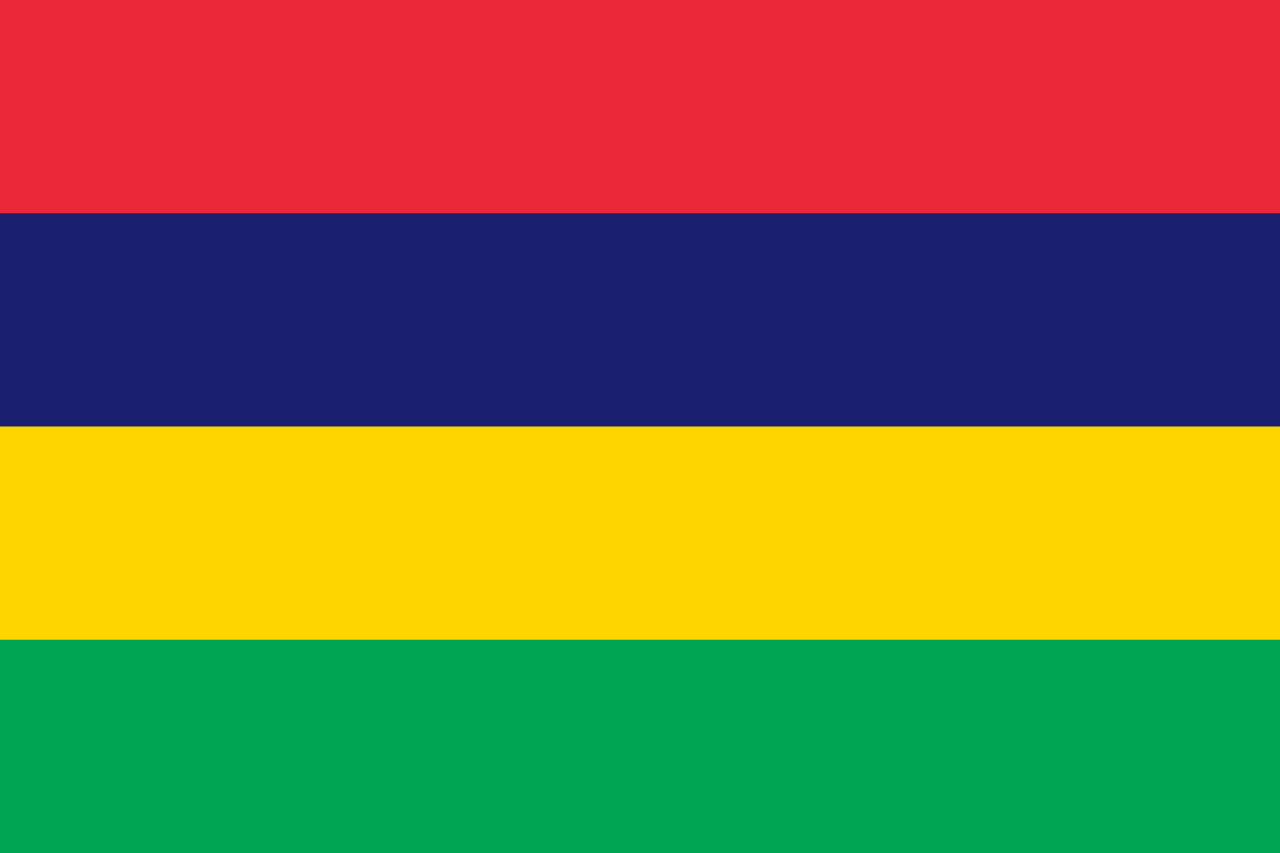
The striking basalt monolith of Le Morne Brabant rises dramatically from a peninsula on the southwest coast, and it carries profound meaning. According to oral tradition, the rugged, near-inaccessible mountain became a refuge for runaway enslaved people, known as maroons, who hid in its caves and on its summit. The site is now a UNESCO World Heritage Site recognising it as a symbol of the global struggle against slavery and the resistance to it. Beyond its history, Le Morne is also a world-class kitesurfing and windsurfing spot, its lagoon drawing athletes from around the world. The contrast of painful past and vibrant present captures the spirit of the nation; you can see that same layered identity reflected in the Mauritian flag.
Frequently Asked Questions
What is the capital of Mauritius?
The capital of Mauritius is Port Louis, located on the northwest coast. Founded by the French in 1735, it is the country's largest city, main seaport, and financial centre, blending colonial-era architecture with a modern central business district.
What is Mauritius famous for?
Mauritius is famous for its turquoise lagoons, white-sand beaches, and coral reefs, as well as being the only home of the extinct dodo bird. It is also known for its multicultural population, fusion cuisine, sugar-cane heritage, and natural wonders like the Seven Coloured Earths.
Is there really an underwater waterfall in Mauritius?
Not literally. Near Le Morne, ocean currents push sand over a steep underwater drop-off, creating a striking optical illusion of a waterfall plunging off the island. It looks spectacular from the air but is actually moving sediment, not falling water.
Conclusion
From a flightless bird that became the world's symbol of extinction to dunes that glow in seven colours and a mountain that sheltered the enslaved, Mauritius is far more than a beach holiday. It is an island built entirely by migration, where four continents meet over a plate of dholl puri. These ten facts only hint at the depth of this Indian Ocean gem, and there is always more to discover.