
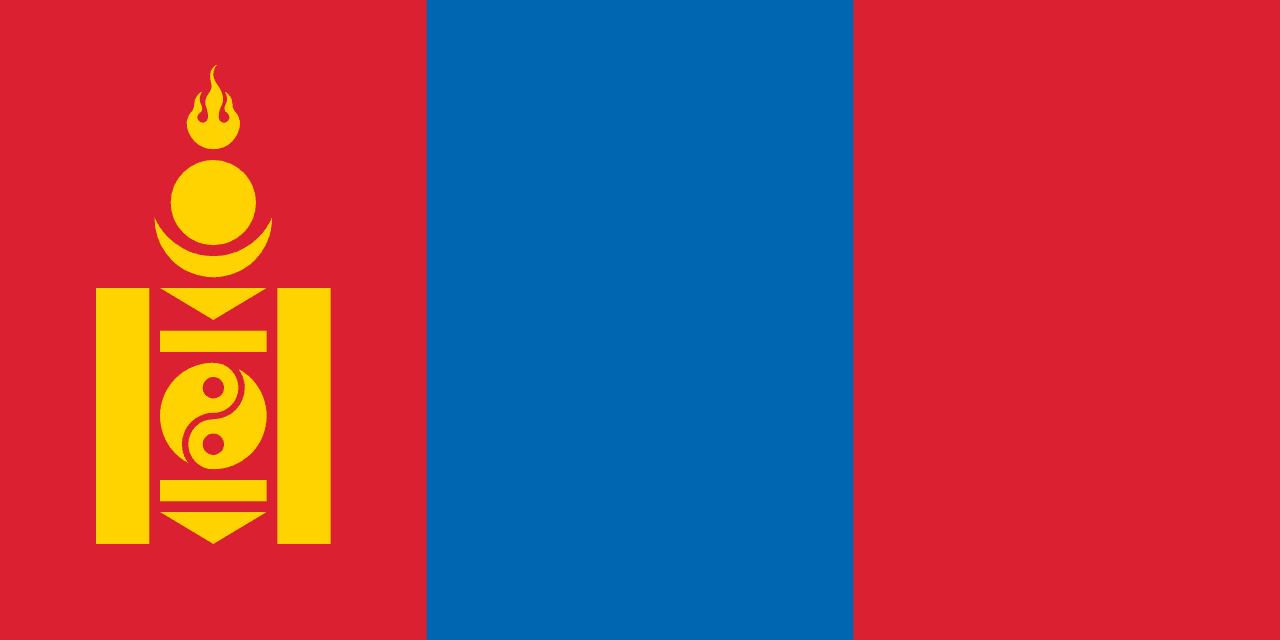
Mongolia is the kind of place that bends your sense of scale: a landlocked giant where there are more horses than people, where a single city holds nearly half the population, and where you can drive for hours without seeing a fence. Sandwiched between Russia and China, it is one of the last great strongholds of nomadic life on Earth. Here are ten facts that capture why this windswept land of steppe, desert, and empire continues to fascinate travelers and historians alike.
1. It Is the World's Most Sparsely Populated Sovereign Country
With roughly 3.6 million people spread across more than 1.5 million square kilometers, Mongolia has the lowest population density of any independent nation on the planet, at around two people per square kilometer. To put that in perspective, the country is about the size of Western and Central Europe combined, yet its entire population could fit comfortably inside a single large metropolis elsewhere. This emptiness is not a sign of hardship but a defining feature of life here. Vast tracts of open steppe, semi-desert, and mountain make Mongolia feel almost limitless, and it is precisely this space that has allowed traditional herding cultures to survive into the modern era.
2. Ulaanbaatar Is the Coldest Capital on Earth
Ulaanbaatar, the capital, holds the unenviable record of being the coldest national capital in the world, with average annual temperatures hovering around freezing and winter lows plunging well below minus 30 degrees Celsius. Despite the brutal climate, the city is home to roughly half of all Mongolians, a figure that has swelled dramatically as herders migrate from the countryside. The name itself means "Red Hero," a nod to the country's twentieth-century socialist past. Today Ulaanbaatar is a study in contrasts, where glass towers and traffic-clogged boulevards sit beside sprawling districts of gers, the traditional felt tents that thousands of new arrivals still call home.
3. Genghis Khan Built History's Largest Contiguous Empire
In the early thirteenth century, a Mongol leader named Temujin united the warring tribes of the steppe and took the title Genghis Khan. Under him and his successors, the Mongol Empire grew into the largest contiguous land empire in human history, stretching from the Korean Peninsula to the gates of Eastern Europe. At its height it covered roughly 24 million square kilometers. Genghis Khan remains a towering national hero in Mongolia, his face adorning currency, the international airport, and a colossal stainless-steel statue east of the capital. Far from being only a conqueror, he is remembered for establishing a postal relay system, religious tolerance, and a written legal code.
4. Nearly a Third of Mongolians Still Live as Nomads
Mongolia is one of the last countries where nomadic and semi-nomadic herding remains a mainstream way of life, with a significant share of the population still moving seasonally with their livestock. Families raise the so-called "five snouts," that is sheep, goats, cattle, camels, and horses, following the grass across the steppe and packing up their portable ger homes several times a year. This lifestyle shapes everything from the national diet to the calendar of festivals. You can learn more about the country's geography and rhythms of life in our country guide.
5. Horses Outnumber People Several Times Over
The Mongolian relationship with horses borders on the sacred. There are estimated to be several million horses in the country, comfortably outnumbering the human population, and the hardy Mongolian horse is woven into the national identity. Children often learn to ride before they can confidently walk, and the country produces some of the world's best long-distance jockeys, many of them under the age of thirteen. Mongolia is also home to Przewalski's horse, the only truly wild horse species never domesticated, which was reintroduced to the wild here after being saved from extinction in zoos.
6. The Gobi Desert Is a Treasure Trove of Dinosaurs
The Gobi Desert, which sprawls across southern Mongolia into China, is one of the world's most important paleontological sites. It was here, at the Flaming Cliffs of Bayanzag, that explorers in the 1920s discovered the first scientifically recognized dinosaur eggs, rewriting what scientists understood about how dinosaurs reproduced. The Gobi has since yielded spectacular fossils, including the velociraptor and the famous "fighting dinosaurs" specimen, which preserves a velociraptor and protoceratops locked in combat. Despite its reputation, the Gobi is not a sea of sand dunes but a cold, rocky desert that can drop below freezing in winter.
7. The Naadam Festival Celebrates the "Three Manly Games"
Every July, Mongolia erupts in celebration for Naadam, a national festival whose roots stretch back centuries to military training and tribal gatherings. The festivities center on the "three manly games" of wrestling, horse racing, and archery, though women now compete in archery and the horse races. Mongolian wrestling has no weight classes and no time limit, and champions are honored with poetic titles like "Lion" and "Falcon." Recognized by UNESCO as part of humanity's intangible cultural heritage, Naadam is as much a celebration of national identity as it is a sporting contest, drawing huge crowds to the capital's central stadium.
8. Throat Singing Turns the Human Voice Into a Chord
One of Mongolia's most extraordinary cultural exports is khoomei, or throat singing, a technique in which a single performer produces two or more distinct pitches simultaneously. By manipulating the throat, mouth, and lips, a skilled singer can sustain a deep fundamental drone while whistling a clear, flute-like melody overhead. The sounds are said to imitate the natural world, from rushing rivers to howling steppe winds. Often accompanied by the morin khuur, the two-stringed horsehead fiddle considered the national instrument, throat singing is one of the most distinctive musical traditions on Earth and a point of immense cultural pride.
9. The Economy Rides on Minerals and Livestock
Beneath Mongolia's empty-looking landscapes lies enormous mineral wealth, and mining has become the engine of the modern economy. The country sits on vast deposits of copper, gold, coal, and rare earth elements, with massive projects like the Oyu Tolgoi copper-gold mine drawing billions in foreign investment. This mineral boom has earned Mongolia the nickname "Minegolia." Alongside mining, the traditional pastoral economy endures, with cashmere a major export, as Mongolia is one of the world's largest producers of the luxury wool combed from its goats. Balancing rapid resource-driven growth with environmental protection and the herding way of life is one of the country's central challenges.
10. Tibetan Buddhism and a Distinctive Vertical Script Define Its Culture
Mongolia's spiritual life is dominated by Tibetan Buddhism, which took deep root from the sixteenth century and survived decades of suppression under communist rule before a powerful revival. The Gandantegchinlen Monastery in Ulaanbaatar is a thriving center of worship and home to a towering gilded statue of a Buddhist deity. The Mongolian language, meanwhile, is traditionally written in a beautiful vertical script that reads top to bottom and left to right, unique among the world's writing systems, though Cyrillic became standard in the twentieth century. You can also explore the symbolism of the national flag, whose Soyombo emblem encapsulates fire, sun, moon, and the steadfast spirit of the people.
Frequently Asked Questions
What is the capital of Mongolia?
The capital is Ulaanbaatar, sometimes written Ulan Bator, which is home to roughly half of the country's population of around 3.6 million. It is famous for being the coldest national capital in the world, and its name translates to "Red Hero."
What is Mongolia most famous for?
Mongolia is best known as the homeland of Genghis Khan and the Mongol Empire, the largest contiguous empire in history. It is equally celebrated for its nomadic herding culture, its endless steppe and the Gobi Desert, its horse-centered way of life, and traditions such as throat singing and the Naadam festival.
Are there really more horses than people in Mongolia?
Yes. Mongolia's horse population numbers in the millions and comfortably exceeds its human population of about 3.6 million. Horses are central to Mongolian life, used for transport, racing, and even producing the fermented mare's milk drink known as airag.
Conclusion
Mongolia is a country of staggering open space and deep historical resonance, where the legacy of the world's greatest land empire mingles with a living nomadic culture found almost nowhere else. From dinosaur-filled deserts and throat singers to copper mines and herds of half-wild horses, it defies easy categorization. These ten facts are only an invitation: the real reward lies in exploring further and letting the sheer scale of the steppe reshape how you see the world.