
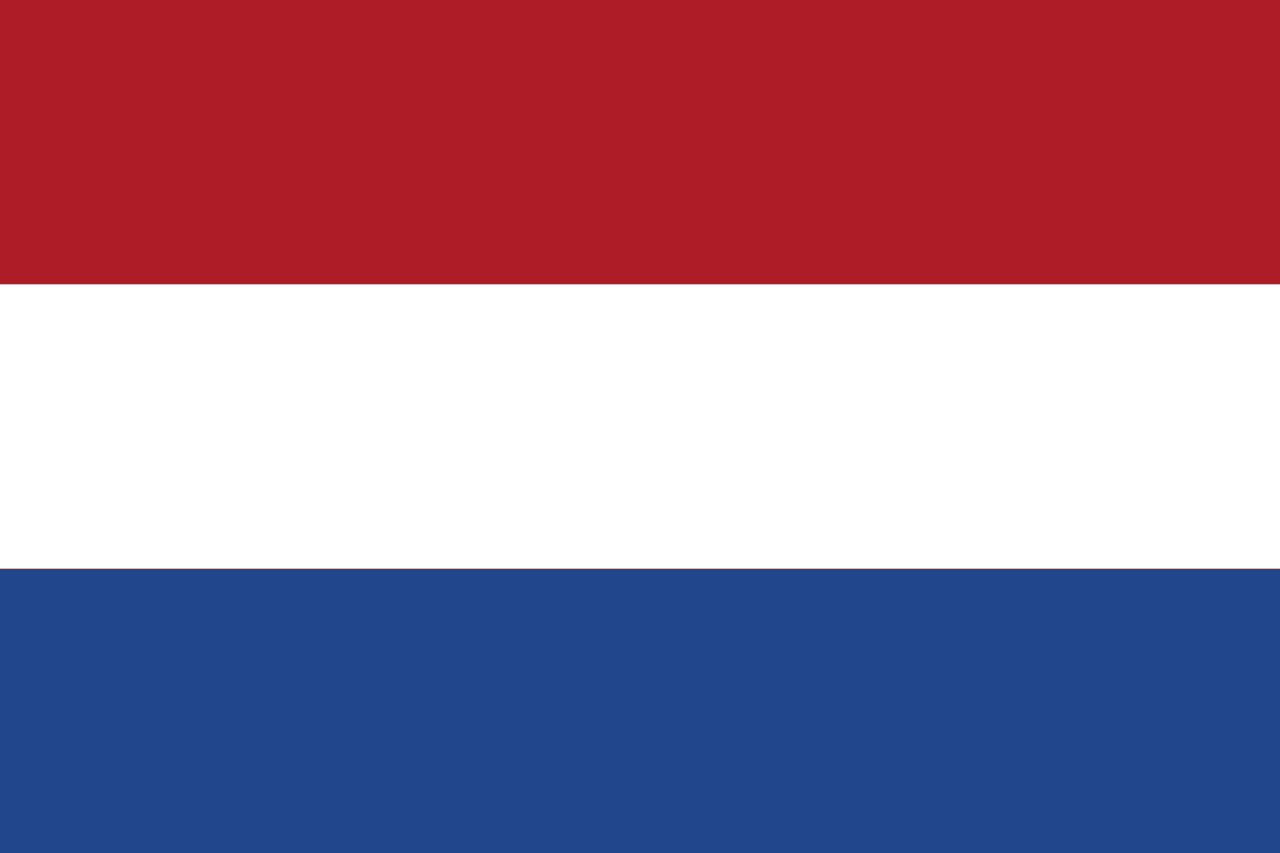
The Netherlands packs an extraordinary amount of innovation, art, and reclaimed land into one of Europe's smallest and flattest countries. It is a place where engineers wrestled an entire nation out of the sea, where bicycles outnumber people, and where a 17th-century painting boom still shapes how the world sees art. Here are ten genuinely fascinating facts that go far beyond windmills and tulips.
1. A Country That Built Itself Out of the Sea
The name "Nederland" literally means "low lands," and it is no exaggeration. Roughly one-third of the country sits below sea level, with the lowest point near Rotterdam reaching about 6.7 metres beneath it. For more than a thousand years, the Dutch have battled the water using dikes, dams, pumps, and windmills, slowly draining lakes and seabeds to create new land called polders. The Flevoland province, home to hundreds of thousands of people, did not exist a century ago — it was once the floor of a sea. There is even a Dutch saying: "God created the world, but the Dutch created the Netherlands." Their water-management expertise is now exported worldwide.
2. Amsterdam's Canals Form a UNESCO Masterpiece
Amsterdam, the capital, is laced with roughly 165 canals stretching over 100 kilometres and crossed by more than 1,500 bridges. The famous concentric ring of waterways — the Grachtengordel — was dug during the Dutch Golden Age in the 17th century and is now a UNESCO World Heritage Site. The narrow, gabled canal houses lean and tilt charmingly, partly because they were built on wooden piles driven into soft soil, and partly because their hoist beams made hauling furniture through upper windows easier than up cramped staircases. You can learn far more about the country in our country guide.
3. Bicycles Outnumber People
The Netherlands is the most bicycle-friendly nation on Earth, with an estimated 23 million bikes for a population of around 18 million — more bicycles than residents. Cycling is woven into daily life: roughly a quarter of all trips are made by bike, and dedicated cycle paths, traffic lights, and even multi-storey bike parking garages are standard. In flat, compact cities, pedalling is often faster than driving. The royal family, business executives, and schoolchildren alike commute on two wheels, making the bicycle one of the truest symbols of Dutch egalitarian culture.
4. The Tallest People in the World
Dutch men and women are, on average, the tallest people on the planet. The average Dutch man stands around 1.83 metres (about 6 feet), and women average roughly 1.70 metres. Researchers credit a combination of genetics, a protein- and dairy-rich diet, excellent healthcare, and relative social equality. Remarkably, the Dutch were among the shortest Europeans in the early 1800s, so this dramatic growth happened within just a few generations — one of the fastest height surges ever recorded in any population.
5. Amsterdam Is the Capital, But Not the Seat of Government
Here is a quirk that surprises many: although Amsterdam is the constitutional capital, the Dutch government, parliament, and the royal residence are based in The Hague (Den Haag). The Hague is also home to international institutions like the International Court of Justice and the International Criminal Court, earning it the nickname "the legal capital of the world." This split between ceremonial capital and political seat is unusual among nations and reflects centuries of compromise in a country famous for its consensus-driven "polder model" of politics.
6. The Golden Age That Reshaped Art and Trade
During the 17th century, the small Dutch Republic became a global superpower in trade, science, and art. The Dutch East India Company (VOC) was arguably the first multinational corporation and issued some of the earliest public shares. This wealth funded an explosion of painting, producing masters like Rembrandt van Rijn, Johannes Vermeer (of Girl with a Pearl Earring fame), and Frans Hals. Centuries later, Vincent van Gogh added to this legacy. Amsterdam's Rijksmuseum and Van Gogh Museum still draw millions of visitors who come to witness this artistic heritage up close.
7. A Language With Global Echoes
The official language is Dutch, spoken by around 24 million people across the Netherlands, Belgium (as Flemish), Suriname, and the Caribbean. English speakers may find Dutch oddly familiar, since both descend from West Germanic roots — words like "water," "hand," and "appel" are easy to recognise. The Dutch are also famously multilingual: the country consistently ranks at or near the top of global English-proficiency indexes for non-native speakers. Afrikaans, spoken in South Africa and Namibia, evolved directly from the Dutch carried abroad by 17th-century settlers.
8. Cheese, Stroopwafels, and Raw Herring
Dutch cuisine is hearty and famously unpretentious. The country is one of the world's largest cheese exporters, and towns like Gouda and Edam lend their names to globally beloved varieties; traditional weighing-house cheese markets still run as colourful tourist spectacles. Sweet-toothed visitors adore stroopwafels — thin waffle discs glued together with caramel syrup. For the adventurous, haring (raw herring) is a street-food classic, traditionally eaten by tilting your head back and lowering the silvery fish in by its tail, often topped with chopped onions and pickles.
9. Tulips, Flowers, and a Floral Empire
The Netherlands dominates the global flower trade, exporting billions of tulips and other blooms each year, with the Aalsmeer flower auction being one of the largest commercial buildings on Earth. Yet tulips are not even native to the country — they arrived from the Ottoman Empire in the 1500s. They sparked "Tulip Mania" in the 1630s, when single rare bulbs sold for the price of a canal house, in what is often called history's first speculative financial bubble. Today the springtime bloom at Keukenhof gardens carpets the landscape in dazzling colour. The national colour orange, seen on the flag's heritage and worn fervently by sports fans, comes from the royal House of Orange-Nassau.
10. Rotterdam Hosts Europe's Largest Port
Rotterdam is home to the busiest seaport in Europe and one of the largest in the world, a vital gateway for goods flowing into the continent. Heavily bombed during World War II, the city rebuilt itself with bold, futuristic architecture rather than restoring its old centre, making it a striking contrast to historic Amsterdam. Its iconic Cube Houses, tilted yellow homes designed by architect Piet Blom, and the soaring Erasmus Bridge have turned Rotterdam into an open-air gallery of modern design and Dutch engineering ambition.
Frequently Asked Questions
What is the capital of the Netherlands?
Amsterdam is the official capital of the Netherlands. However, the government, parliament, royal offices, and many international courts are located in The Hague, which serves as the political and administrative seat of the country.
What is the Netherlands famous for?
The Netherlands is famous for its canals, windmills, tulips, and cheese, as well as its world-class cycling culture, low-lying reclaimed land, and Golden Age masters like Rembrandt and Vermeer. It is also renowned for engineering feats that hold back the sea.
Why are the Dutch so tall?
Scientists attribute the world-leading average height of the Dutch to a mix of strong genetics, a diet rich in dairy and protein, excellent healthcare, and social equality. The transformation is recent — the Dutch were among Europe's shortest people just two centuries ago.
Conclusion
From land conjured out of the sea to a Golden Age that gave the world Rembrandt and the first stock exchange, the Netherlands proves that size has little to do with influence. It is a country of bicycles and tulips, towering people and tilting houses, hard-headed engineering and dazzling art. Whether you come for the cheese, the canals, or the culture, the Netherlands rewards every traveller and curious mind with surprise after surprise.