
They call it the "Giant of Africa," and the nickname is no exaggeration. Nigeria packs more people, more languages, and arguably more cultural energy into its borders than almost anywhere on Earth, all while exporting a soundtrack and a film industry that the whole planet now follows. Here are ten facts that capture why this West African powerhouse is impossible to ignore.
1. One in Every Five Africans Is Nigerian
With roughly 240 million people, Nigeria is by far the most populous country in Africa and the sixth most populous on the planet. Put differently, about one of every five sub-Saharan Africans is Nigerian. The population is strikingly young, with a median age of around 18, which means schools, cities, and the job market are all expanding at breakneck speed. Demographers project that by the year 2050 Nigeria could become the third most populous nation in the world, trailing only India and China. That sheer human scale shapes everything: the size of its markets, the reach of its music, and the volume of its diaspora communities scattered across London, Houston, and beyond. For more on the country's profile, see our country guide.
2. Lagos Is the Megacity, but Abuja Is the Capital
Many people assume Lagos is Nigeria's capital because it is the country's economic engine and one of the largest cities in the world, home to well over 15 million residents in its metropolitan area. In reality, the capital is Abuja, a purpose-built city in the geographic center of the country that officially took over the role from Lagos in 1991. Abuja was planned from scratch in the 1980s, chosen specifically for its central, ethnically neutral location to avoid favoring any single region. The result is a spacious, modern capital of wide boulevards and government complexes, watched over by the giant monolith of Aso Rock, while Lagos remains the chaotic, creative commercial heart of the nation.
3. More Than 500 Languages Are Spoken Here
Nigeria is one of the most linguistically diverse countries on Earth, with more than 500 distinct languages spoken across its territory. The three largest are Hausa in the north, Yoruba in the southwest, and Igbo in the southeast, each with tens of millions of speakers and rich literary traditions. To bridge this incredible diversity, English serves as the official language of government, education, and business, a legacy of British colonial rule. In everyday life, however, many Nigerians communicate in Nigerian Pidgin, a vibrant English-based creole that has become a unifying street language and the medium of choice for comedy, radio, and pop culture across ethnic lines.
4. Nollywood Is the World's Second-Largest Film Industry
Nigeria's film industry, affectionately nicknamed Nollywood, churns out more movies per year than Hollywood and ranks second only to India's Bollywood by volume of titles produced. Born in the early 1990s with low-budget, straight-to-video dramas, Nollywood now releases thousands of films annually and employs hundreds of thousands of people, making it one of the country's biggest sources of jobs after agriculture. Its melodramas, comedies, and morality tales are devoured across the African continent and throughout the diaspora, exporting Nigerian fashion, slang, and storytelling worldwide. In recent years, streaming platforms have begun investing heavily in higher-budget Nollywood productions, pushing the industry toward an even larger global audience.
5. The Country Is Named After a River
The name "Nigeria" comes from the Niger River, the third-longest river in Africa, which winds through the country before emptying into the Atlantic Ocean. The journalist Flora Shaw coined the name in the 1890s, and it stuck. The Niger and its great tributary, the Benue, meet at the city of Lokoja in a dramatic Y-shaped confluence that effectively splits the country into three regions. At the river's mouth lies the vast Niger Delta, one of the largest river deltas in the world, a maze of creeks, mangroves, and wetlands. This delta is both an ecological treasure and the source of the oil wealth that has defined modern Nigeria's economy.
6. Africa's Biggest Economy Runs on Oil and Hustle
Nigeria has repeatedly ranked as the largest economy in Africa, powered historically by its enormous crude oil reserves in the Niger Delta, which make it one of the world's significant petroleum exporters. Oil revenues fueled decades of growth, but they also created a dependency that the government is now working hard to diversify. Beyond petroleum, Nigeria boasts a booming technology and fintech sector, with Lagos emerging as one of Africa's leading startup hubs, and a thriving entertainment economy. The Nigerian entrepreneurial spirit, often summed up by the local word "hustle," drives a vast informal economy where millions trade, build, and innovate outside traditional corporate structures.
7. Afrobeats Conquered the Global Charts
Nigeria gave the world Afrobeats, the genre that now dominates dance floors and streaming playlists from Lagos to London to Los Angeles. Artists like Burna Boy, Wizkid, Davido, and Tems have won Grammy Awards, headlined sold-out arenas, and collaborated with the biggest names in Western pop. The sound traces its roots to the legendary Fela Kuti, the firebrand musician and activist who pioneered Afrobeat (singular) in the 1970s, blending jazz, funk, and Yoruba rhythms with sharp political protest. Today Nigeria is arguably the cultural capital of the African continent, exporting its music, films, and fashion with a confidence that has reshaped how the world hears Africa.
8. Two of the World's Great Religions Meet Here
Nigeria sits at a fascinating cultural crossroads, roughly split between a predominantly Muslim north and a predominantly Christian south, with traditional African beliefs woven throughout. This makes it one of the few countries that is home to enormous populations of both major faiths living side by side. The result is one of the most festival-rich calendars anywhere, from the colorful Durbar horse parades celebrating Islamic holidays in northern cities like Kano to elaborate masquerade festivals in the south. This blend of traditions shapes daily life, cuisine, and the rhythm of the national calendar, where Christian and Muslim holidays are both observed as public holidays.
9. Jollof Rice Sparks Friendly International Rivalries
No discussion of Nigeria is complete without jollof rice, the smoky, tomato-and-pepper rice dish at the center of every celebration. Nigerians take such fierce pride in their version that the "Jollof Wars," a good-natured culinary rivalry with Ghana and Senegal over who makes it best, regularly light up social media. Beyond jollof, Nigerian cuisine is bold and varied: there is suya, the spicy skewered grilled meat sold by roadside vendors; pounded yam paired with rich egusi soup made from melon seeds; and puff-puff, sweet fried dough balls. Food in Nigeria is communal and generous, and sharing a plate is one of the warmest expressions of hospitality.
10. The Green-and-White Flag Stands for Land and Peace
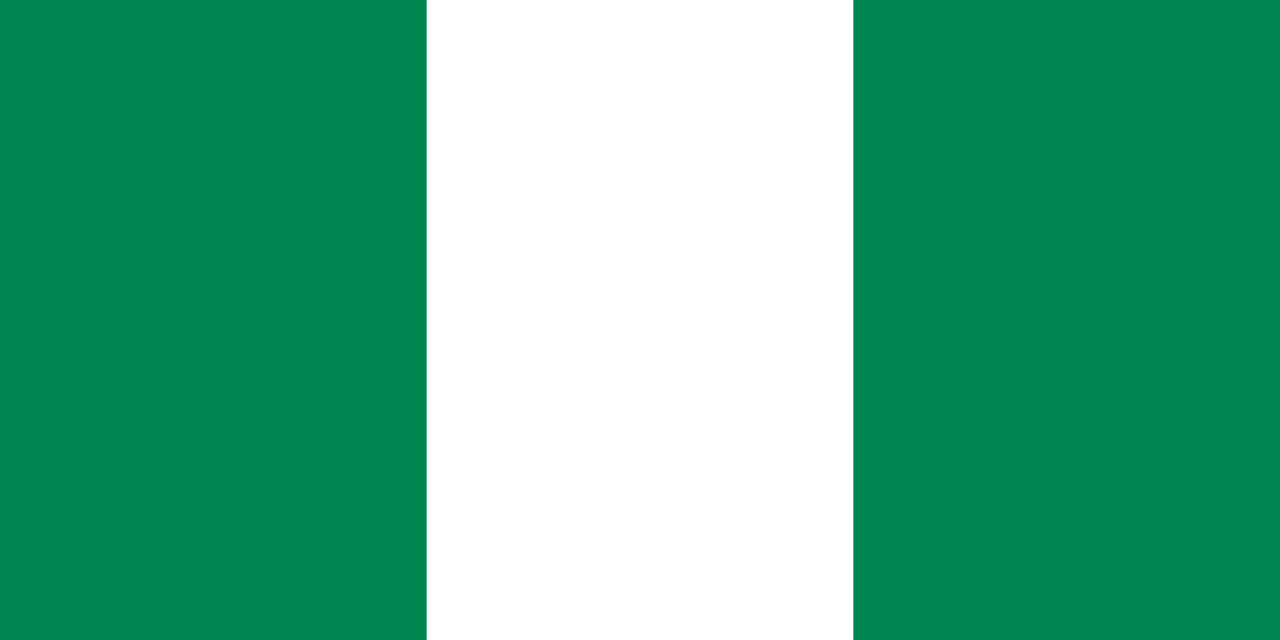
Nigeria's national flag is one of the simplest and most elegant in the world: three vertical bands of green, white, and green. It was designed by a 23-year-old student named Michael Taiwo Akinkunmi, who entered a national competition in 1959 ahead of independence the following year. The two green stripes represent Nigeria's lush agricultural land and forests, while the white center band symbolizes peace and unity among the country's many peoples. The original winning design had a red sun emblem in the white band, but organizers removed it to leave the clean tricolor that has flown proudly since Nigeria gained its independence from Britain on October 1, 1960.
Frequently Asked Questions
What is the capital of Nigeria?
The capital of Nigeria is Abuja, a planned city in the center of the country that replaced Lagos as the capital in 1991. While Lagos remains the largest city and commercial hub, Abuja is the seat of the federal government and home to the National Assembly and presidential complex.
What is Nigeria most famous for?
Nigeria is famous for being the most populous country in Africa, for its booming Nollywood film industry, and for Afrobeats, the music genre that has taken over global charts. It is also widely known for its oil wealth, its incredible linguistic diversity, and beloved foods like jollof rice and suya.
Why is Nigeria called the "Giant of Africa"?
Nigeria earned the nickname because of its sheer scale and influence: it has the largest population on the continent, frequently the largest economy, and an outsized cultural footprint through music, film, and its global diaspora. When Nigeria moves, the rest of West Africa tends to feel it.
Conclusion
Nigeria is a country of superlatives and surprises, where ancient kingdoms, 500 languages, chart-topping music, and a youthful energy all collide. Whether it is the smoky aroma of jollof rice, the global beat of Afrobeats, or the staggering vibrancy of Lagos, the Giant of Africa rewards anyone curious enough to look closer. These ten facts are only the beginning of its remarkable story.