
Landlocked at the center of South America, Paraguay is one of the continent's most overlooked yet genuinely surprising nations. It is a place where almost everyone speaks an Indigenous language daily, where a single dam once powered most of two countries, and where iced herbal tea is practically a national identity. Here are ten fascinating facts that reveal why Paraguay deserves far more attention than it usually gets.
1. It Is One of South America's Only Two Landlocked Countries
Paraguay, along with Bolivia, holds the distinction of being one of just two landlocked nations in South America. Despite having no coastline, it is far from cut off from the world. The mighty Paraguay River slices the country in two, flowing southward into the Paraná and eventually reaching the Atlantic Ocean. For centuries these rivers have been Paraguay's highways, carrying goods, people, and ideas. In fact, Paraguay operates one of the largest river-barge fleets on Earth, allowing this sea-less country to ship soybeans and beef to global markets. The river divides the nation into two starkly different regions: the fertile, populous east and the wild, sparsely settled west.
2. The Gran Chaco Is a Vast, Untamed Wilderness
West of the Paraguay River lies the Gran Chaco, an immense expanse of dry forest, thorny scrubland, and seasonal wetlands that covers roughly 60 percent of the country's territory. Yet astonishingly, only a small fraction of Paraguayans live there. This is one of South America's last great frontiers, home to jaguars, giant anteaters, armadillos, and the rare Chacoan peccary, a species once thought extinct until it was rediscovered alive in the 1970s. The Chaco endures punishing extremes, baking in some of the hottest temperatures recorded on the continent. To learn more about the landscapes and regions, see our Paraguay country guide.
3. Almost Everyone Speaks Guaraní
Paraguay is one of the very few countries in the Americas where an Indigenous language is spoken by the majority of the population, including people of European descent. Guaraní shares official status with Spanish, and the vast majority of Paraguayans are bilingual, frequently blending the two into a colloquial mix affectionately called "Jopará." You will hear Guaraní in homes, markets, radio broadcasts, and even in government. Words like "Asunción" sit alongside everyday Guaraní phrases, and the language carries deep cultural pride. This linguistic resilience makes Paraguay unique, a nation where the tongue of pre-colonial peoples never faded into the background but instead became part of national identity.
4. Asunción Is One of the Oldest Cities in South America
Founded by Spanish conquistadors in 1537, Asunción earned the nickname "Mother of Cities" because expeditions launched from here went on to found or refound settlements across the region, including Buenos Aires. Today the capital sits gracefully along the Paraguay River, blending faded colonial mansions, neoclassical government palaces, and modern towers. The Palacio de los López, the seat of government, gleams white above the waterfront and is beautifully illuminated at night. Asunción is also Paraguay's cultural and economic engine, home to museums, lively markets, and the famous Panteón de los Héroes, where national heroes are entombed. For a relatively small capital, it carries an outsized sense of history.
5. Tereré Is the National Obsession
If there is one ritual that defines daily life in Paraguay, it is tereré, an ice-cold infusion of yerba mate sipped through a metal straw from a shared cup or hollowed horn. Unlike the hot mate favored in Argentina and Uruguay, Paraguayans embrace the cold version, perfect for the country's sweltering heat. People carry their tereré gear everywhere, often steeping it with crushed medicinal herbs known as "yuyos." Sharing tereré is a social glue, a sign of friendship and community that pauses the workday and brings people together. It is so beloved that Paraguay has officially recognized the practice as part of its cultural heritage.
6. It Was Reshaped by One of History's Deadliest Wars
The War of the Triple Alliance, fought from 1864 to 1870, pitted Paraguay against the combined might of Brazil, Argentina, and Uruguay. It became one of the deadliest conflicts in modern history relative to population, devastating Paraguay and killing a staggering proportion of its men. The country lost enormous swaths of territory and took generations to recover. This searing experience forged a fierce sense of national resilience and pride that persists today. Decades later, Paraguay fought the Chaco War against Bolivia in the 1930s over the disputed Chaco region, ultimately securing most of the contested land it still holds.
7. The Itaipú Dam Is an Engineering Marvel
Straddling the border with Brazil on the Paraná River, the Itaipú Dam is one of the largest hydroelectric power stations in the world and a source of immense national pride. Jointly operated by Paraguay and Brazil, it has at times generated nearly all of Paraguay's electricity and a sizable share of Brazil's, despite Paraguay using only a fraction of its allotted output. The dam is so vast it was once named among the modern engineering wonders of the world. Thanks to Itaipú and the nearby Yacyretá dam, Paraguay generates almost all of its electricity from clean, renewable hydropower and exports the surplus to its larger neighbors.
8. Sopa Paraguaya Is a Soup You Eat With a Fork
Paraguayan cuisine is hearty, corn-based, and full of surprises, the most famous being "sopa paraguaya," a misnomer if ever there was one. Despite its name meaning "Paraguayan soup," it is actually a savory, spongy cornbread made with cornmeal, cheese, eggs, and onions. Legend has it the dish was born from a kitchen accident involving a thickened soup that was baked rather than discarded. Other staples include chipa, a chewy cheese bread made with cassava starch that is especially popular during Holy Week, and grilled meats reflecting the country's strong cattle-ranching culture. Mandioca, or cassava, appears at nearly every meal.
9. Football Is a National Passion
Like much of South America, Paraguay lives and breathes football. The national team, nicknamed "La Albirroja" for its red-and-white striped jerseys, has qualified for multiple World Cups and reached the quarterfinals in 2010, its best result. Paraguay is famous for producing tenacious, hard-fighting squads and legendary goalkeepers, including José Luis Chilavert, who remarkably scored goals himself from free kicks and penalties. Club football is fierce too, with Asunción rivals Olimpia and Cerro Porteño contesting one of the continent's most passionate derbies. You can spot the team's colors echoed in the national flag, which itself holds a unique distinction.
10. Its Flag Is Different on Each Side
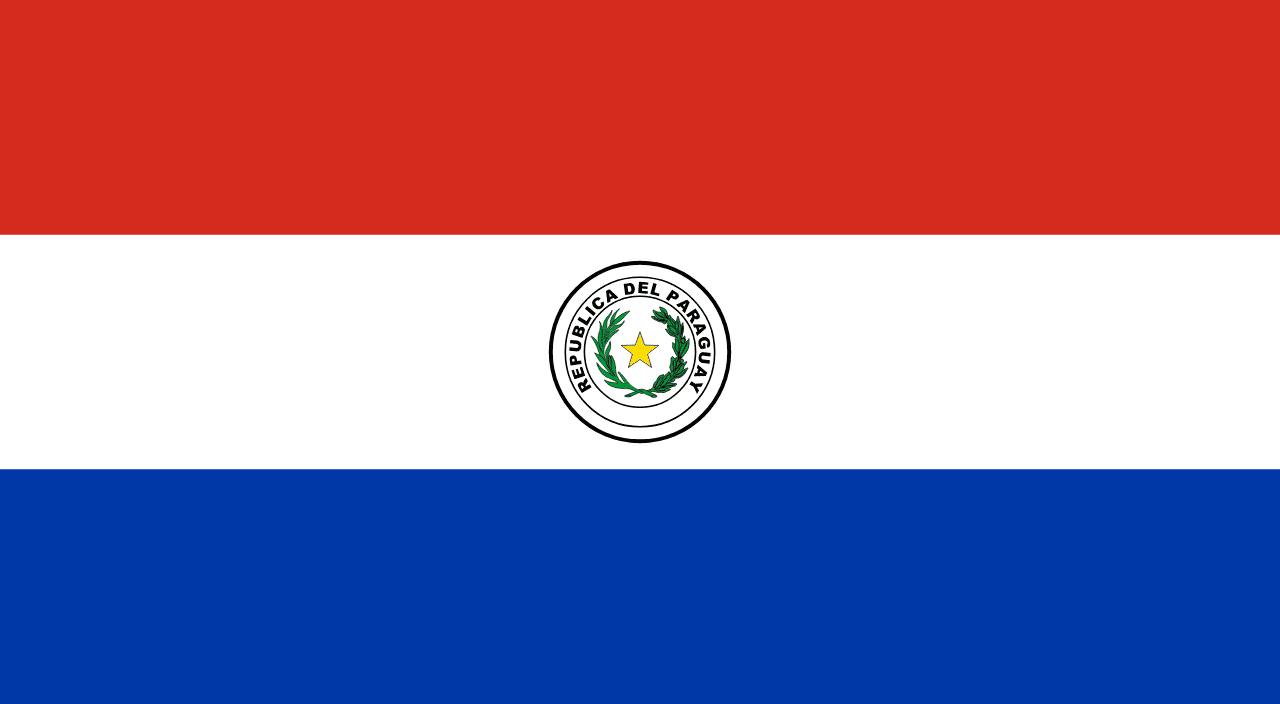
Paraguay holds a quirky honor in the world of vexillology: its national flag is one of the very few that displays a different emblem on each side. The front bears the national coat of arms with a yellow star, while the reverse shows the seal of the treasury featuring a lion and a red liberty cap. Most national flags are identical on both faces, making Paraguay's a true rarity. The flag's red, white, and blue horizontal bands were inspired by the ideals of the French Revolution, reflecting the country's revolutionary spirit when it declared independence from Spain in 1811.
Frequently Asked Questions
What is the capital of Paraguay?
The capital of Paraguay is Asunción, founded in 1537 and one of the oldest cities in South America. Situated along the Paraguay River, it serves as the country's political, cultural, and economic center, with a population that makes it the largest city in the nation.
What is Paraguay famous for?
Paraguay is best known for being bilingual in Spanish and Guaraní, its love of the iced herbal drink tereré, the colossal Itaipú hydroelectric dam, and the wild Gran Chaco wilderness. It is also celebrated for its passionate football culture and its resilient national history.
Why is Paraguay's flag so unusual?
Paraguay's flag is one of only a handful in the world that features a different design on its front and back. The obverse displays the national coat of arms, while the reverse shows the treasury seal, making it a famous curiosity among flag enthusiasts worldwide.
Conclusion
From its two-sided flag and bilingual streets to the untamed Chaco and the thundering turbines of Itaipú, Paraguay is a country full of unexpected character. It rewards anyone curious enough to look beyond the headlines with a culture proud of its roots, a history forged through hardship, and a daily life enriched by shared cups of tereré. These ten facts only begin to capture what makes this heart-of-the-continent nation so genuinely fascinating.