
Tucked into the rolling highlands where Central and East Africa meet, Rwanda packs astonishing variety into one of the continent's smallest nations. It is a land of misty volcanoes, terraced hillsides, and a capital so clean that visitors do a double-take. From mountain gorillas to a globally watched reinvention story, here are ten facts that reveal why Rwanda fascinates travellers, students, and geographers alike.
1. The Land of a Thousand Hills
Rwanda's nickname, "Le Pays des Mille Collines" (the Land of a Thousand Hills), is no exaggeration. The country is one of the most mountainous in Africa, with terrain that ripples endlessly in green ridges and valleys. Much of Rwanda sits above 1,000 metres in elevation, and the average altitude gives it a famously mild, spring-like climate despite lying just south of the Equator. This high-altitude geography shapes everything from agriculture to settlement patterns. Farmers carve neat terraces into the hillsides, and the cool temperatures make Rwanda ideal for growing tea and high-quality arabica coffee. To learn more about how the landscape defines the nation, see our full country guide.
2. Kigali, One of Africa's Cleanest Capitals
Kigali, Rwanda's capital, regularly earns praise as one of the cleanest and safest cities on the continent. Spread across several hills, the city blends modern glass towers with leafy boulevards and well-kept public spaces. A nationwide ban on single-use plastic bags, introduced in 2008, helped keep streets remarkably litter-free. Kigali is also the heart of Rwanda's economy and government, home to the Kigali Convention Centre, whose illuminated dome has become an iconic skyline feature. The city showcases the country's rapid transformation, attracting international conferences, tech startups, and tourists using it as a gateway to the rest of Rwanda.
3. Umuganda: A National Day of Community Cleaning
One of the reasons Rwanda stays so tidy is Umuganda, a mandatory community service day held on the last Saturday of every month. From morning until midday, most citizens, including government ministers, pause normal activities to sweep streets, repair roads, build homes for the vulnerable, or plant trees. The tradition draws on a long-standing Rwandan concept of mutual assistance and collective responsibility. Many shops and offices close during these hours, and even visitors may find services paused. Umuganda has become a powerful symbol of national unity and shared purpose, helping rebuild social bonds and turning civic duty into a deeply rooted habit.
4. Home to Endangered Mountain Gorillas
Rwanda's most famous natural treasure lives in Volcanoes National Park, in the country's northwest. These misty, forested slopes are home to roughly a third of the world's remaining wild mountain gorillas, a critically endangered species. Tourists pay premium permit fees to trek through the bamboo and rainforest for an hour in the presence of these gentle giants. The park was also where American primatologist Dian Fossey carried out her pioneering research and conservation work, later dramatised in the film Gorillas in the Mist. Today, gorilla tourism funds conservation and local communities, and Rwanda celebrates each newborn gorilla at Kwita Izina, an annual public naming ceremony.
5. A Remarkable Story of Recovery
Rwanda's modern history is defined by tragedy and renewal. In 1994, the country endured a horrific genocide against the Tutsi, in which roughly 800,000 people were killed in about 100 days. The scale of the violence shocked the world. What followed has been equally remarkable: a sustained national effort toward reconciliation, justice through community Gacaca courts, and rebuilding. Memorials such as the Kigali Genocide Memorial honour the victims and educate future generations. The phrase "Never Again" underpins national policy, and Rwanda's recovery is studied internationally as an example of how a society can confront atrocity and pursue unity and stability.
6. A Multilingual Nation with Four Official Languages
Rwanda recognises four official languages: Kinyarwanda, French, English, and Swahili. Kinyarwanda is spoken by virtually the entire population, giving the country a rare linguistic unity unusual on a continent of immense language diversity. French dates to the Belgian colonial era, while English was adopted as an official language in 1996 and made the primary language of education in 2008, reflecting Rwanda's pivot toward the East African Community and global business. Swahili, the lingua franca of much of East Africa, became official in 2017. This blend allows Rwandans to communicate locally, regionally, and internationally with ease.
7. World Leader in Women in Parliament
Rwanda holds a global distinction that surprises many: it has the highest proportion of women in its national parliament of any country on Earth, with women holding well over 60 percent of seats in the lower house. The 2003 constitution guarantees that at least 30 percent of decision-making positions go to women, but the reality far exceeds that minimum. This shift partly grew out of the post-genocide period, when women played a central role in rebuilding society. Today Rwandan women are prominent in business, government, and civic life, making the country a frequently cited example in global discussions about gender and representation.
8. A Coffee and Tea Powerhouse
Rwanda's cool, high-altitude hills and volcanic soils are ideal for growing premium coffee and tea, two of its most important exports. Rwandan arabica coffee, much of it grown by smallholder farmers, has earned a strong reputation among specialty roasters for its bright, fruity flavours. Tea estates carpet many hillsides in vivid green. Beyond agriculture, Rwanda has pursued an ambitious development strategy, sometimes nicknamed the "Singapore of Africa," focused on services, technology, and tourism. The economy has grown rapidly in recent decades, and the government has invested heavily in connectivity, even partnering on drone-delivery networks that fly blood and medical supplies to remote clinics.
9. Hearty Cuisine Built on Local Staples
Rwandan food is simple, fresh, and rooted in the land. Everyday meals lean on staples such as beans, plantains, cassava, sweet potatoes, and maize. A popular dish is isombe, made from mashed cassava leaves often cooked with spinach, eggplant, and peanuts. Street-side brochettes, skewers of grilled goat, beef, or fish, are a beloved social food, frequently paired with grilled plantains. Ibihaza, pumpkin cooked with beans, is another comfort dish. Cattle hold deep cultural significance, and milk has traditionally been a prized food. Meals tend to be communal affairs, reflecting the same spirit of togetherness that runs through Rwandan social life.
10. The Striking Flag and the Source of the Nile
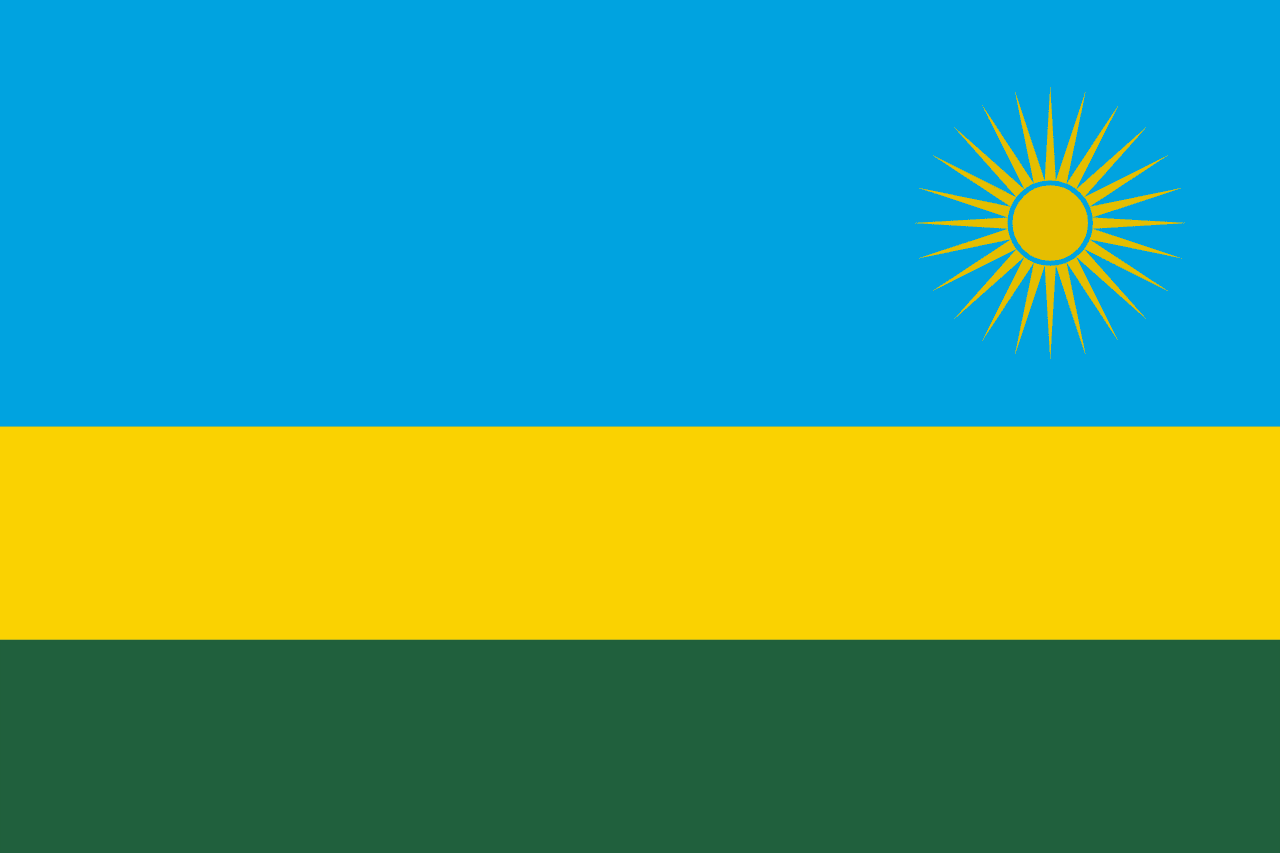
Rwanda adopted a new national flag in 2001, replacing earlier symbols associated with the country's troubled past. Its bands of blue, yellow, and green, topped with a golden sun, represent peace, economic development, and hope for prosperity; you can read the full meaning in our guide to the Rwandan flag. Geographically, Rwanda also lays claim to one of Africa's great mysteries: some explorers identify the Nyungwe Forest in the country's southwest as a possible southernmost source of the Nile, the world's longest river. This ancient montane rainforest is also a haven for chimpanzees and colourful birdlife.
Frequently Asked Questions
What is the capital of Rwanda?
The capital of Rwanda is Kigali, located near the geographic centre of the country. Spread across a series of hills, it is the nation's largest city and serves as its political, economic, and cultural hub. Kigali is widely regarded as one of the cleanest and safest capital cities in Africa.
What is Rwanda most famous for?
Rwanda is best known for its endangered mountain gorillas in Volcanoes National Park, its dramatic "thousand hills" landscape, and its remarkable recovery and reconciliation following the 1994 genocide. It is also celebrated for clean cities, premium coffee and tea, and a world-leading share of women in parliament.
Why is Rwanda called the Land of a Thousand Hills?
The nickname comes from the country's strikingly hilly terrain. Rwanda's geography is dominated by ridges, valleys, and highlands, with farmland terraced into the slopes. The endless rolling hills give the landscape its distinctive look and inspired the French phrase Le Pays des Mille Collines.
Conclusion
Rwanda proves that a small country can hold an enormous amount of wonder. From gorilla-filled volcanoes and tea-covered hills to a story of resilience that the world watches closely, this East African nation rewards every bit of curiosity it inspires. These ten facts are only a starting point, so keep exploring and discover even more about the Land of a Thousand Hills.