
Scattered across the eastern Caribbean like a string of green jewels, Saint Vincent and the Grenadines is a nation of one main island and a sweep of tiny islets where superyachts anchor beside fishing boats. It is a place of brooding volcanoes, black-sand beaches, and a fierce indigenous heritage that resisted European conquest longer than almost anywhere else in the region. Here are ten facts that reveal why this small archipelago is one of the Caribbean's most fascinating corners.
1. It Is a Country Made of More Than 30 Islands
Saint Vincent and the Grenadines is not a single landmass but a multi-island state stretching roughly 80 kilometres from north to south. The volcanic main island of Saint Vincent holds the bulk of the land and people, while a chain of smaller islands and cays known as the Grenadines trails southward toward Grenada. The inhabited Grenadines include Bequia, Mustique, Canouan, Mayreau, Union Island, and Petit Saint Vincent, with dozens of uninhabited rocks in between. This geography makes boats as essential as cars, and the country's identity is inseparable from the sea that links its scattered communities together across sparkling turquoise channels.
2. A Live Volcano Towers Over the Main Island
The dominant feature of Saint Vincent is La Soufrière, an active stratovolcano rising to about 1,234 metres, the highest point in the country. It is one of the most active volcanoes in the Caribbean, with major eruptions recorded in 1812, 1902, and most recently in April 2021, when a series of explosive blasts blanketed the island in ash and forced tens of thousands to evacuate from the northern "red zone." Despite the danger, the volcano's slopes are extraordinarily fertile, and hiking to its steaming crater rim is one of the island's signature adventures, rewarding trekkers with views across lush rainforest to the sea.
3. Kingstown Is Known as the City of Arches
The capital, Kingstown, sits on a sheltered bay on the southwest coast of the main island and serves as the country's commercial and political heart. It earned the nickname "City of Arches" for the cobblestone archways and covered walkways that shade its bustling streets, a practical response to tropical sun and rain. Among its landmarks are the Gothic-style St. George's Anglican Cathedral and the Roman Catholic Cathedral of the Assumption, with its eclectic mix of architectural styles. Just outside town lie the Kingstown Botanic Gardens, founded in 1765 and considered the oldest botanic garden in the Western Hemisphere.
4. The Indigenous Garifuna Resisted Colonization Fiercely
Saint Vincent, called Hairouna or Yurumein by its first inhabitants, was home to the Kalinago (Island Caribs) and later the Garifuna, also known as the Black Caribs, descended from indigenous people and shipwrecked or escaped Africans. They resisted European settlement so effectively that the island remained one of the last in the Caribbean to be colonized. After the Second Carib War, the British forcibly deported thousands of Garifuna in 1797 to the island of Roatán off Honduras, where their descendants live today. This dramatic history is commemorated, and Garifuna culture survives as a thread in the nation's identity.
5. English Is Official, But Vincentian Creole Rules Daily Life
English is the official language, used in government, schools, and media, a legacy of British colonial rule. In everyday conversation, however, Vincentians speak Vincentian Creole, an English-based Creole flavored with African, French, and indigenous influences. The lilting rhythm and distinctive vocabulary give the islands their own unmistakable voice. This blend of formal English and expressive Creole reflects the layered history of a country where European, African, and Amerindian heritage all left their mark on speech, song, and storytelling.
6. Independence Came Peacefully in 1979
Saint Vincent and the Grenadines gained full independence from the United Kingdom on October 27, 1979, becoming a sovereign nation within the Commonwealth. It remains a constitutional monarchy with the British monarch as head of state, represented locally by a Governor-General, while a Prime Minister leads the government. In 2009, voters narrowly rejected a referendum to become a republic. The country is a member of the United Nations, the Caribbean Community (CARICOM), and the Organisation of Eastern Caribbean States, punching above its weight in regional diplomacy despite its modest size.
7. Mustique Is a Hideaway for the Global Elite
Among the Grenadines, the private island of Mustique has earned legendary status as a discreet playground for royalty, rock stars, and billionaires. Developed from the 1960s, it became famous when Princess Margaret was gifted a plot of land and built a villa there, drawing a glittering parade of visitors over the decades. Today the island is dotted with exclusive villas amid carefully managed tropical landscapes, and its understated luxury contrasts sharply with the working fishing villages elsewhere in the country. It is a vivid reminder of the islands' double identity as both a humble Caribbean home and a glamorous escape.
8. Bananas and Tourism Power the Economy
For decades, bananas were the backbone of the Vincentian economy, with the fertile volcanic soil producing fruit exported largely to Britain. When preferential European trade access eroded, the country diversified toward tourism, yachting, and services. The deep-water harbours and pristine cays make the Grenadines a world-class sailing destination, drawing yacht charters from around the globe. Arrowroot, once a major export used in fine starches, remains a niche product, and offshore financial services and a growing international airport on the main island have broadened the economic base of this resourceful island nation.
9. The Cuisine Centers on the Sea, Roots, and Spice
Vincentian food reflects the bounty of land and ocean. The national dish pairs roasted breadfruit with fried jackfish, a hearty combination born of local staples. Callaloo soup, made from leafy greens, and seafood like conch, lobster, and snapper feature heavily, while ground provisions such as dasheen, yams, and plantains anchor many meals. "Buljol," a salted-fish salad, and spicy pepperpot stews show African and Creole roots. Fresh tropical fruit, locally distilled rum, and the warm flavors of nutmeg and cinnamon round out a cuisine that is unpretentious, satisfying, and deeply tied to the islands' agricultural heritage.
10. It Doubled as a Pirate Paradise on Film
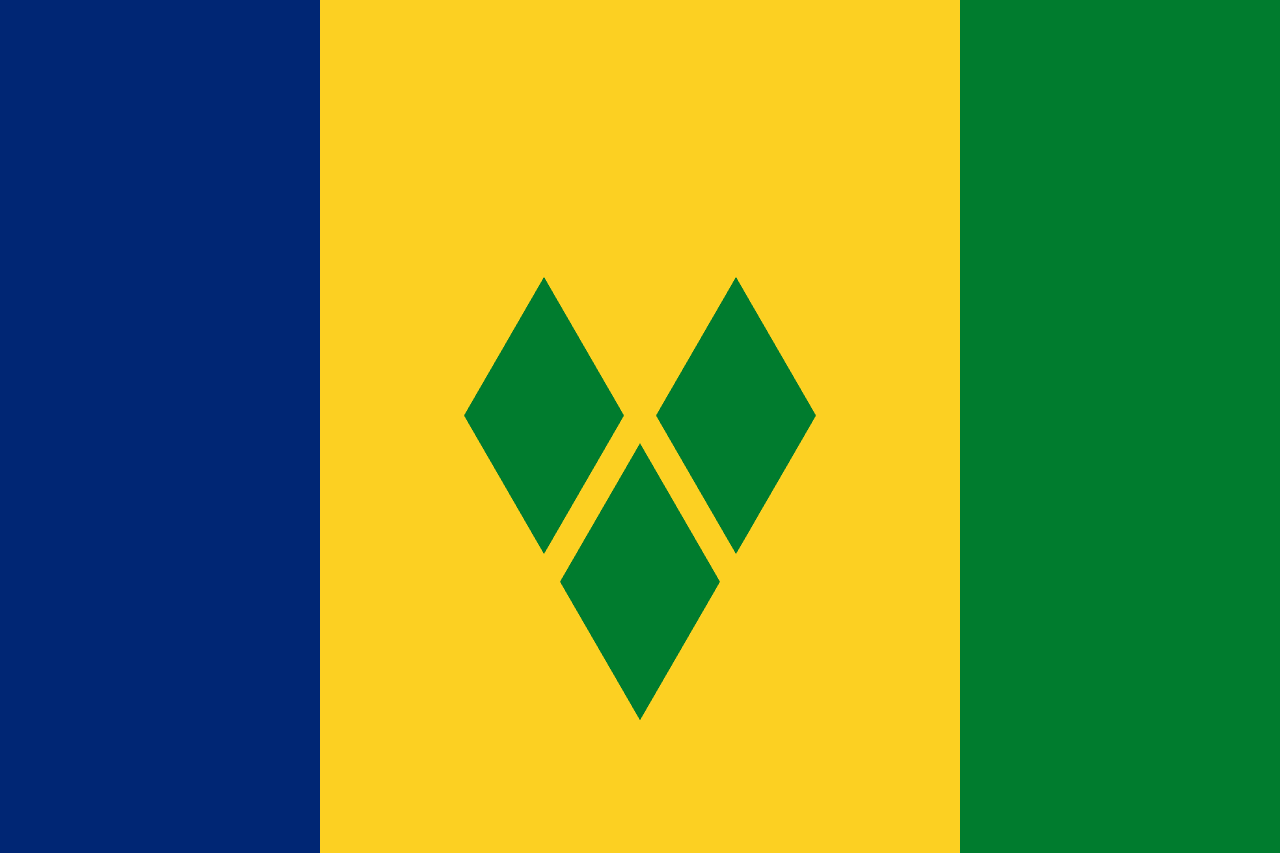
The dramatic landscapes of Saint Vincent gained worldwide fame as a filming location for the first Pirates of the Caribbean movie, with Wallilabou Bay on the leeward coast transformed into the bustling colonial port of Port Royal. Remnants of the film set still draw curious visitors today. The country's flag, a striking design of blue, gold, and green bands with three green diamonds, reflects this lush volcanic beauty; you can read more about the flag and its symbolism. The diamonds form a "V" for Vincent and represent the islands as gems of the Antilles.
Frequently Asked Questions
What is the capital of Saint Vincent and the Grenadines?
The capital is Kingstown, a bustling port town on the southwest coast of the main island of Saint Vincent. Nicknamed the "City of Arches," it is the country's commercial, administrative, and cultural center, and home to the historic Kingstown Botanic Gardens, one of the oldest in the Western Hemisphere.
What is Saint Vincent and the Grenadines famous for?
The country is best known for the Grenadines, a chain of stunning islands beloved by sailors and including the exclusive private island of Mustique. It is also famous for the active La Soufrière volcano, its role as a filming location for Pirates of the Caribbean, and its rich Garifuna indigenous heritage.
Why is one of its islands so popular with celebrities?
Mustique, a privately managed island in the Grenadines, has drawn royalty and celebrities since the 1960s, most famously Princess Margaret. Its exclusive villas, strict privacy, and tranquil tropical setting have made it a discreet retreat for the rich and famous for generations.
Conclusion
Saint Vincent and the Grenadines proves that a small nation can hold an enormous amount of character. From the smoking crater of La Soufrière to the yacht-filled coves of the Grenadines, from fierce Garifuna resistance to peaceful independence, this archipelago rewards every traveller and curious mind. To dig deeper into its landscapes, history, and culture, explore our full country guide and keep discovering the gems of the Caribbean.
