
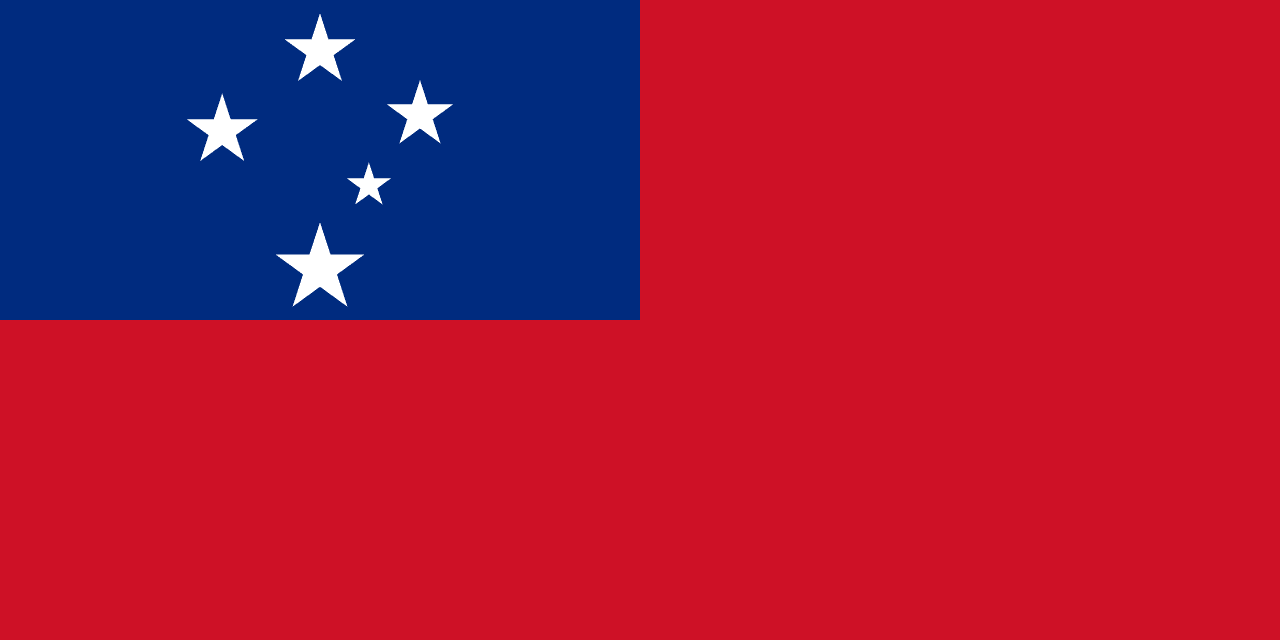
In the heart of the South Pacific lies a nation where time itself was once rewritten, where chiefs still govern villages, and where the oldest written novel's author chose to spend his final days. Samoa is far more than a postcard of palm trees and turquoise lagoons. Read on for ten genuinely surprising facts about this remarkable Polynesian country.
1. Samoa Skipped an Entire Day in 2011
On December 29, 2011, Samoa went to bed and woke up on December 31, completely erasing December 30 from the calendar. The country jumped across the International Date Line, switching from the eastern side to the western side to align its time zone with major trading partners Australia and New Zealand rather than the United States. For decades Samoa had been one of the last places on Earth to see each new day; overnight it became one of the first. The move was driven by business logic: Samoa shared no working days with Sydney and Auckland on Fridays, hampering commerce. Today, neighboring American Samoa, just 100 kilometers away, remains a full day behind.
2. It Sits on Two Volcanic Main Islands
Samoa is made up of two large volcanic islands, Upolu and Savai'i, plus several smaller islets. Savai'i is actually the larger and is one of the biggest islands in Polynesia, but most people and the capital live on Upolu. The islands are young in geological terms, with rugged volcanic peaks, lava fields, and craters. Savai'i experienced eruptions as recently as the early 1900s, and you can still walk across the dramatic Saleaula lava fields where molten rock buried villages. Lush rainforest, waterfalls, and blowholes like the famous Alofaaga Blowholes punctuate the landscape, which means the country offers far more than just beaches. To learn more, see our country guide.
3. Apia Is the Only City in the Country
Apia, on the northern coast of Upolu, is Samoa's capital and its sole urban center, home to roughly 35,000 people. It grew up around a natural harbor and developed as a trading port in the 19th century, attracting German, British, and American interests. Today it blends colonial-era buildings, busy markets, and the striking Immaculate Conception Cathedral along its waterfront. The Maketi Fou market is the commercial heart, overflowing with taro, breadfruit, and handicrafts. Despite being the capital, Apia retains a relaxed, village-like atmosphere, and outside its small downtown the rest of Samoa remains overwhelmingly rural, with life organized around traditional villages rather than towns.
4. The Fa'a Samoa Way of Life Still Governs Daily Life
Fa'a Samoa, meaning "the Samoan way," is the traditional system of culture and social organization that continues to shape modern Samoa. At its center is the matai system, where each extended family (aiga) is led by a chosen chief, or matai, who holds a title and represents the family in village councils. These councils, called fono, make decisions on local matters and uphold customary law. Land is largely held communally under customary tenure rather than privately owned. Respect, service to family, and communal responsibility are core values. This deeply rooted system means that Samoa has preserved its indigenous governance and identity to a degree rarely seen elsewhere in the modern world.
5. Tattooing Is a Sacred, Painful Rite
Samoa gave the world the very word "tattoo," derived from the Samoan tatau. Traditional Samoan tattooing remains a profound cultural rite. Men receive the pe'a, an intricate design covering the body from waist to knees, while women may receive the malu on the thighs. The tattoos are applied by a master tattooist, the tufuga, using hand-tapped tools made from bone, tusk, and wood, a process that can take days and is intensely painful. Completing a pe'a is a mark of courage, endurance, and commitment to one's culture and family. Abandoning the process partway through brings lasting shame, so those who begin are expected to see it through.
6. Two Languages, One Identity
Samoan and English are both official languages. Samoan, or Gagana Samoa, is a Polynesian language closely related to Tongan, Hawaiian, and Maori, and it is spoken by virtually the entire population, making it one of the most vital indigenous languages in the Pacific. Samoan has a fascinating feature: it uses two distinct registers, a formal "chiefly" speech used in ceremonies and oratory, and an everyday colloquial style. Skilled orators, known as tulafale or "talking chiefs," are highly respected for their command of proverbs and ceremonial language. English is widely used in business, government, and education, so most Samoans are comfortably bilingual.
7. Robert Louis Stevenson Spent His Final Years Here
The Scottish author of Treasure Island and Strange Case of Dr Jekyll and Mr Hyde, Robert Louis Stevenson, settled in Samoa in 1890 seeking a climate kind to his fragile health. He built an estate called Vailima near Apia, immersed himself in Samoan affairs, and was affectionately nicknamed Tusitala, meaning "teller of tales." When he died suddenly in 1894 at just 44, Samoans carried his body up Mount Vaea, where he is buried beneath an epitaph he wrote himself. His former home is now the Robert Louis Stevenson Museum, and his grave remains a pilgrimage site for literary admirers from around the world.
8. The Umu and a Coconut-Rich Cuisine
Samoan food revolves around the bounty of land and sea. The traditional cooking method is the umu, an above-ground earth oven of hot volcanic stones used especially for the Sunday family feast known as the to'ona'i. A signature dish is palusami, young taro leaves baked in coconut cream until rich and tender. Other staples include taro, breadfruit, green bananas, fresh reef fish, and oka, a refreshing raw fish marinated in coconut cream, lime, and chili similar to ceviche. Coconut appears in nearly everything. Meals are generous and communal, reflecting the cultural emphasis on family and hospitality that runs through every aspect of Samoan life.
9. Rugby Is a National Obsession
For such a small country, Samoa is a giant in world rugby. The national team, Manu Samoa, has repeatedly stunned far larger rugby nations, including a famous victory over Wales at the 1991 Rugby World Cup. Samoa produces an extraordinary number of elite players relative to its population, and Samoan-heritage athletes feature prominently in the professional leagues of New Zealand, Australia, England, and Japan. Before matches, the team performs the Siva Tau, a powerful traditional war dance similar in spirit to New Zealand's haka. Rugby is woven into national pride, and success on the field is celebrated across every village in the country.
10. The To Sua Ocean Trench and Natural Wonders
One of Samoa's most photographed sights is the To Sua Ocean Trench on Upolu, a stunning swimming hole where you descend a long wooden ladder into a deep, vivid blue pool surrounded by lush greenery and connected to the sea by a lava tube. Its name fittingly means "big hole." Beyond it, Samoa offers waterfalls like Papapapaitai Falls, the freshwater Piula Cave Pool, and pristine coral reefs teeming with marine life. The islands also shelter the rainforests of Savai'i and protected areas important for native birds and the flying fox, a large fruit bat that holds cultural significance. You can read more about national symbols in our piece on the Samoan flag.
Frequently Asked Questions
What is the capital of Samoa?
The capital of Samoa is Apia, located on the northern coast of the island of Upolu. With around 35,000 residents, it is the country's only city and serves as the political, commercial, and cultural hub, built around a natural harbor that made it an important Pacific trading port.
What is Samoa famous for?
Samoa is famous for its strong living culture (Fa'a Samoa), traditional hand-tapped tattooing that gave the world the word "tattoo," its powerhouse rugby team Manu Samoa, stunning natural sites like the To Sua Ocean Trench, and for being the place where author Robert Louis Stevenson spent his final years.
Why did Samoa skip a day in 2011?
Samoa shifted across the International Date Line at the end of 2011 to better align its working week with Australia and New Zealand, its main trading partners. As a result, the calendar jumped straight from December 29 to December 31, eliminating December 30 entirely.
Conclusion
From rewriting its own calendar to preserving one of the Pacific's most intact traditional cultures, Samoa proves that a small nation can hold an enormous amount of wonder. Whether you are drawn by its volcanic landscapes, its sacred tattoos, its rugby glory, or its literary history, there is always more to discover about this captivating Polynesian country.