
Few countries pack as much into so little space as Singapore, a glittering island nation perched at the tip of the Malay Peninsula. In just half a century it transformed from a swampy trading port into one of the wealthiest and most futuristic cities on Earth. From rooftop infinity pools to a national obsession with food courts, here are ten facts that reveal why this tiny red dot punches so far above its weight.
1. It Is a City, a Country, and an Island All at Once
Singapore holds the rare distinction of being one of only three surviving city-states in the world, alongside Monaco and Vatican City. The entire nation occupies a main island plus around 60 smaller islets, covering roughly 730 square kilometres, which is barely larger than New York City. Remarkably, Singapore has been steadily expanding its own borders through land reclamation, growing by about 25 percent since independence by filling in coastline with imported sand and earth. Because the country and its capital share the same name and the same boundaries, there is no separate "capital city" to travel to. To dig deeper into its borders and geography, explore our country guide.
2. A Skyline Built on Reclaimed Land
Some of Singapore's most iconic sights sit on ground that did not exist a few decades ago. Marina Bay, home to the boat-shaped Marina Bay Sands hotel and its famous rooftop infinity pool, was entirely reclaimed from the sea. The Gardens by the Bay nature park, with its towering Supertrees and climate-controlled domes, also rises from reclaimed terrain. This relentless engineering reflects a nation that treats land as its most precious and scarce resource, planning vertically and underground when it cannot expand outward.
3. Home to Around 5.9 Million People From Many Backgrounds
With roughly 5.9 million residents squeezed onto a small island, Singapore is among the most densely populated countries on the planet. Its society is famously multicultural, built primarily on Chinese, Malay, and Indian communities, along with a large population of expatriates drawn by its global economy. This diversity is woven into daily life through neighbourhoods like Chinatown, Little India, and Kampong Glam. Rather than blending everyone into one identity, Singapore officially celebrates its distinct ethnic and religious groups, and racial harmony is treated as a serious matter of national policy and pride.
4. Four Official Languages and a Slang All Its Own
Singapore recognises four official languages: English, Mandarin Chinese, Malay, and Tamil. English is the main language of business, government, and schooling, which helps the diverse population communicate and connects the country to global trade. Malay, however, holds the ceremonial status of national language, and the national anthem is sung in Malay. Out of this mix grew "Singlish," a colourful colloquial blend of English peppered with words and grammar borrowed from Chinese dialects, Malay, and Tamil. Phrases like "lah," "can lah," and "shiok" are instantly recognisable markers of local identity.
5. From Fishing Village to Global Powerhouse in One Lifetime
Modern Singapore traces its rise to 1819, when Sir Stamford Raffles established a British trading post on the island. After Japanese occupation during World War II and a brief, turbulent union with Malaysia, Singapore became a fully independent republic in 1965, almost by accident, after being expelled from the Malaysian federation. With no natural resources and uncertain prospects, its leaders, especially founding Prime Minister Lee Kuan Yew, pursued aggressive economic and social transformation. Within a single generation the country leapt from third-world struggles to first-world prosperity, a trajectory often called one of the great economic success stories of the modern era.
6. One of the World's Richest and Busiest Economies
Despite its size, Singapore consistently ranks among the wealthiest nations measured by GDP per capita. It is a leading global financial hub, a top destination for multinational headquarters, and home to one of the busiest container ports in the world. Strategically positioned along the Strait of Malacca, through which a huge share of global shipping passes, the country turned its location into an economic superpower. Low corruption, a stable government, and a highly educated workforce have made it a magnet for international banks, technology firms, and trade.
7. A Garden City With Surprising Wildlife
Singapore brands itself a "City in a Garden," and the greenery is no marketing gimmick. Lush tropical foliage spills over highways, buildings, and bridges, and the island retains genuine rainforest at the Bukit Timah Nature Reserve, one of the few patches of primary rainforest within a major city anywhere on Earth.
The wildlife can be startling for such an urban place. Long-tailed macaques, monitor lizards over a metre long, and even the occasional wild boar roam green corridors. Smooth-coated otters have famously returned to the city's rivers and reservoirs, with playful family groups now a beloved sight delighting residents and tourists alike.
8. A Food-Obsessed Nation of Hawker Centres
Few places take eating as seriously as Singapore, where mealtimes can feel like a national sport. The heart of its food culture is the hawker centre, an open-air complex packed with stalls selling affordable, freshly cooked dishes from every corner of its multicultural population. In 2020, Singapore's hawker culture was added to UNESCO's list of intangible cultural heritage. Signature dishes spark passionate debate, from chilli crab and Hainanese chicken rice to laksa, satay, and the rich, spicy noodle soup of bak kut teh. Several humble hawker stalls have even earned Michelin recognition, proving world-class cooking does not require a fancy dining room.
9. Famously Strict Rules and a Spotless Reputation
Singapore is renowned for its cleanliness, safety, and orderliness, qualities maintained partly through strict laws and fines. Chewing gum sales are heavily restricted, littering and jaywalking carry penalties, and graffiti is treated as a serious offence. Vandalism can result in caning, a form of corporal punishment that drew global attention in the 1990s. While critics debate the trade-offs, the result is a city that consistently ranks among the safest and tidiest in the world, where late-night walks and clean public transport are simply taken for granted.
10. The Lion City Where Its Symbol Never Existed
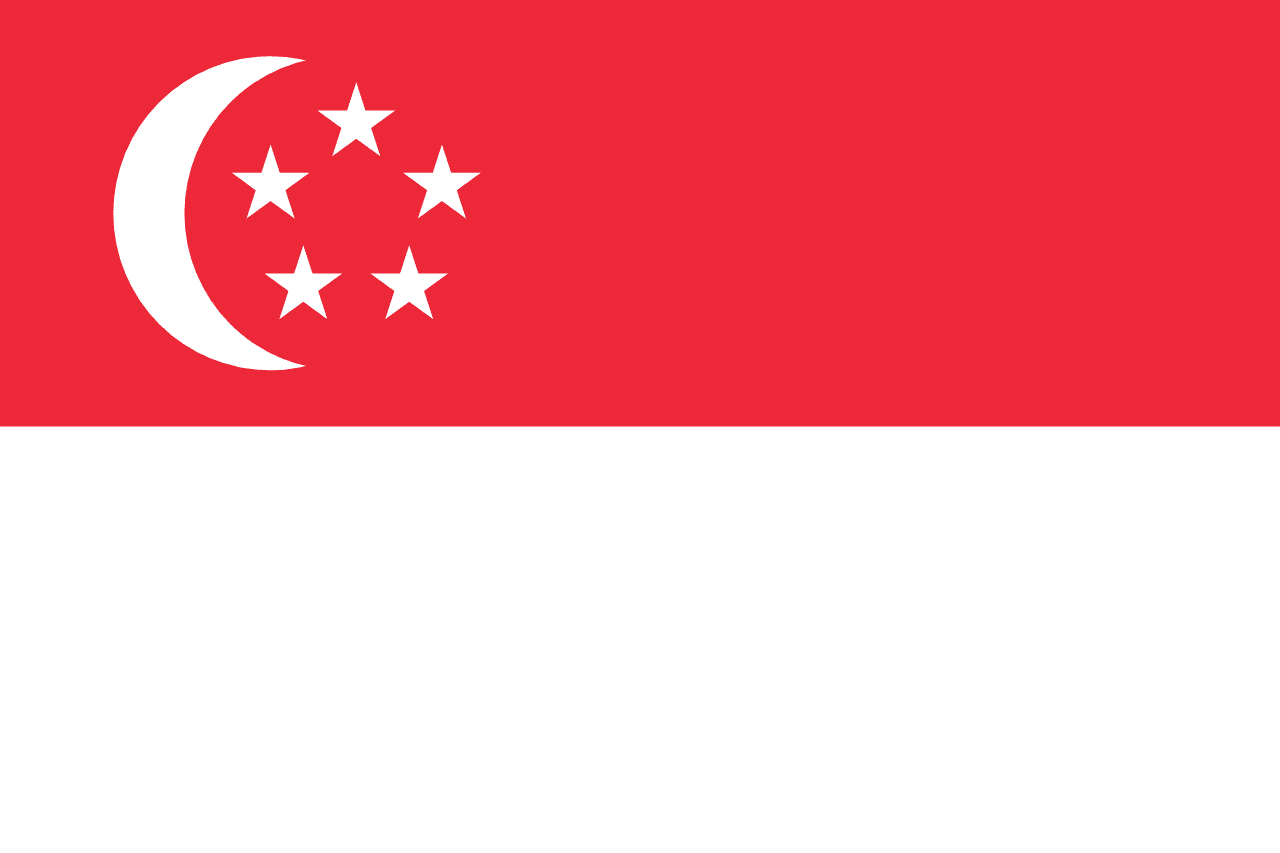
The name "Singapore" comes from the Malay words "Singa Pura," meaning "Lion City," based on a legend in which a visiting prince spotted a lion-like beast on the island. There is just one catch: lions have never been native to Singapore, and the animal he saw was almost certainly a tiger. The country embraced the myth anyway, adopting the Merlion, a creature with a lion's head and a fish's body, as its national mascot. The fish tail nods to the island's origins as a humble fishing village. You can learn more about the country's emblems and colours in our piece on the Singapore flag.
Frequently Asked Questions
What is the capital of Singapore?
Singapore is a city-state, so the country and its capital are one and the same. The entire nation functions as a single city, meaning there is no distinct capital located elsewhere within its borders.
What is Singapore famous for?
Singapore is famous for its stunning modern skyline, the Marina Bay Sands hotel, Gardens by the Bay, and its world-class hawker food. It is also known as a major global financial centre, an exceptionally clean and safe city, and a meeting point of Chinese, Malay, Indian, and Western cultures.
Is it true that chewing gum is banned in Singapore?
Largely, yes. Since 1992 the sale and import of chewing gum has been prohibited, a measure introduced to keep public spaces and transit systems clean. Today there are limited exceptions for therapeutic and dental gum bought from a pharmacist, but casual gum chewing remains strongly discouraged.
Conclusion
Singapore proves that size is no limit to ambition. In a space smaller than many cities, it has built a thriving economy, a green and futuristic landscape, and a rich multicultural society where four languages and dozens of cuisines coexist. From its reclaimed skyline to its otters, hawker stalls, and lion-that-was-really-a-tiger origin story, the Lion City offers endless fascination for anyone curious about how a nation reinvents itself against the odds.