
Tucked into the rugged heart of Central Asia, Tajikistan is a country where more than ninety percent of the land buckles upward into towering mountains, where Persian poetry echoes through bustling bazaars, and where one of the deepest lakes on Earth glitters at high altitude. It is the smallest country in Central Asia by area, yet it packs in some of the most dramatic scenery on the continent. Here are ten fascinating facts that reveal why Tajikistan deserves far more attention than it usually receives.
1. It Is One of the Most Mountainous Countries on Earth
Roughly 93 percent of Tajikistan is covered by mountains, and more than half the country sits above 3,000 metres in elevation. The terrain is dominated by the mighty Pamir range, often nicknamed the "Roof of the World." The nation's highest peak, Ismoil Somoni Peak, rises to 7,495 metres and was the tallest summit in the entire Soviet Union, once known as Communism Peak. This vertical landscape shapes nearly everything about Tajik life, from where people can farm to how roads snake through impossibly narrow valleys. To learn more about the wider nation, see our country guide.
2. Dushanbe, the Capital, Means "Monday"
Tajikistan's capital and largest city is Dushanbe, home to well over 800,000 people. Its name comes from the Tajik word for "Monday," because the settlement grew up around a popular Monday marketplace. For most of its history it was just a humble village, only becoming a city in the twentieth century under Soviet rule. Today Dushanbe is a leafy, low-rise capital lined with grand fountains, Soviet-era boulevards, and modern monuments. It hosts the national government, universities, and one of the tallest flagpoles ever built, which stood as a world record holder for several years after its completion.
3. A Persian-Speaking Island in a Turkic Sea
Unlike most of its Central Asian neighbours, who speak Turkic languages, Tajiks speak Tajik, a variety of Persian closely related to the Farsi spoken in Iran and the Dari of Afghanistan. This makes Tajikistan culturally and linguistically Persian, a living link to the great civilizations of the ancient Iranian world. Russian remains widely used as a language of business and government, a legacy of the Soviet period. The shared Persian heritage means Tajiks revere poets like Rudaki and Ferdowsi as national heroes, celebrating a literary tradition that stretches back well over a thousand years.
4. Home to One of the World's Deepest Lakes
High in the Pamirs lies Lake Karakul, a stunning blue lake formed inside an ancient meteorite impact crater, sitting at around 3,900 metres above sea level. Elsewhere, Lake Sarez was created in 1911 when a massive earthquake triggered a landslide that dammed a river valley, forming a lake more than 500 metres deep. Sarez is held back by the natural Usoi Dam, the tallest dam of any kind on the planet, and scientists monitor it carefully because a sudden breach could endanger communities downstream. These dramatic bodies of water underline just how geologically active and youthful Tajikistan's landscape really is.
5. The Pamir Highway Is a Legendary Road Trip
The M41, better known as the Pamir Highway, is the second-highest international road in the world. Built by Soviet engineers in the 1930s, it climbs over passes higher than 4,600 metres as it threads through the eastern Pamirs toward the Afghan and Chinese borders. For adventurous travellers and cyclists, it has become one of the planet's most coveted overland journeys, offering jaw-dropping views of glaciers, high plateaus, and remote Kyrgyz and Pamiri villages. The thin air, harsh winters, and sheer isolation make it as challenging as it is breathtaking, a true pilgrimage for lovers of wild places.
6. The Population Is Young and Mostly Rural
Tajikistan is home to roughly 11 million people, and it has one of the youngest populations in the world, with a large share under the age of 30. Unlike many countries, the majority of Tajiks still live in rural areas rather than cities, farming the narrow valleys and mountain slopes. The Tajik people form the large ethnic majority, alongside Uzbek and Kyrgyz minorities and distinct Pamiri communities in the remote east. Family ties are strong, multi-generational households are common, and hospitality toward guests is considered a deep cultural obligation rather than a mere courtesy.
7. Plov and Endless Cups of Green Tea
Tajik cuisine reflects centuries of Silk Road exchange. The national dish is osh, also called plov, a hearty rice pilaf cooked with carrots, onions, and lamb in a large cast-iron pot. Flatbread known as non is treated with great respect and is never placed upside down or thrown away. Meals are typically accompanied by green tea, sipped throughout the day from small bowls. Other favourites include qurutob, a layered dish of bread, yogurt sauce, and herbs eaten communally by hand, and skewers of grilled meat called shashlik enjoyed at celebrations.
8. Navruz Marks the Persian New Year
One of the most important festivals in Tajikistan is Navruz, the Persian New Year celebrated at the spring equinox around 21 March. Rooted in ancient Zoroastrian tradition, it marks renewal and the rebirth of nature. Families clean their homes, prepare special dishes such as sumalak made from sprouted wheat, and gather for music, dancing, and games. The celebration is recognised by UNESCO as part of humanity's intangible cultural heritage. Navruz reveals how Tajikistan's Persian identity remains vividly alive, blending pre-Islamic customs with the rhythms of modern community life.
9. Remittances Power the Economy
Tajikistan is one of the most remittance-dependent economies in the world. Hundreds of thousands of Tajiks travel abroad, mainly to Russia, to work as labourers and send money home, and these remittances have at times accounted for a remarkable share of the country's entire economy. Beyond that, Tajikistan is rich in hydroelectric potential thanks to its rushing mountain rivers; the colossal Nurek Dam was for decades the tallest dam on Earth. Cotton, aluminium, and minerals also play important roles, while the rugged terrain keeps large-scale industry and agriculture concentrated in a handful of valleys.
10. A Crossroads of the Ancient Silk Road
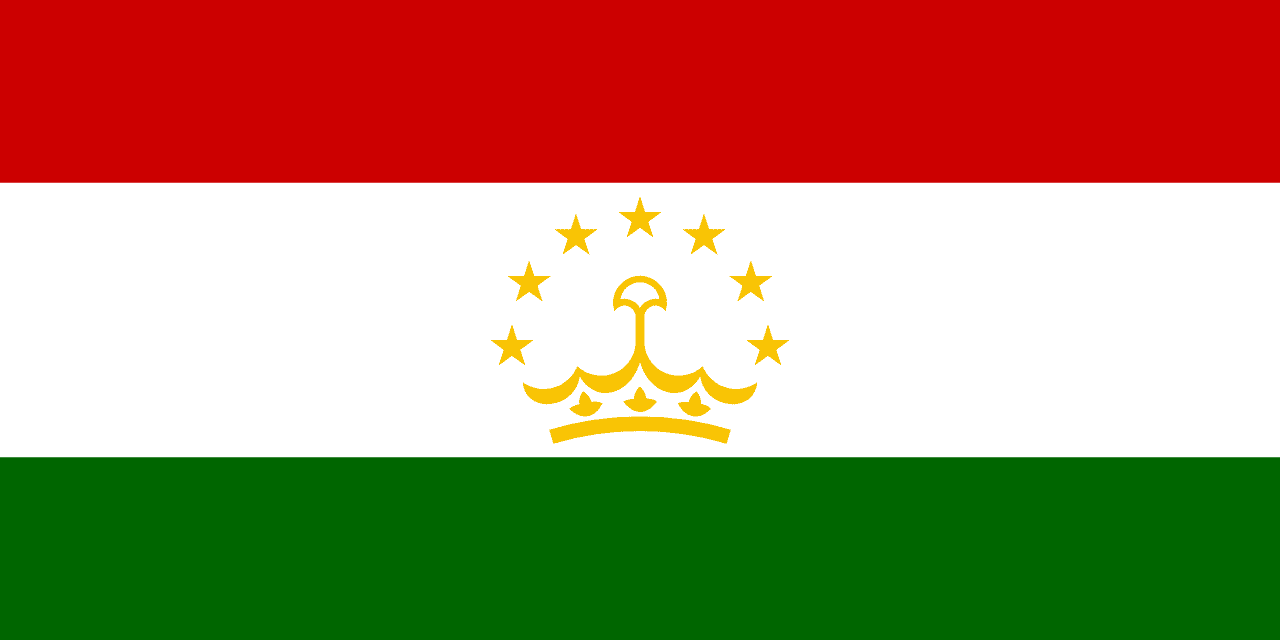
Tajikistan sits on land that was once a vital artery of the Silk Road, the trade network linking China with the Mediterranean. The ancient city of Panjakent, sometimes called the "Pompeii of Central Asia," preserves the ruins of a Sogdian settlement with remarkable wall paintings. Empires from the Persians and Alexander the Great to the Samanids and Timurids left their mark here. The national flag carries a crown and stars symbolising sovereignty and unity; you can read more about its meaning in our piece on the flag of Tajikistan.
Frequently Asked Questions
What is the capital of Tajikistan?
The capital of Tajikistan is Dushanbe, a city of more than 800,000 people whose name means "Monday" in Tajik, after the weekly market that once gathered there. It is the country's political, cultural, and educational centre.
What is Tajikistan famous for?
Tajikistan is famous for its spectacular mountains, especially the Pamirs known as the "Roof of the World," and for the legendary Pamir Highway. It is also known as a Persian-speaking nation with deep Silk Road heritage, high-altitude lakes, and the celebration of Navruz.
Why is Tajikistan called the "Roof of the World"?
The nickname comes from the Pamir Mountains, which dominate eastern Tajikistan with vast high plateaus and peaks exceeding 7,000 metres. With over 90 percent of the country covered by mountains, much of the population lives at altitudes that would leave many visitors breathless.
Conclusion
From its soaring Pamir peaks and meteorite-crater lakes to its Persian poetry, communal feasts of plov, and ancient Silk Road cities, Tajikistan is a country of striking contrasts and quiet wonders. It rewards anyone willing to look beyond the headlines and discover a young, resilient nation perched quite literally on top of the world. These ten facts are only the beginning of all there is to explore.
