
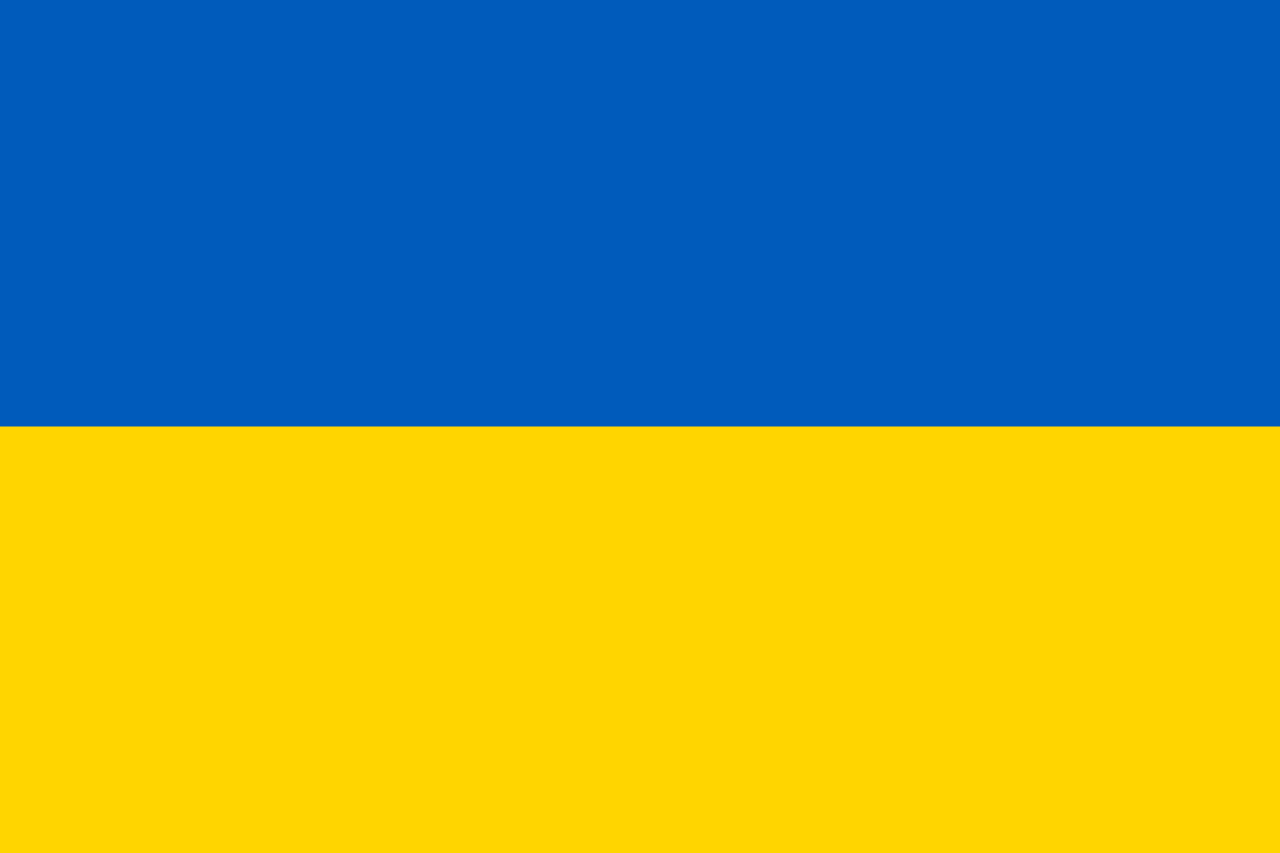
Ukraine is the largest country lying entirely within Europe, a vast land of golden wheat fields, ancient cities, and a fiercely independent spirit. From the Carpathian Mountains in the west to the shores of the Black Sea in the south, it packs astonishing diversity into its borders. These ten facts reveal a nation whose history, culture, and landscapes are far richer than most people realize.
1. The Largest Country Entirely in Europe
Covering roughly 603,000 square kilometers, Ukraine is the biggest country whose territory lies completely within Europe (Russia is larger but spans into Asia). This sprawling expanse gives Ukraine remarkable geographic variety. In the west rise the forested Carpathian Mountains, home to Hoverla, the country's highest peak at 2,061 meters. The center and east are dominated by vast, fertile plains called steppes, while the south opens onto the warm coastline of the Black Sea and the Sea of Azov. Mighty rivers thread through it all, especially the Dnipro, which splits the country roughly in two as it flows southward toward the sea. This combination of mountains, plains, and coast makes Ukraine one of Europe's most physically diverse nations.
2. The "Breadbasket of Europe"
Ukraine sits atop some of the most fertile soil on Earth: a rich, dark, nutrient-packed earth known as chernozem, or "black soil." Roughly a quarter of the world's chernozem lies within Ukraine, making the country an agricultural powerhouse. For more than a century it has earned the nickname the "Breadbasket of Europe."
Ukraine ranks among the world's top exporters of wheat, corn, barley, and sunflower oil. In fact, it is the global leader in sunflower oil production, and those iconic fields of nodding yellow blooms have become a national symbol. So central is grain to the country that wheat appears woven into Ukrainian folk art, embroidery, and even the design of the national emblem's surroundings. When you eat bread in much of the world, there is a decent chance Ukrainian soil helped grow it.
3. Kyiv Is One of Europe's Oldest Capitals
The capital, Kyiv, is more than 1,500 years old, founded according to legend by three brothers and their sister around the 5th to 6th century. By the 10th and 11th centuries it was the glittering heart of Kievan Rus, a powerful medieval state often regarded as the cultural ancestor of modern Ukraine, Russia, and Belarus. Today Kyiv is a city of golden domes and steep hills overlooking the Dnipro River. Its crown jewels include the Saint Sophia Cathedral and the Kyiv Pechersk Lavra (Monastery of the Caves), both UNESCO World Heritage Sites. The Lavra's underground catacombs, lined with the preserved remains of monks, draw pilgrims from across the Orthodox Christian world. You can learn more in our country guide.
4. The Deepest Metro Station on the Planet
Kyiv is home to Arsenalna, widely cited as the deepest metro station in the world, plunging about 105 meters below the surface. Riding its escalators down into the earth takes around five minutes, a slightly dizzying descent that feels more like entering a bunker than catching a train. The depth was no accident: the station was built in the Soviet era, and many deep metro stations doubled as potential bomb shelters during the Cold War. Kyiv's metro itself is a marvel of engineering and a daily artery for millions, with some stations decorated in grand marble, mosaics, and chandeliers that make the underground feel like a palace.
5. A Language Written in Cyrillic
Ukrainian is the country's official language, a melodic East Slavic tongue written in the Cyrillic alphabet. It is closely related to Russian and Belarusian but is very much its own language, with distinct vocabulary, grammar, and a famously musical quality, sometimes ranked among the world's most lyrical languages. Ukrainian was suppressed during various periods of imperial and Soviet rule, which makes its flourishing today a point of deep national pride. Visitors quickly notice that even simple phrases sound warm and sing-song. The blue and yellow of the national flag, representing the sky above and the wheat fields below, often appear alongside Ukrainian script in everything from street art to embroidered shirts.
6. Pysanky: The Art of Magical Eggs
One of Ukraine's most beautiful traditions is pysanka, the art of decorating eggs using a wax-resist (batik) method. Artists draw intricate geometric and symbolic patterns with melted beeswax, then dip the egg in successive dyes to build up dazzling, multicolored designs. The tradition is ancient, predating Christianity, and each symbol once carried meaning, including protection, fertility, and the renewal of spring. Folk belief even held that as long as people kept making pysanky, evil would be held at bay. Today these eggs are treasured as folk art and given as gifts, especially around Easter. The western city of Kolomyia even has a museum shaped like a giant egg dedicated entirely to the craft.
7. Borscht, Varenyky, and a Hearty Table
Ukrainian cuisine is rich, comforting, and built around the country's abundant harvests. The most famous dish is borscht, a deep-red beet soup served hot with a dollop of sour cream. It is so culturally important that UNESCO added the culture of Ukrainian borscht cooking to its list of intangible cultural heritage in need of safeguarding.
Equally beloved are varenyky, soft dumplings stuffed with potato, cheese, cherries, or cabbage, and holubtsi, cabbage rolls filled with rice and meat. Bread holds near-sacred status, especially the ornate braided loaf called korovai, used in weddings. Meals are generous and social, reflecting a culture of warm hospitality where feeding a guest well is a point of honor.
8. The Chernobyl Disaster Happened Here
In April 1986, the Chernobyl Nuclear Power Plant in northern Ukraine suffered the worst nuclear accident in history when a reactor exploded during a botched safety test. The nearby city of Pripyat was evacuated and remains a frozen-in-time ghost town, its abandoned amusement park and crumbling apartment blocks now eerie symbols of the catastrophe. Decades later, the surrounding Exclusion Zone has become an unexpected haven for wildlife, with wolves, wild boar, lynx, and rare Przewalski's horses roaming freely in the absence of humans. Once strictly off-limits, the zone became a regulated tourist destination, drawing visitors fascinated by its haunting mix of human tragedy and resurgent nature.
9. A Land of Surprising Natural Wonders
Beyond its farmland, Ukraine hides some genuinely strange and beautiful natural sights. The Tunnel of Love near Klevan is a stretch of railway track swallowed by an arch of green trees, a romantic spot that draws photographers and couples from around the world. In the southwest lies a small slice of desert: the Oleshky Sands, one of Europe's largest expanses of windblown sand dunes. Ukraine also shares the Danube Delta, a vast wetland teeming with pelicans and migratory birds. Add the Carpathian forests, home to brown bears, lynx, and Europe's largest population of beech woodlands, and you have a country whose ecosystems range from near-desert to alpine within a single border.
10. A Nation Forged by Resilience
Modern Ukraine declared independence in 1991 with the collapse of the Soviet Union, but its story of seeking self-determination stretches back centuries. The country has a long tradition of fierce independence embodied by the Cossacks, the legendary warrior communities of the steppe who became enduring symbols of Ukrainian freedom and identity. That spirit resurfaced in the peaceful Orange Revolution of 2004 and the Maidan protests of 2013 to 2014. Ukrainians are known for their resilience, courage, and strong sense of community, qualities celebrated in their folk songs, embroidered vyshyvanka shirts, and national holidays. Few nations wear their identity quite so proudly.
Frequently Asked Questions
What is the capital of Ukraine?
The capital of Ukraine is Kyiv (sometimes spelled Kiev), one of the oldest cities in Eastern Europe at over 1,500 years old. It sits on the Dnipro River and is famous for its golden-domed churches, including the UNESCO-listed Saint Sophia Cathedral and the Kyiv Pechersk Lavra monastery.
What is Ukraine famous for?
Ukraine is famous for being the "Breadbasket of Europe" thanks to its rich black soil and huge grain and sunflower-oil exports. It is also known for borscht soup, decorated pysanka eggs, the golden domes of Kyiv, the Chernobyl disaster site, and its strikingly blue-and-yellow national flag.
What is the deepest metro station in the world?
Arsenalna station in Kyiv is widely regarded as the deepest metro station in the world, sitting roughly 105 meters underground. It takes about five minutes to ride the escalators down to the platform, a relic of Cold War design when deep stations could serve as shelters.
Conclusion
From the deepest metro on Earth to fields of sunflowers stretching to the horizon, Ukraine is a country of striking contrasts and deep resilience. Its ancient capital, soulful language, vibrant folk art, and hearty cuisine all reflect a proud and enduring identity. These ten facts are just the beginning, so keep exploring and you will find that Ukraine has countless more stories waiting to be discovered.