
In barely half a century, the United Arab Emirates has transformed from a string of quiet pearling and fishing villages into one of the most futuristic destinations on Earth, where artificial islands curl into the Gulf and the world's tallest tower spears the sky. Yet beneath the glass towers and luxury malls lies a deeply traditional desert culture of falconry, camel races, and Bedouin hospitality. These ten facts reveal a federation that is far stranger, older, and more surprising than its skyline suggests.
1. It Is Actually Seven Countries Stitched Together
The "United" in United Arab Emirates is no accident. The nation is a federation of seven emirates: Abu Dhabi, Dubai, Sharjah, Ajman, Umm Al Quwain, Ras Al Khaimah, and Fujairah, each ruled by its own hereditary emir. They formally united on December 2, 1971, when British protection ended, and that date is still celebrated as National Day. Abu Dhabi is by far the largest emirate, covering roughly 87 percent of the country's land area, while tiny Ajman could fit inside it hundreds of times over. To understand how this patchwork holds together as one modern state, explore our full country guide.
2. Most People Living Here Were Not Born Here
The UAE has a population of roughly 10 to 11 million, yet one of the most astonishing facts about the country is that Emirati citizens make up only around 11 to 12 percent of it. The overwhelming majority are expatriates, drawn from India, Pakistan, Bangladesh, the Philippines, Egypt, and dozens of other nations to build, staff, and run the economy. This makes the UAE one of the most diverse societies on the planet by proportion of foreign-born residents. Walk through a Dubai neighborhood and you may hear a dozen languages within a single block, a living reflection of how globalization built this country brick by brick.
3. Abu Dhabi Is the Capital, but Dubai Steals the Spotlight
Abu Dhabi, sitting on a coastal island, is the federal capital and the seat of government, home to the spectacular Sheikh Zayed Grand Mosque with its 82 domes and a chandelier dripping with Swarovski crystals. But it is neighboring Dubai that most of the world pictures. Dubai is home to the Burj Khalifa, which at roughly 828 meters remains the tallest building in the world, as well as the sail-shaped Burj Al Arab hotel and the palm-shaped artificial Palm Jumeirah islands. The friendly rivalry between the two cities has fueled a relentless race to build bigger, taller, and more dazzling.
4. The Land Is Mostly Sand and Searing Heat
Geographically, the UAE is dominated by desert. The vast Rub' al Khali, or "Empty Quarter," the largest continuous sand desert on Earth, sweeps into the country's southern reaches with dunes that can rise hundreds of meters. Summer temperatures regularly soar past 45 degrees Celsius, and humidity along the coast can feel suffocating. Yet the landscape is not uniform: the rugged Hajar Mountains rise in the east near Fujairah and Ras Al Khaimah, offering wadis, oases, and cooler air, a dramatic contrast to the flat, shimmering coastal plains of the Persian Gulf.
5. Before Oil, It Was All About Pearls
For centuries, the economy of this region rested not on petroleum but on pearling. Skilled divers would plunge into the Gulf without modern equipment, holding their breath for minutes to harvest natural pearls that were prized from India to Europe. The trade collapsed in the 1930s when Japan perfected cultured pearls and the Great Depression gutted demand, plunging the area into hardship. Then, in the late 1950s and 1960s, oil was discovered, especially in Abu Dhabi, and everything changed. The pearling heritage lives on in museums, festivals, and the national imagination.
6. Falconry Is a National Obsession
Few traditions are as cherished as falconry, which is so central to Emirati identity that it has been recognized by UNESCO as intangible cultural heritage. Once a practical method for desert Bedouin to hunt for food, it is now a prestigious passion. Falcons are pampered like royalty: they have their own dedicated hospitals, travel with their own passports, and can even occupy seats on airplanes. Alongside falconry, camel racing remains hugely popular, with high-tech robot jockeys now riding the camels around the track, a curious blend of ancient sport and modern technology that perfectly captures the UAE.
7. The National Language Is Arabic, but English Rules the Streets
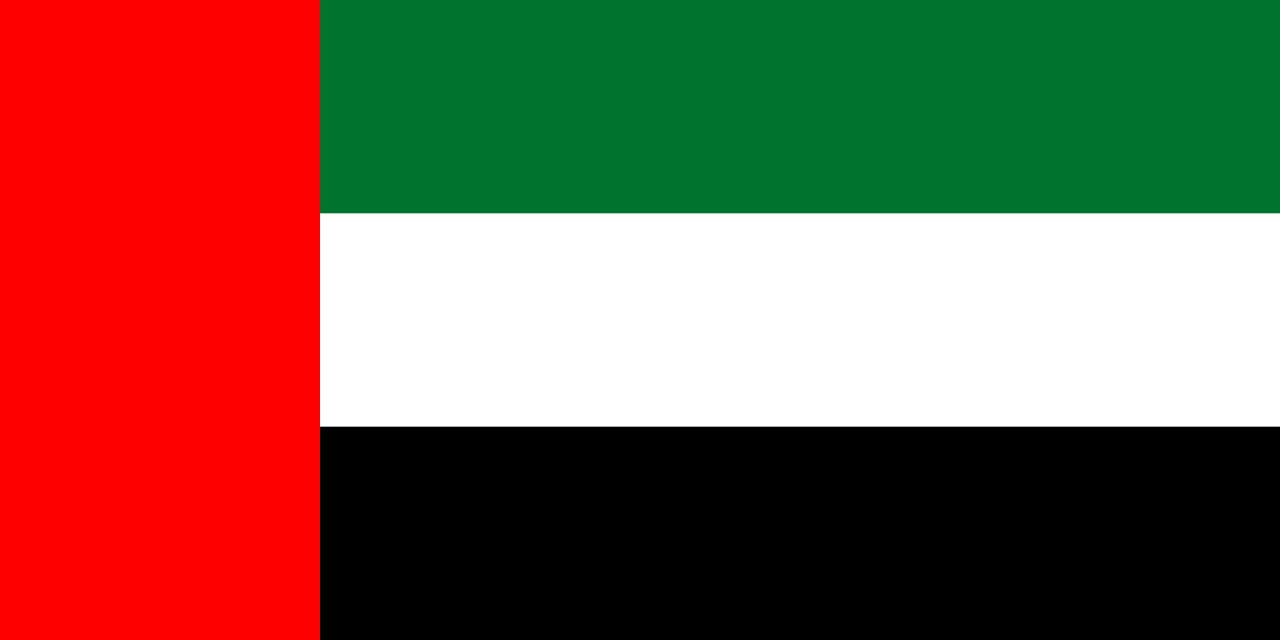
Arabic is the official language and appears on all government documents, road signs, and currency, while the Islamic faith shapes daily rhythms, from the call to prayer to the holy month of Ramadan. Yet because expatriates so vastly outnumber locals, English has become the de facto lingua franca of business, education, and everyday life. Hindi, Urdu, Malayalam, Tagalog, and Persian are also widely spoken. This linguistic mosaic, like the green, white, black, and red flag that unites the seven emirates, symbolizes a society balancing tradition with extraordinary diversity.
8. The Food Reflects Centuries of Trade Winds
Emirati cuisine is built on the ingredients of a desert and seafaring people: dates, rice, lamb, camel meat, and fish, seasoned with spices carried in by Indian Ocean traders. A signature dish is machboos, a fragrant spiced rice cooked with meat, dried lime, and saffron, while luqaimat, sweet fried dumplings drizzled with date syrup, are a beloved treat. Dates themselves are sacred, traditionally used to break the daily fast during Ramadan. Today the UAE's restaurant scene is wildly cosmopolitan, offering everything from Lebanese mezze and Pakistani biryani to some of the world's most extravagant fine dining.
9. It Is Building Cities of the Future, Literally
The UAE has made a sport of audacious ambition. It built Masdar City near Abu Dhabi as a low-carbon urban experiment, launched a Mars probe named "Hope" that successfully entered the Red Planet's orbit in 2021, and even appointed a government Minister of State for Artificial Intelligence, among the first such posts in the world. The country has invested heavily in renewable energy, hosting major solar projects, while simultaneously planning tourism megaprojects and economic free zones designed to wean itself off oil dependence well before the wells run dry.
10. Wildlife Survives in the Harshest of Places
Despite the brutal climate, the UAE shelters remarkable wildlife. The Arabian oryx, a striking white antelope once hunted to near extinction in the wild, has been brought back through dedicated breeding programs and now roams protected reserves. The sandy gazelle, desert foxes, and the elusive Arabian leopard cling to existence in the mountains, while the coastal mangroves and Gulf waters host flamingos, dugongs, and sea turtles. Conservation has become a national priority, and protected areas like the Arabian Oryx sanctuary show how the country is working to preserve a fragile natural heritage.
Frequently Asked Questions
What is the capital of the United Arab Emirates?
The capital is Abu Dhabi, located on a coastal island and serving as the seat of the federal government. It is the largest of the seven emirates and home to landmarks such as the Sheikh Zayed Grand Mosque and the presidential palace. Many people mistakenly assume Dubai is the capital, but Dubai is a separate emirate.
What is the United Arab Emirates most famous for?
The UAE is best known for Dubai's record-breaking skyline, including the Burj Khalifa, the world's tallest building, along with luxury shopping, artificial islands, and ultra-modern architecture. It is also famous for its rapid transformation from a pearling and desert economy into a global hub for tourism, finance, and aviation.
Do falcons really get their own passports in the UAE?
Yes, surprisingly. Pet falcons in the UAE can be issued official passports that allow them to travel internationally with their owners, a system introduced to regulate the movement of these prized birds. Some falcons even occupy purchased seats on commercial flights, a vivid example of how deeply falconry is woven into Emirati culture.
Conclusion
The United Arab Emirates is a nation of dazzling contradictions: ancient Bedouin traditions and Mars missions, empty desert and the world's busiest airports, a tiny native population and a vast global community. From pearling divers to robot camel jockeys, its story is one of relentless reinvention. These ten facts only begin to capture a country that seems determined to surprise the world at every turn.
