
Shaped like a slender, curving dragon stretching more than 1,600 kilometres along the South China Sea, Vietnam packs an astonishing amount of variety into its narrow frame. From terraced rice mountains in the north to the labyrinth of the Mekong Delta in the south, this is a country where motorbikes outnumber cars, where a bowl of soup can spark fierce regional pride, and where a 4,000-year story keeps surprising you. Here are ten facts that capture what makes Vietnam unforgettable.
1. The Country Is So Long It Spans Wildly Different Climates
Vietnam stretches roughly 1,650 kilometres from north to south, yet at its narrowest point near the centre it is only about 50 kilometres wide. This unusual shape means the country contains several distinct climate zones at once. While the north around Hanoi experiences four seasons and even occasional frost in the highlands, the south around Ho Chi Minh City stays tropical year-round with just a wet and dry season.
This geographic stretch explains a lot about Vietnam's diversity. Travellers can go from misty mountain villages in Sapa to sun-baked southern beaches in a single trip. You can dig deeper into the landscapes and regions in our country guide, which maps out the north-to-south journey in detail.
2. Hanoi Is Over a Thousand Years Old
Vietnam's capital, Hanoi, traces its founding as a capital to 1010, when Emperor Ly Thai To moved his seat of power there and named it Thang Long, meaning "Ascending Dragon." That makes it one of the oldest continuously inhabited capitals in Southeast Asia, and the city celebrated its millennium in 2010 with enormous festivities.
Today Hanoi blends that deep history with chaotic charm. Its Old Quarter still organises streets by the trades once practised there, the tree-lined boulevards betray French colonial influence, and Hoan Kiem Lake sits at the city's beating heart. Hanoi is the political and cultural capital, while Ho Chi Minh City (formerly Saigon) in the south is the larger, faster commercial hub.
3. A Nation of Nearly 100 Million People
With a population around 100 million, Vietnam ranks among the fifteen most populous countries on Earth and is the third most populous in Southeast Asia after Indonesia and the Philippines. The vast majority belong to the Kinh (Viet) ethnic group, but Vietnam officially recognises 54 distinct ethnic groups, many living in the northern and central highlands.
These minority communities, including the Hmong, Tay, Thai, and Khmer peoples, maintain their own languages, dress, and festivals, adding extraordinary cultural texture to the country. Vietnam is also a young nation demographically, with a median age in the low thirties, which has fuelled both its workforce and its rapid modernisation.
4. Vietnamese Is Written in a Latin-Based Alphabet
Unlike many of its Asian neighbours, Vietnam writes its language using a Latin-based script called chu Quoc ngu. Developed in the 17th century with input from Portuguese and French missionaries, notably Alexandre de Rhodes, the script uses diacritical marks to indicate the language's six tones. The same syllable can mean six entirely different things depending on pitch.
This makes spoken Vietnamese famously tricky for foreigners, but the written form is far more approachable than character-based systems. Vietnamese gradually replaced classical Chinese characters and the older chu Nom script over the colonial period, becoming the universal standard. It is one of the few major Asian languages a Western visitor can attempt to read aloud almost immediately.
5. It Holds the World's Largest Cave
Hidden in the jungles of Phong Nha-Ke Bang National Park lies Son Doong, the largest known cave passage on the planet. Only confirmed by explorers in 2009 (a local man had stumbled on its entrance years earlier), the cave is so vast it contains its own jungle, river, and weather system, with clouds forming inside. Its main chamber could fit an entire city block of skyscrapers.
Son Doong is just one highlight of a region riddled with spectacular limestone caverns. Access is tightly limited to a few hundred adventurers each year through a single licensed operator, which keeps this natural wonder pristine and adds to its almost mythical reputation among explorers and geographers alike.
6. Vietnam Is the World's Second-Largest Coffee Exporter
Coffee is woven into daily Vietnamese life, and the country is the second-biggest coffee exporter in the world after Brazil. Most of it is robusta, the strong, bitter bean ideal for the country's signature drink, ca phe sua da, dark coffee dripped slowly through a metal filter over sweetened condensed milk and ice.
The French introduced coffee in the 19th century, but Vietnam made it utterly its own. Beyond the classic iced version, you will find egg coffee in Hanoi, whipped with yolk and sugar into something like a warm tiramisu, and coconut coffee blended into a creamy slush. Coffee culture here is unhurried, social, and absolutely central to the national identity.
7. The Motorbike Is King
Vietnam has tens of millions of registered motorbikes, and in its cities they dominate the roads in mesmerising, river-like swarms. Crossing a busy Hanoi or Saigon street on foot is a genuine rite of passage: the trick is to walk slowly and predictably while the bikes flow around you. Families of four, towers of produce, and even live animals all travel by two wheels.
The motorbike is more than transport; it is an economic engine, powering food delivery, ride-hailing, and small commerce. This love affair with the scooter reflects Vietnam's pragmatic, adaptable spirit, finding nimble solutions in crowded, fast-growing urban spaces where cars would simply gridlock.
8. Pho Is a National Obsession
Vietnamese cuisine is celebrated worldwide for its fresh herbs, balanced flavours, and light touch, and no dish embodies it like pho. This fragrant noodle soup, built on a slow-simmered beef or chicken broth, is eaten at all hours, especially for breakfast. Northerners favour a clearer, simpler broth, while southerners pile on bean sprouts, basil, and lime.
But pho is only the beginning. Banh mi sandwiches fuse French baguettes with Vietnamese fillings, fresh spring rolls wrap shrimp and herbs in translucent rice paper, and street stalls everywhere serve regional specialities. The food's emphasis on freshness and herbs ties directly to the country's lush agriculture and long coastline.
9. The National Flag Has Deep Symbolic Meaning
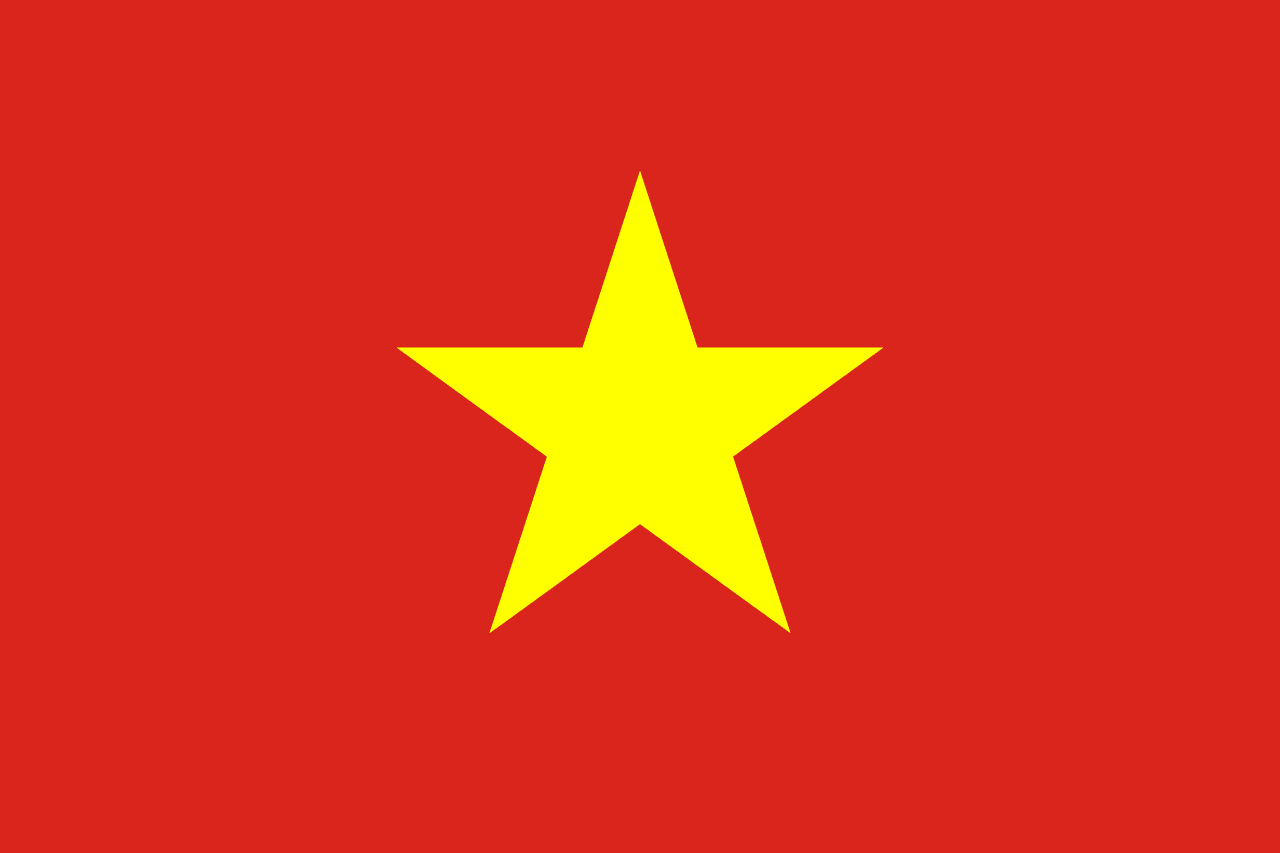
Vietnam's instantly recognisable banner features a single golden five-pointed star centred on a bold red field. The red represents the bloodshed and revolutionary struggle of the people, while the gold star stands for the unity of workers, peasants, soldiers, intellectuals, and youth in building the nation. It was first flown in 1945.
The flag is a powerful national symbol, displayed proudly during holidays like Independence Day and especially during football matches, when celebrating crowds flood the streets on motorbikes draped in red and gold. You can read the full story behind its design and colours in our dedicated guide to the flag of Vietnam.
10. One of the World's Fastest-Growing Economies
Following market reforms known as Doi Moi ("renovation") launched in 1986, Vietnam transformed from one of the poorest countries on Earth into a manufacturing powerhouse. It is now a major global exporter of electronics, textiles, footwear, and seafood, and a key link in international supply chains for companies producing phones and consumer goods.
This rapid rise has lifted tens of millions out of poverty and created a booming, youthful middle class. Alongside coffee and rice, of which Vietnam is also among the world's top exporters, the diversified economy has made the country one of Asia's standout development stories of recent decades.
Frequently Asked Questions
What is the capital of Vietnam?
The capital of Vietnam is Hanoi, located in the north of the country. It has served as a capital on and off for over a thousand years and is the political and cultural centre, while Ho Chi Minh City in the south is the largest city and main commercial hub.
What is Vietnam most famous for?
Vietnam is famous for its stunning scenery, especially the limestone islands of Ha Long Bay, its delicious cuisine led by pho and banh mi, its strong coffee culture, and its remarkable history. It is also well known for being a top global exporter of coffee, rice, and manufactured goods.
Does Vietnam really have a cave with its own weather?
Yes. Son Doong, the world's largest cave, is so enormous that clouds can form inside it, and it contains an underground jungle and river. Confirmed by explorers in 2009, it remains one of the planet's most extraordinary and tightly protected natural wonders.
Conclusion
From a thousand-year-old capital and a Latin-based alphabet to the world's biggest cave and an economy reborn, Vietnam constantly defies easy expectations. It is a country where ancient tradition and rapid modernity ride side by side, quite literally, on the back of a motorbike. These ten facts are only a starting point for exploring one of Asia's most dynamic and endlessly fascinating nations.