
Agriculture is classified along two independent axes: why the food is grown and how hard the land is worked. The purpose axis runs from subsistence farming (grown to feed the household) to commercial farming (grown to sell). The intensity axis runs from intensive farming (high inputs and high yields per hectare) to extensive farming (large areas, low inputs, low yields per hectare). Every real farming system — plantation, pastoral, organic, market gardening, shifting cultivation, mixed — is a particular combination of positions on those two axes.
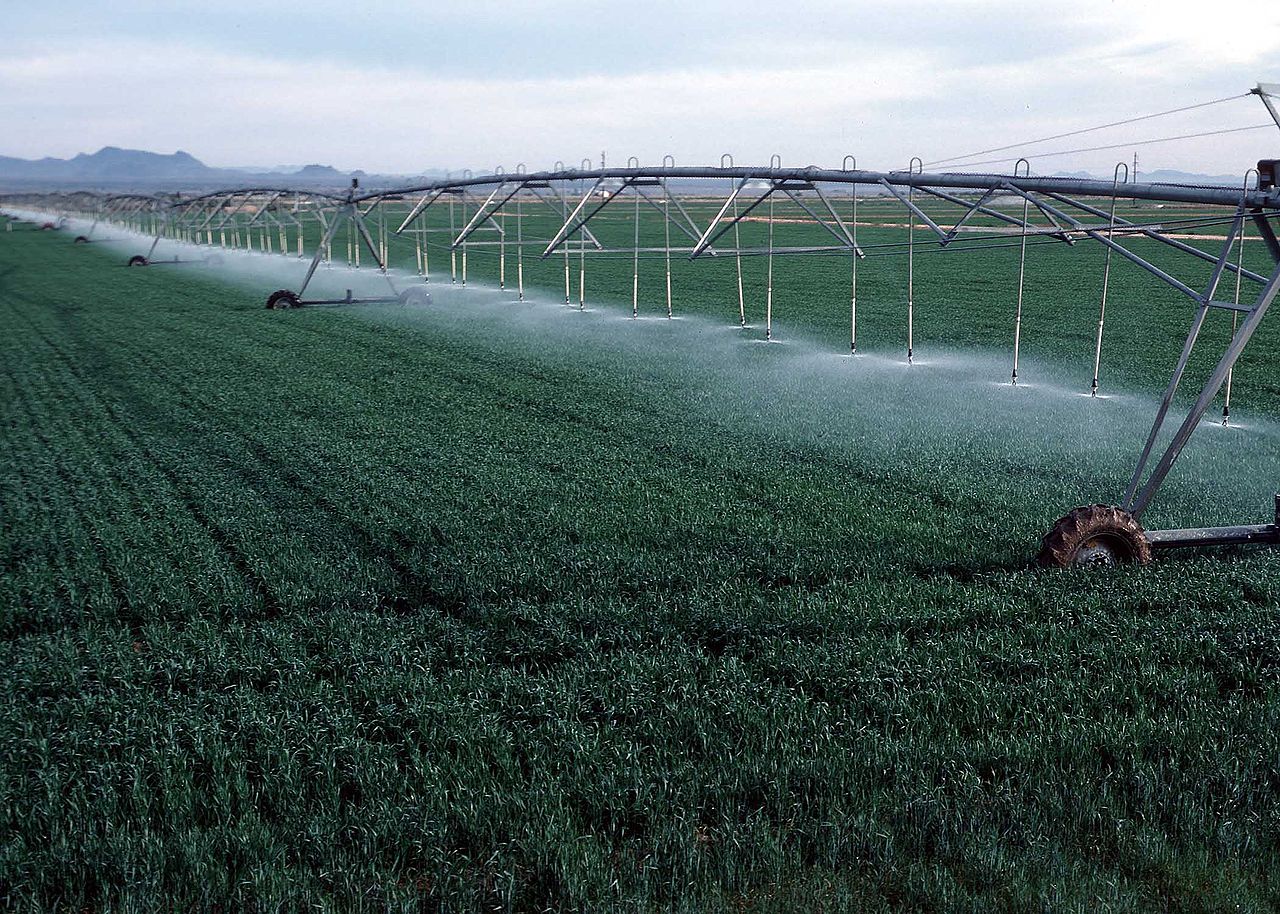
Roughly 38 to 40 percent of the planet's habitable land is given over to agriculture, and it employs something in the region of a quarter of the global workforce. Understanding how that enormous activity divides up matters, because the categories are not merely descriptive — they predict what a landscape looks like, how many people it supports, and how it responds to drought, price shocks or new technology.
The two axes that organise everything
The single most common mistake in learning this topic is treating "subsistence, commercial, intensive, extensive" as one flat list of alternatives. They are not alternatives; they are two separate questions, and every farm answers both.
- Purpose: is the output consumed by the producing household (subsistence) or sold into a market (commercial)?
- Intensity: how much labour, capital, fertiliser, water and machinery goes into each hectare?
All four combinations exist and all four are common. Intensive subsistence farming — wet rice cultivation across monsoon Asia — supports very high rural population densities on small plots. Extensive subsistence farming — shifting cultivation in tropical forests — supports low densities over large areas. Intensive commercial farming covers Dutch greenhouses and Californian orchards. Extensive commercial farming covers Australian sheep stations and Canadian prairie wheat. Knowing which quadrant a farm sits in tells you far more than either label alone.
Subsistence farming
Subsistence farming produces food primarily for the farmer's own household, with little or no marketed surplus. It is still the livelihood of a very large number of people — estimates commonly run to several hundred million smallholders worldwide — concentrated in low-income regions where capital, mechanisation and market access are all limited. It appears in two distinct forms.
Shifting cultivation (also called swidden or slash-and-burn) clears a patch of forest, burns the vegetation to release nutrients into the soil, crops it for a few years until fertility declines, then abandons it and moves on while the forest regrows. Where fallow periods are long, it is genuinely sustainable and has been practised for millennia in the Amazon, Central Africa and Southeast Asia. Where population pressure shortens the fallow, soils degrade quickly.
Intensive subsistence farming is the opposite in every respect except purpose. Plots are tiny, often well under a hectare, and worked with enormous labour input — transplanting, weeding and harvesting by hand, terracing hillsides, managing water carefully. Wet rice cultivation across South, Southeast and East Asia is the archetype, and it sustains some of the highest rural population densities anywhere on Earth.
Commercial farming
Commercial farming produces for sale, and the logic of the market shapes everything about it: crop choice, farm size, mechanisation and the willingness to specialise in a single product. It dominates agriculture across high-income countries and is expanding rapidly in middle-income ones. Several distinct forms are worth naming.
- Grain and oilseed farming — vast mechanised operations growing wheat, maize, soy or canola, as in the US Corn Belt, the Canadian prairies, the Argentine pampas and the Brazilian cerrado.
- Plantation agriculture — large tropical estates growing a single cash crop for export: rubber, oil palm, coffee, cocoa, tea, bananas, sugarcane. Historically established under colonial rule, and still concentrated in the tropics because the crops are.
- Market gardening (truck farming) — intensive production of high-value perishables such as vegetables, salad and soft fruit, located close to cities or to fast transport links.
- Mediterranean agriculture — the distinctive combination of olives, grapes, citrus, tree nuts and winter wheat that appears wherever the world has a Mediterranean climate: southern Europe, coastal California, central Chile, the Cape, and southern Australia.
- Dairying — a highly perishable product, historically tied closely to its market, and now heavily capital-intensive.
Pastoral and mixed farming
Pastoral farming raises livestock — cattle, sheep, goats, camels, yaks, reindeer — for meat, milk, wool or hides. It is the dominant system wherever land is too dry, too cold or too steep for crops, because grazing animals convert grass, which humans cannot digest, into food that they can. It takes three main forms: nomadic pastoralism, where herders move continuously with their animals across arid rangeland; transhumance, a regular seasonal migration between lowland winter pasture and highland summer pasture, still practised in the Alps, the Pyrenees, the Atlas and the Himalaya; and sedentary ranching, where livestock stay on fixed, fenced holdings.
Pastoralism explains one of the most striking statistics in world agriculture. Livestock systems occupy roughly three-quarters of all agricultural land while supplying only around a fifth of humanity's calories. That looks wildly inefficient until you note that most of that land is rangeland which could not grow crops at all — the inefficiency argument bites hardest against feedlot systems that use cropland to grow animal feed.
Mixed farming combines crops and livestock on the same holding, and was for centuries the default across Europe and much of the world. It is elegant in its logic: animals eat crop residues and provide manure, which fertilises the crops. Industrial agriculture largely broke that loop by separating the two and substituting synthetic fertiliser, and much of the current interest in regenerative agriculture is an attempt to rebuild it.
Specialised and alternative systems
Organic farming excludes synthetic fertilisers, synthetic pesticides and genetically modified organisms, relying instead on crop rotation, composting, manure, cover crops and biological pest control. It is defined by certification standards rather than by scale, and organic farms range from tiny market gardens to large commercial operations. Meta-analyses generally find organic yields running roughly 20 to 25 percent below conventional yields, with the gap varying widely by crop and region — which is the central tension in the debate over whether organic methods could feed the world.
Aquaculture — the farming of fish, shellfish and seaweed — is the fastest-growing food production sector of the past half-century and now supplies around half of all fish eaten by humans. Precision agriculture is less a type than a layer applied over commercial farming: GPS-guided machinery, soil sensors, variable-rate fertiliser application and satellite imagery used to treat different parts of a field differently rather than uniformly.
Intensive versus extensive: a direct comparison
These two are worth setting against each other explicitly, because they are frequently confused with "large" and "small" — which is not what they mean at all. Intensity is measured per hectare, not in total.
- Inputs per hectare. Intensive: high labour, capital, fertiliser, irrigation, machinery. Extensive: low on all counts.
- Yield per hectare. Intensive: high. Extensive: low — sometimes very low, as on desert-margin rangeland.
- Yield per worker. Often the reverse. A single Australian grain farmer working thousands of extensive hectares may out-produce a labour-intensive rice household many times over.
- Farm size. Intensive farms are usually small, but not always — Californian irrigated agriculture is both intensive and enormous.
- Where it appears. Intensive where land is scarce and expensive relative to labour or capital. Extensive where land is abundant and cheap relative to both.
- Environmental pressure. Intensive systems concentrate impact: nutrient runoff, soil degradation, aquifer depletion, pesticide load. Extensive systems spread a lighter impact over far more land, with overgrazing and habitat conversion as the main risks.
Neither is simply better. Intensification spares land — feeding a given population from fewer hectares leaves more for forest and habitat — but concentrates pollution. Extensive systems are gentler per hectare but need many more hectares. This is the central land-sparing versus land-sharing argument in modern agricultural policy, and it has no universal answer.
What decides which type appears where
Three forces do most of the work. Climate and soil set the outer limits: no amount of capital makes rain-fed wheat viable in the Sahara, and rice needs water that steppe grassland simply does not receive. Relative factor prices decide intensity within those limits — where land is dear and labour cheap, farmers intensify; where land is cheap and labour dear, they spread out and mechanise. Distance to market shapes what is grown where, an insight formalised by Johann Heinrich von Thünen as early as 1826: perishable, bulky, high-value products cluster near cities, while durable, transportable, low-value products occupy the periphery. Refrigeration and container shipping have stretched von Thünen's rings to global scale, but the underlying logic still explains why the Netherlands exports greenhouse tomatoes and Mongolia exports cashmere.
Technology then resets the whole board periodically. The Green Revolution of the 1960s and 1970s — semi-dwarf wheat and rice varieties combined with fertiliser and irrigation — converted large areas of Asian and Latin American subsistence farming into intensive commercial production within a generation, dramatically raising yields while also raising input dependence.
Frequently asked questions
What are the main types of agriculture?
The primary division is subsistence versus commercial by purpose, and intensive versus extensive by input level. Within those, the major named systems are shifting cultivation, intensive subsistence, plantation, grain and oilseed farming, market gardening, Mediterranean agriculture, dairying, pastoral farming, mixed farming, organic farming and aquaculture.
What is the difference between intensive and extensive farming?
Intensive farming applies large amounts of labour, capital and inputs to each hectare and gets high yields from it. Extensive farming applies little to each hectare and gets low yields, but works far more hectares. It is a measure of inputs per unit of land, not of total farm size.
Is subsistence farming the same as small-scale farming?
No. A smallholder growing vegetables to sell in a nearby town is farming commercially on a small scale. The defining question is whether the output is consumed by the household or sold.
Which type of agriculture feeds most of the world?
Intensive commercial farming produces the majority of globally traded calories, but subsistence and smallholder farming remains the direct food source for a very large share of the world's rural population — the two systems feed different people rather than competing to feed the same ones.