
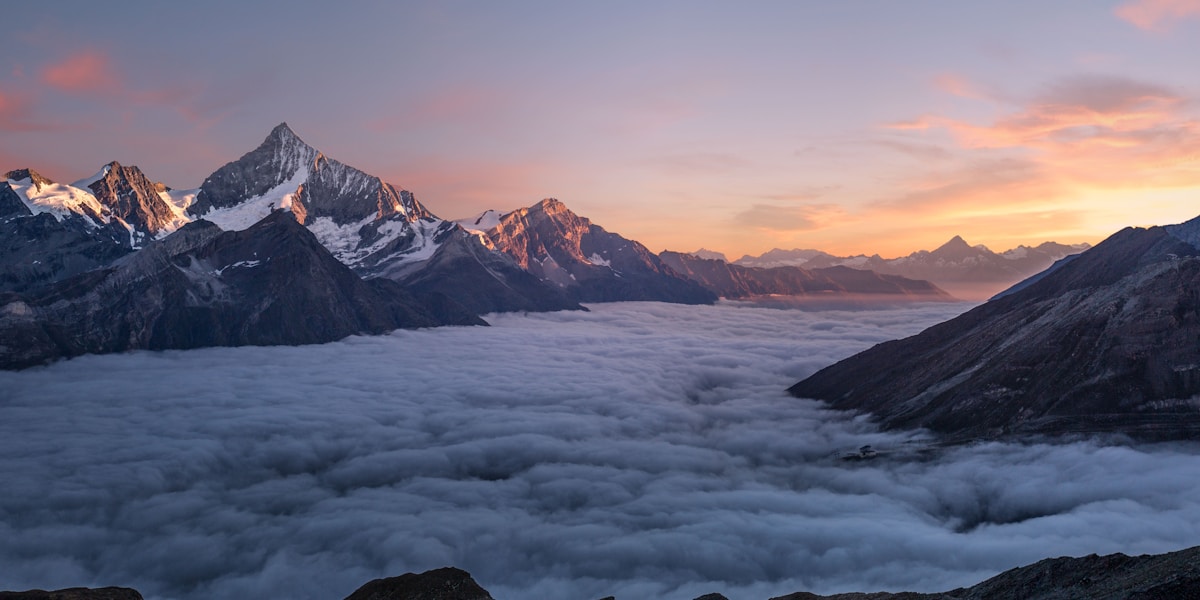
Different climate zones exist primarily because Earth is a sphere tilted on its axis, causing different latitudes to receive different amounts of solar energy. The equator receives the most direct and intense sunlight year-round, creating hot tropical climates. The poles receive the least and most oblique sunlight, creating cold polar climates. The mid-latitudes receive intermediate amounts that vary with the seasons, creating temperate climates.
Introduction
These basic temperature differences drive atmospheric circulation patterns (Hadley, Ferrel, and Polar cells) that redistribute heat and moisture around the globe. Combined with the effects of ocean currents, mountain barriers, continentality (distance from oceans), and altitude, they create the diverse mosaic of climate zones observed on Earth.

The Short Answer
- Primary Cause: Uneven solar heating due to Earth's shape and tilt
- Secondary Causes: Atmospheric circulation, ocean currents, topography
- Major Zones: Tropical, arid, temperate, continental, polar
At the equator, the Sun's rays strike the surface nearly vertically, concentrating energy over a small area. Near the poles, the same rays strike at a low angle and spread over a much larger area, delivering less heat per unit of surface. This fundamental difference creates the temperature gradient from equator to poles.
But latitude alone does not explain all climate variation. London and Labrador are at the same latitude but have vastly different climates because the Gulf Stream warms London while cold currents and continental air masses chill Labrador. Mountains, deserts, forests, and proximity to oceans all modify the basic latitude-based climate pattern.
The Science Behind It
- Hadley Cells: Tropical circulation: rising air at equator, sinking at ~30° latitude
- Ferrel Cells: Mid-latitude circulation: ~30° to ~60° latitude
- Polar Cells: Polar circulation: ~60° to pole
- ITCZ: Intertropical Convergence Zone, the belt of rising moist air near the equator
The Hadley cells are the most important atmospheric circulation pattern for understanding climate zones. Warm, moist air rises at the equator (the Intertropical Convergence Zone), creating heavy tropical rainfall. This air flows poleward at high altitude, cooling and losing moisture. It sinks around 30° latitude, creating the subtropical high-pressure zones where most of the world's great deserts lie.
The Ferrel cells in the mid-latitudes create the prevailing westerly winds and the variable weather characteristic of temperate climates, where warm tropical air masses meet cold polar air masses along the polar front. The polar cells drive cold, dry conditions at the poles. These three-cell circulation patterns, combined with the Coriolis effect from Earth's rotation, create the global wind belts that distribute heat and moisture.
Types & Variations
- Tropical (A): Hot year-round, high rainfall (Amazon, Congo Basin)
- Arid (B): Very low rainfall, large temperature swings (Sahara, Gobi)
- Temperate (C): Mild winters, distinct seasons (Western Europe, SE Australia)
- Continental (D): Harsh winters, warm summers (Siberia, Upper Midwest USA)
- Polar (E): Extremely cold, minimal precipitation (Antarctica, Greenland)
The Koppen climate classification, developed by Wladimir Koppen in 1884, divides the world into five major climate groups (A through E) with numerous subtypes based on temperature and precipitation patterns. This system remains the most widely used climate classification today, appearing on maps and in textbooks worldwide.
Within each major zone, remarkable variation exists. The Mediterranean climate (Csa in Koppen notation), found in areas like coastal California, southern Europe, and western Australia, features warm dry summers and mild wet winters. Highland climates can create tropical conditions at the base of a mountain and polar conditions at its peak within a few vertical kilometers.
Famous Examples
- Amazon Basin: Tropical wet climate with 2,000-3,000+ mm rainfall/year
- Sahara: Hot desert climate, < 25 mm rainfall/year in parts
- British Isles: Maritime temperate, moderated by the Gulf Stream
- Siberia: Extreme continental, temperatures from -50°C to +35°C
The contrast between maritime and continental climates illustrates how oceans moderate temperature. London and Irkutsk (Siberia) are at similar latitudes, but London's maritime climate has mild winters (average January temperature ~5°C) while Irkutsk's continental climate has brutal winters (average January temperature -21°C). The ocean stores heat and releases it slowly, preventing the extremes that characterize continental interiors.
High-altitude cities demonstrate how elevation creates climate zones within climate zones. Quito, Ecuador sits almost exactly on the equator but has a mild, spring-like climate year-round because it lies at 2,850 meters elevation. Temperature decreases approximately 6.5°C for every 1,000 meters of altitude, so Quito is about 18°C cooler than the hot equatorial lowlands.
Why It Matters
- Agriculture: Climate zones determine what crops can grow where
- Biodiversity: Climate is the primary driver of biome distribution
- Climate Change: Zones are shifting poleward and upward as temperatures rise
Climate zones fundamentally determine the distribution of ecosystems, agricultural potential, and human settlement patterns. The tropical climate zone supports rainforests and year-round agriculture. The temperate zone with its distinct seasons has been the most productive agricultural region historically. Arid zones require irrigation for agriculture, while polar zones support very limited plant life.
Climate change is causing measurable shifts in climate zone boundaries. The tropics are expanding poleward at roughly 56-111 kilometers per decade. Alpine climate zones are moving uphill, shrinking habitat for cold-adapted species. The permafrost zone is thawing at its southern margins. These shifts affect agriculture, water supply, biodiversity, and human habitability across vast regions.
Key Facts
- Earth's spherical shape and 23.5° axial tilt are the primary causes of climate zones.
- The Koppen classification divides world climates into 5 major groups: tropical, arid, temperate, continental, and polar.
- Atmospheric circulation creates three cells per hemisphere: Hadley, Ferrel, and Polar.
- The subtropical deserts at ~30° latitude form because dry air sinks from the upper atmosphere.
- Temperature drops approximately 6.5°C for every 1,000 m of altitude gain.
Fun Facts
- Yakutsk in Siberia has the world's greatest annual temperature range, from -64°C to +39°C (103°C range).
- The driest inhabited place on Earth is Arica, Chile, which averages just 0.76 mm of rain per year.
- Cherrapunji in India once received 26,461 mm of rain in a single year.
- The tropical zone is expanding poleward by 56-111 km per decade due to climate change.
Final Thoughts
The diversity of Earth's climate zones is a product of geometry, physics, and geography working together. The spherical shape of our planet and its tilted axis create the basic temperature gradient, atmospheric circulation redistributes heat and moisture, and local factors like ocean currents and mountains add complexity. This climate mosaic has shaped the evolution of life, the development of agriculture, and the patterns of human civilization. As climate change reshapes these zones, understanding why they exist helps us predict and adapt to the changes ahead.
Test Your Knowledge!
Curious about geography? Test what you've learned!
Play Geography Games →