

The Alps and the Himalayas are arguably the two most famous mountain ranges on Earth, yet they differ dramatically in scale, age, and character. The Alps stretch 1,200 kilometers across central Europe with a highest point of 4,809 meters at Mont Blanc. The Himalayas extend 2,400 kilometers across South Asia and contain all 14 of the world's peaks above 8,000 meters.
Introduction
Both ranges were formed by tectonic collision, but at vastly different times and scales. The Alps arose from the convergence of the African and European plates roughly 65 million years ago, while the Himalayas began forming when the Indian plate crashed into the Eurasian plate about 50 million years ago and continue to rise today.
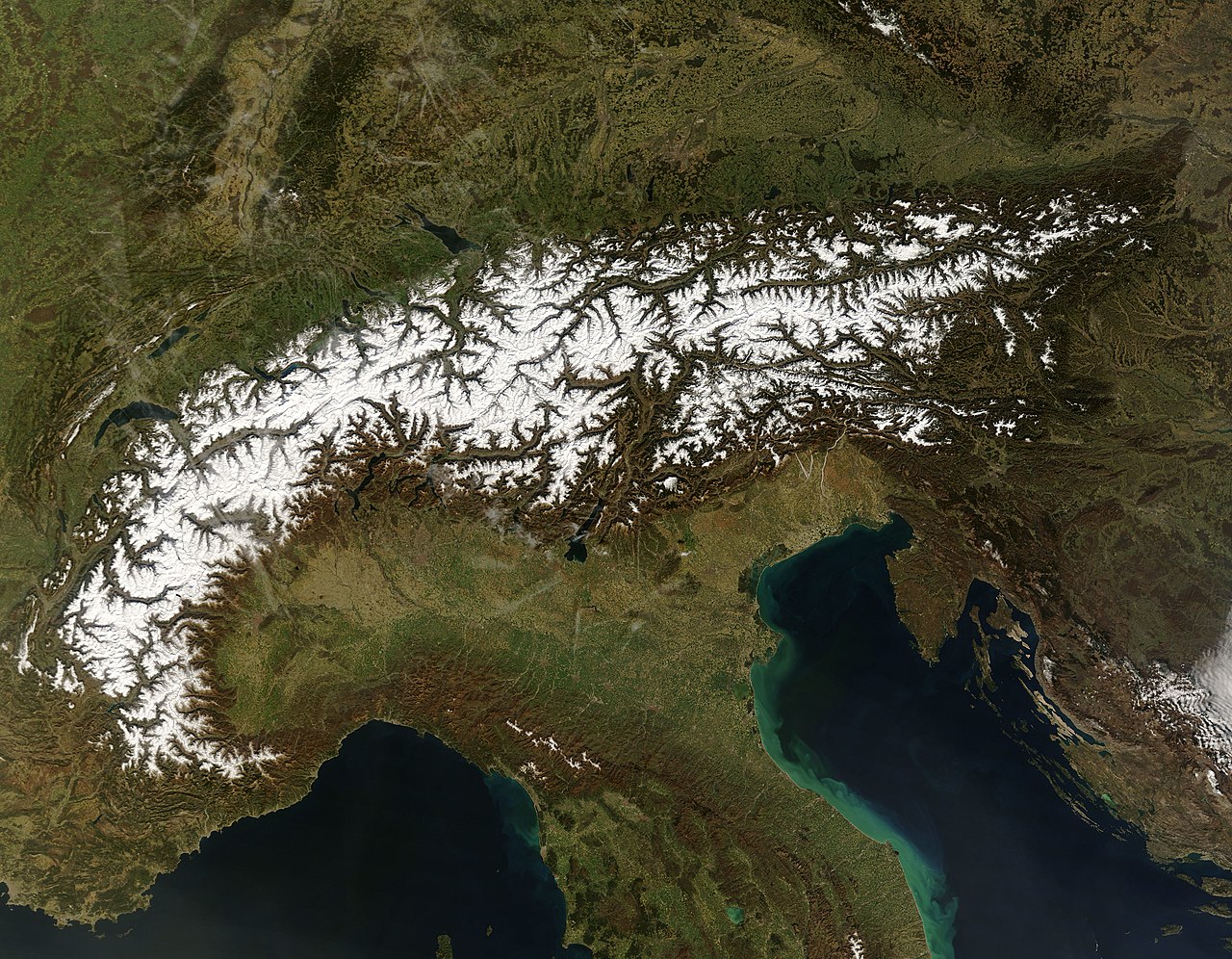
Size & Geography
- Alps Length: ~1,200 km
- Himalayas Length: ~2,400 km
- Alps Highest Peak: Mont Blanc, 4,809 m
- Himalayas Highest Peak: Mount Everest, 8,849 m
- Alps Area: ~200,000 km²
- Himalayas Area: ~595,000 km²
The Himalayas are roughly twice as long, three times the area, and nearly twice the maximum elevation of the Alps. The Himalayan range includes the Tibetan Plateau to its north, the highest and largest plateau on Earth, earning the region its nickname "the Roof of the World."
The Alps are more compact and accessible, divided among eight countries: France, Switzerland, Italy, Austria, Germany, Liechtenstein, Slovenia, and Monaco. Despite their smaller size, the Alps contain enormous geographic diversity, from Mediterranean-influenced valleys in the south to heavily glaciated peaks in the center.
Alps Profile
- Countries: 8
- Glaciers: ~3,000 (rapidly shrinking)
- Population in Alps: ~14 million
- Tourism: ~120 million visitors per year
The Alps are the most densely populated mountain range in the world, with major cities like Innsbruck, Zurich, and Grenoble nestled in their valleys. Europe's road and rail networks cross the Alps through famous passes like the Brenner and Gotthard, and through engineering marvels like the Gotthard Base Tunnel, the world's longest railway tunnel at 57 kilometers.
Alpine glaciers, while still impressive, are retreating rapidly due to climate change. The range has lost approximately half its glacier volume since 1900. The Alps are the birthplace of modern mountaineering and skiing, and their tourism industry generates over $50 billion annually. Iconic peaks like the Matterhorn and Mont Blanc are among the most recognized mountains in the world.
Himalayas Profile
- Countries: 5 (India, Nepal, Bhutan, China, Pakistan)
- Peaks Above 8,000 m: All 14 on Earth
- Glaciers: ~15,000
- Rivers Fed: Ganges, Indus, Brahmaputra, Yangtze, Mekong
The Himalayas are the source of Asia's greatest rivers, providing water to over 1.5 billion people. The glaciers of the Himalayas, sometimes called the "Third Pole," hold the largest store of freshwater ice outside the polar regions. These glaciers feed the Ganges, Indus, Brahmaputra, and other rivers that sustain agriculture and civilization across South Asia.
The Himalayan range is home to extraordinary biodiversity, from tropical forests at its base to arctic conditions at its peaks. Iconic species include the snow leopard, red panda, Himalayan tahr, and numerous endemic plants. The region also holds immense spiritual significance as the mythical home of the gods in Hindu, Buddhist, and Bon traditions.
Key Differences
- Age: Alps ~65 MY; Himalayas ~50 MY
- Maximum Elevation: Alps 4,809 m; Himalayas 8,849 m
- Accessibility: Alps highly accessible; Himalayas remote
- Population Density: Alps densely settled; Himalayas sparsely populated
The most striking difference is scale. The Himalayas contain peaks that tower nearly 4,000 meters above the highest point in the Alps. The treeline in the Himalayas sits at roughly 4,000 meters, nearly at the summit of Mont Blanc. Altitude sickness, which rarely affects Alps visitors, is a constant concern above 3,000 meters in the Himalayas.
Accessibility is another key contrast. Alpine valleys have been major trade routes for millennia, with modern highways and railways crossing the range. Much of the Himalayas remains accessible only on foot, with some communities requiring days of trekking to reach. This isolation has preserved traditional cultures but also limited development.
Which Is More Impressive?
- Alps Advantage: Cultural richness, accessibility, tourism infrastructure
- Himalayas Advantage: Unmatched scale, extreme altitude, wilderness
The Alps win on accessibility, cultural integration, and the sheer number of people who can experience their beauty. They have shaped European history, art, and identity for centuries and remain a playground for skiers, hikers, and climbers. The engineering achievements of Alpine tunnels and railways are remarkable in their own right.
The Himalayas are simply in a different class of scale. Nothing in the Alps prepares you for the sight of an 8,000-meter peak rising above the clouds. The Himalayas represent Earth's geology at its most dramatic, rivers at their most powerful, and wilderness at its most vast. For raw geographic grandeur, the Himalayas are unmatched anywhere on the planet.
Key Facts
- The Himalayas are roughly twice as long and twice as high as the Alps.
- All 14 peaks above 8,000 m are in the Himalayas; the Alps' highest is 4,809 m.
- The Alps receive ~120 million tourists annually, making them the world's most visited mountains.
- Himalayan glaciers supply water to over 1.5 billion people in South Asia.
- Both ranges are still tectonically active and continue to rise.
Fun Facts
- The Gotthard Base Tunnel through the Alps is 57 km long, the world's longest railway tunnel.
- Mount Everest's summit was once at the bottom of the Tethys Sea, containing marine fossils.
- The Alps lose about 3% of their glacier volume every year due to climate change.
- Bhutan, entirely within the Himalayas, measures national success by Gross National Happiness.
Final Thoughts
The Alps and Himalayas each represent mountain magnificence at different scales. The Alps are humanity's most beloved mountains, woven into European culture and accessible to millions. The Himalayas are Earth's ultimate expression of geological force, a wall of rock and ice that shapes weather patterns, feeds rivers, and inspires awe. Comparing them reveals that greatness in geography comes in many forms.
Test Your Knowledge!
Think you can tell geographic features apart? Test your knowledge!
Play Geography Games →