
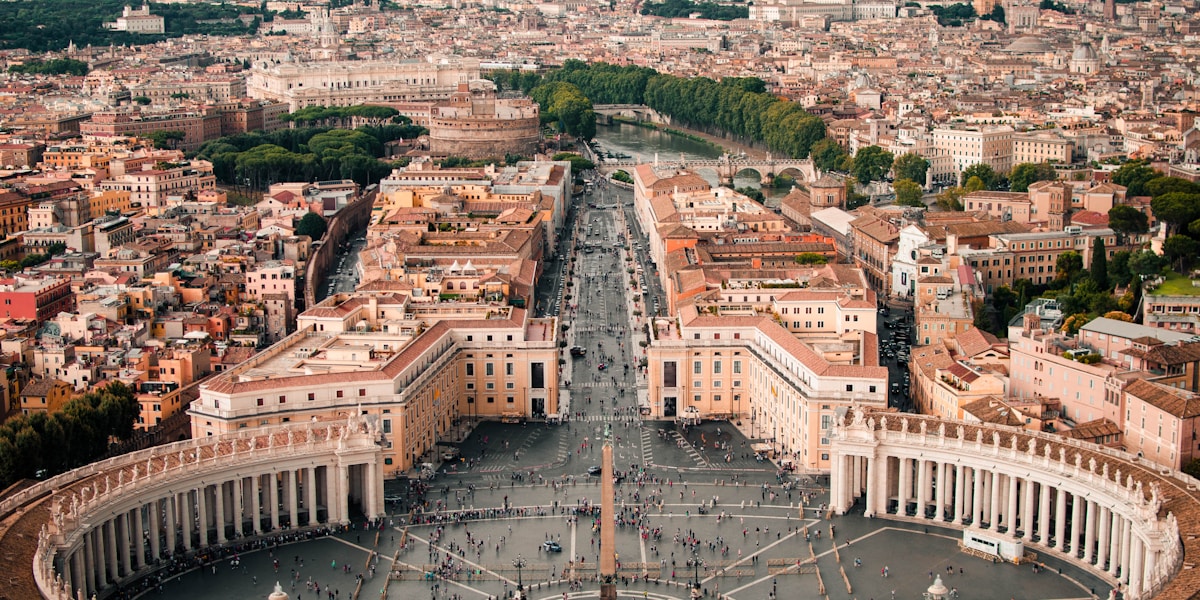
Italy is a Southern European country, 301,340 km² with population of 59 million. The country occupies the famous boot-shaped Italian Peninsula plus the Mediterranean islands of Sicily and Sardinia. Italy borders France (northwest), Switzerland and Austria (north), Slovenia (northeast), and includes the famous Vatican City (the world's smallest sovereign state) and San Marino as enclaves within its territory. Italy has the world's highest number of UNESCO World Heritage Sites (60), reflecting extensive Roman, Etruscan, Greek, Renaissance, Baroque, and modern Italian cultural heritage. Italy was unified as a single nation in 1861 following extensive regional principalities; Rome became the capital in 1871. The country is a parliamentary republic since 1946 and was a founding EU member in 1957. The famous Italian cuisine, fashion, art, music, design, and automotive industries (Ferrari, Lamborghini, Maserati, Fiat) shape global culture.
Major destinations include Rome (the capital — population 2.8 million, with the famous Colosseum, Roman Forum, Pantheon, Trevi Fountain, Spanish Steps, Piazza Navona, and the famous Vatican Museums and Saint Peter's Basilica in Vatican City), Venice (UNESCO World Heritage — the famous canal city with Saint Mark's Square, Doge's Palace, Rialto Bridge, and extensive gondola culture), Florence (UNESCO World Heritage — the famous Renaissance capital with the Uffizi Gallery, Duomo, Ponte Vecchio, and the famous David statue by Michelangelo), the famous Amalfi Coast (UNESCO World Heritage with Positano, Amalfi, Ravello, and the famous coastal drive), Cinque Terre (UNESCO World Heritage — the famous five fishing villages on the Ligurian coast), Milan (the famous Italian fashion capital with the Duomo, La Scala opera house, and Last Supper by Leonardo da Vinci), Tuscany (with extensive wine country, the famous Chianti region, Siena, San Gimignano, Pisa with its famous Leaning Tower, and the famous Val d'Orcia), the famous Lake Como and Italian Lakes region, Pompeii and Herculaneum (UNESCO World Heritage Vesuvius-buried Roman cities), the famous Sicily (with Palermo, Taormina, and the active Mount Etna), Sardinia (the famous Mediterranean island with the Costa Smeralda), Naples (with the famous pizza Margherita origin), Verona (with Romeo and Juliet's balcony), the famous Dolomites (UNESCO World Heritage Alpine mountain range), Capri and Ischia islands, Genoa, Turin, and the famous Pisa.
Italy has a longer "ideal travel season" than almost any other major destination, but the standard summer dates that everyone defaults to — July and August — are usually the worst time to visit. The country is hot, crowded, expensive, and partially closed for the Italian holiday month of "Ferragosto." The best Italy is the Italy of late spring and early autumn, when the light softens, the tomatoes are ripe, and you can hear the cathedral bells over a manageable crowd.
Quick verdict
Best overall: Mid-September through mid-October. Warm but no longer brutal, harvest season in Tuscany and Piedmont, all coastal towns still open, prices dropping from peak.
Best spring: Late April through mid-June. Wildflowers, Easter celebrations, lengthening days, comfortable city heat.
Best for budget travelers: November (excluding the week around any local holiday), and January-February (excluding New Year's and Carnevale weeks).
Avoid if you can: All of August. The locals abandon the cities for the coast, half the family-run restaurants close, and the heat is genuinely punishing.
Spring (March to May): the country wakes up
March is unpredictable — sunny one week, cold rain the next. The advantage is empty famous sites. You can walk into the Uffizi or the Vatican without queueing and get a feel for the cities the way locals see them. Temperatures hover around 12 to 17 °C. By the second half of March the wildflowers start in Sicily and Puglia.
April is the start of meaningful tourist season. Easter brings massive crowds to Rome (the Vatican fills, the city's restaurants run on extended hours, hotel rates spike). The week before and after Easter is one of the busiest of the year. Outside Easter, April is excellent: 16 to 22 °C, gardens in bloom, comfortable for walking. The Amalfi Coast and Cinque Terre start coming alive around mid-April but many hotels and restaurants don't open until late April or early May.
May is widely considered the best month for first-time visitors. Stable weather, long daylight, every region open, manageable crowds. The catch: it's increasingly popular, so book accommodation 3 to 4 months ahead, especially in Florence, Venice, and the Amalfi Coast. Wisteria and poppies fill the Tuscan countryside. The Giro d'Italia in May closes some roads but adds atmosphere.
Summer (June to August): hot, crowded, and the highest prices of the year
June starts as a continuation of May but heats up rapidly. By the last week, southern cities can hit 35 °C. The coast — Amalfi, Capri, Cinque Terre, Sardinia, Sicily — is in full swing. Sea temperatures climb past 22 °C and stay swimmable through October. Crowd levels in Rome, Florence, and Venice ratchet up week by week.
July is brutal. Rome regularly hits 37 °C with stifling humidity. Cobblestone city centers retain heat overnight. The famous attractions have peak crowds, peak prices, and minimal joy. The redeeming feature is that the coast and the Italian Lakes (Como, Garda, Maggiore) are paradise. If you must visit in July, structure your trip around water and altitude: lakes, mountains, beaches.
August is worse, paradoxically because the cities empty out. Italians take their summer holiday around Ferragosto (August 15) and many family-run trattorias close for two to three weeks. You're left with the tourist-trap restaurants and the strongest heat of the year. Coastal Italy is at its peak in every sense: gorgeous, packed, and the most expensive it gets.
Autumn (September to November): the magic season
September is the secret weapon of Italian travel. Early September is still warm enough to swim. Crowds in the famous cities thin noticeably after the first week. The harvest begins — grape harvest in mid-to-late September across Tuscany, Piedmont, and Veneto — meaning festivals, the year's first new wines, and abundant produce in markets. Temperatures settle into the 22 to 28 °C range.
October is, for many seasoned Italy travelers, the single best month. Truffles emerge in Alba and Umbria. The light gets golden and the photography improves. Crowds in Rome and Florence become manageable. The Amalfi Coast is quiet enough to actually enjoy. Daytime temperatures of 18 to 23 °C make sightseeing effortless. Rain is possible but rarely sustained.
By November the cities are mostly empty of tourists. Hotel rates drop sharply outside the Truffle Fair weekends in Alba and the Venice Marathon weekend. It's the cheapest meaningful month to visit (excluding the deep winter freeze). Pack a real coat — Rome can be in the single digits at night — but days remain pleasant for walking.
Winter (December to February): cheap, atmospheric, and Christmas magic
December's first three weeks are quiet and cheap until the Christmas markets in Bolzano, Trento, and other Alto Adige towns hit their stride. From around December 22 through January 6 (Epiphany), prices spike and Roman attractions get busy again with European holiday travelers. The light is short — barely nine hours — but Italy at Christmas is genuinely beautiful: presepi (nativity displays) in every church, illuminations in every piazza, hot chocolate the consistency of pudding.
January and February are deep winter and the cheapest travel months by far. Famous sights are quiet. Rome and Florence get cold but rarely freeze; Venice is foggy and atmospheric (and the high-tide acqua alta season is largely past). The Dolomites are in full ski season — among the best skiing in Europe.
Carnevale in Venice (late January through mid-February depending on year) is a notable exception: hotel prices in Venice triple and the city is gridlocked with masked photo seekers. The neighboring lagoon islands and the Veneto countryside stay quiet.
Regional differences worth knowing
Italy is long and narrow — Sicily and Alto Adige feel like different countries climatically. Generally: southern Italy (Naples, Puglia, Sicily) has milder winters and hotter summers; northern Italy (Lakes, Dolomites, Piedmont) has colder winters and milder summers. The Adriatic coast (Venice, Rimini, Bari) tends to be windier than the Tyrrhenian (Rome, Naples, Amalfi).
The Amalfi Coast and Capri effectively close from November through Easter — many hotels and restaurants shutter. If your trip centers on these areas, late April through early November is your window. The same is largely true of Cinque Terre. Conversely, the Dolomites have two distinct high seasons (winter for skiing, July-August for hiking) and a quieter "between" period in May-June and September-October that's lovely for trekking.
Festivals to plan around or avoid
Time your trip to: Venice Carnevale (Jan-Feb), Easter in Rome (Holy Week — book a year out), Palio di Siena (July 2 and August 16), Venice Biennale (most years, May-November), Alba Truffle Fair (October-November), and the Christmas markets in Alto Adige (late November to early January). Avoid if you don't want crowds: Easter Monday, Ferragosto (August 15), New Year's Eve in any major city.
Verdict by traveler type
First-time visitor doing Rome–Florence–Venice: Late September to mid-October, or early-to-mid May.
Amalfi Coast / Cinque Terre: Late May to mid-June, or September. Avoid July, August, and anytime November to April (much is closed).
Food and wine focused: Mid-September through late October. Harvest, truffles, fresh-pressed olive oil from late October.
Budget traveler: Mid-November or mid-January through February (avoid Carnevale week in Venice).
Beach holiday in Sardinia/Sicily: Late May through mid-June, or September.
Skiing the Dolomites: Mid-January through early March.
Bottom line
Italy in summer is a country fighting its own popularity. Italy in May or October is the country you imagine when you book the trip. If you can move dates even two weeks earlier or later than the standard July-August window, you'll get a dramatically better experience for less money. The best practical advice is the same as for many European destinations: shoulder season is no longer a secret, but it's still meaningfully better than peak.