
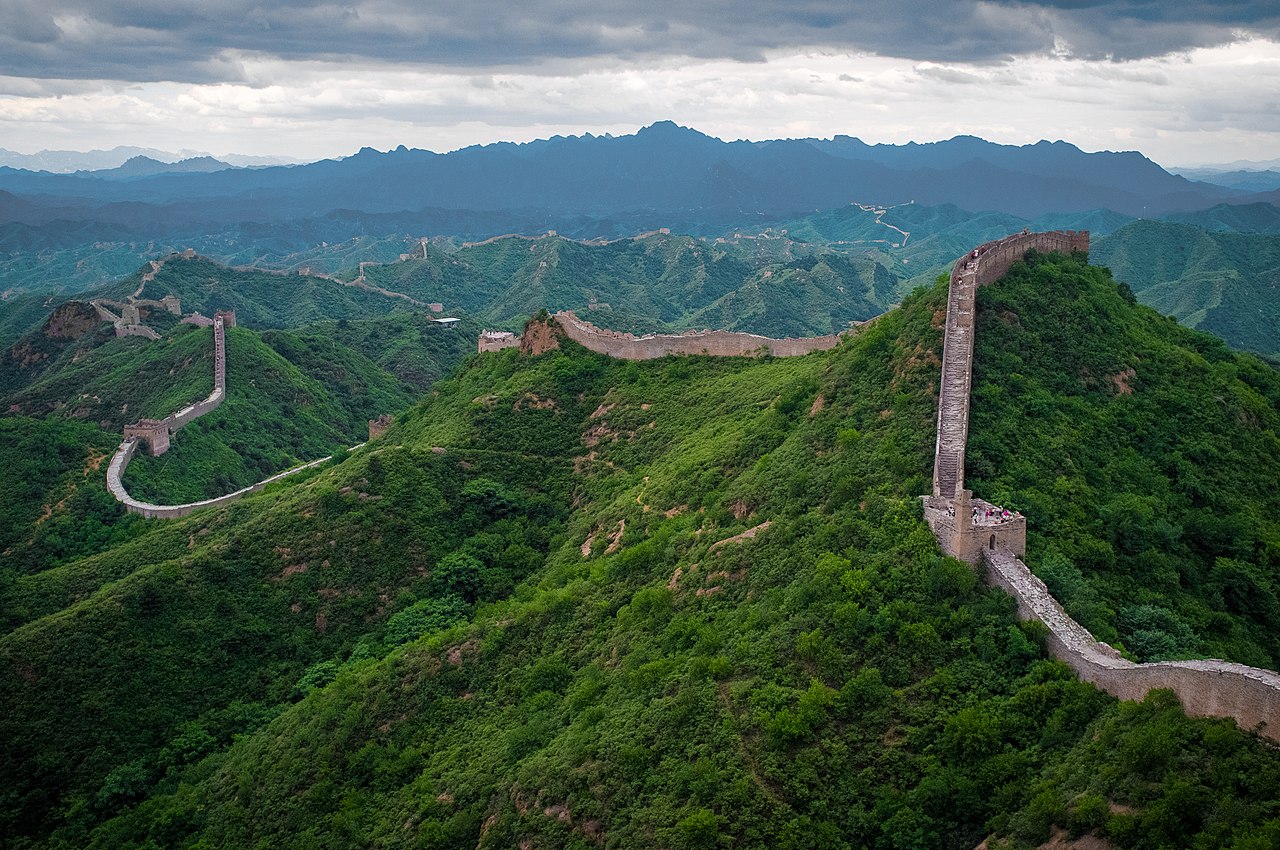
Border walls are among humanity's oldest and most enduring political constructions. From the Great Wall of China to Hadrian's Wall in Roman Britain, from the Berlin Wall to the modern barriers sprouting along borders worldwide, physical barriers have been used for millennia to control movement, defend territory, project power, and define the limits of civilization.
Introduction
The world is currently experiencing an unprecedented era of wall-building. In 1990, approximately 15 border walls existed worldwide. By 2024, that number had surged to over 70. Walls and fences now separate nations across every continent, from the US-Mexico border to India-Bangladesh, from Hungary-Serbia to Saudi Arabia-Iraq. This modern wall-building boom has sparked intense debate about whether barriers solve the problems they claim to address.

Ancient Walls
- Great Wall of China: ~21,196 km total (various dynasties), 2,300+ years old
- Hadrian's Wall: 117 km across northern England, built 122 AD
- Walls of Constantinople: Triple walls, stood for 1,000+ years
- Purpose: Defense against nomadic raiders, trade control, frontier marking
The Great Wall of China is the most ambitious border wall ever constructed, stretching over 21,196 kilometers across northern China when all sections from various dynasties are counted. Construction began in the 7th century BC and continued for over 2,000 years. The wall was never a single continuous structure but rather a system of walls, watchtowers, and fortifications designed to defend agricultural China from nomadic steppe peoples.
Hadrian's Wall, built by the Roman Empire beginning in 122 AD, ran 117 kilometers from coast to coast across northern England. With a garrison of roughly 9,000 soldiers, the wall served less as an impenetrable barrier than as a customs checkpoint and symbol of Roman authority. People and goods passed through controlled gates, making it more analogous to a modern border checkpoint system than to a fortress wall. The wall defined the northern frontier of the Roman Empire for nearly 300 years.
Cold War Barriers
- Berlin Wall: 155 km total, 43.1 km through the city, 1961–1989
- Inner German Border: 1,393 km with death strip, fences, and mines
- Iron Curtain: Total system spanning from Arctic to Adriatic
- Hungarian Border Fence: Electrified fence with Austria, dismantled 1989
The Cold War produced the most comprehensive system of border barriers in history. The Iron Curtain stretched from the Arctic Ocean to the Adriatic Sea, separating NATO and Warsaw Pact nations with fences, minefields, watchtowers, and patrol roads. The inner German border alone was 1,393 kilometers long, fortified with multiple fences, a raked death strip to reveal footprints, spring-gun installations, and over a million land mines.
The Berlin Wall was the most visible symbol of Cold War division. Its 155-kilometer perimeter enclosed West Berlin completely, cutting the city off from surrounding East Germany. The wall system included two parallel concrete walls, watchtowers every 250 meters, anti-vehicle trenches, and guard dogs. Despite these defenses, over 5,000 East Germans successfully escaped, using tunnels, hot air balloons, modified cars, and even a homemade ultralight aircraft.
Modern Border Barriers
- US-Mexico: ~1,100 km of barriers (various types)
- India-Bangladesh: ~3,200 km fence (nearly complete)
- Israel-West Bank: ~708 km barrier (wall and fence)
- Saudi Arabia-Iraq: ~900 km fence with surveillance
The United States has constructed approximately 1,100 kilometers of barriers along its 3,145-kilometer border with Mexico, ranging from vehicle barriers in remote desert areas to 30-foot steel bollard walls in urban zones. Construction accelerated under multiple administrations, with costs reaching billions of dollars. The barriers have diverted unauthorized crossings to more remote and dangerous terrain, contributing to hundreds of migrant deaths annually in the Sonoran Desert.
India has fenced nearly the entire 3,200-kilometer border with Bangladesh with barbed wire and floodlights, making it one of the most extensive modern border barriers. The fence was built to prevent illegal immigration, cattle smuggling, and infiltration. However, human rights organizations have documented numerous deaths of border crossers shot by Indian border guards, raising questions about the human cost of fortification.
The Effectiveness Debate
- For Walls: Reduce illegal crossings, smuggling, and security threats
- Against Walls: Divert rather than stop movement, enormous costs, environmental damage
- Cost: US-Mexico wall sections cost $15-27 million per mile
- Environmental Impact: Fragment wildlife habitats and migration corridors
Proponents of border walls point to measurable security improvements. Israel credits its West Bank barrier with reducing suicide bombings by over 90%. Hungary's border fence reduced unauthorized crossings from over 6,000 per day to near zero within weeks. Saudi Arabia's border defenses have helped prevent ISIS incursions from Iraq. These cases suggest that physical barriers, when combined with surveillance and enforcement, can significantly reduce unauthorized movement.
Critics counter that walls rarely solve the underlying problems driving migration, smuggling, or conflict. The US-Mexico border experience shows that barriers divert crossers to more dangerous routes rather than stopping them entirely. Walls fragment ecosystems, blocking migration routes for species like jaguars, pronghorn, and butterflies. Construction costs are enormous — US-Mexico wall sections have cost between $15 and $27 million per mile — and maintenance adds ongoing expense. Perhaps most fundamentally, walls are political symbols that can deepen hostility rather than build the cooperation needed for lasting solutions.
Future of Border Barriers
- Smart Borders: Technology-based monitoring replacing physical walls
- Climate Migration: Rising seas and drought may create new border pressures
- Urbanization: Growing cities may make traditional walls impractical
The future of border barriers is shifting from concrete and steel to technology. "Smart borders" use sensors, drones, AI-powered cameras, and satellite surveillance to monitor frontiers without physical walls. Estonia's border with Russia uses a network of sensors and cameras in a system that costs a fraction of a physical wall. The US is investing in sensor towers and autonomous surveillance along sections of its southern border as a complement to physical barriers.
Climate change is expected to create new border pressures as rising sea levels, desertification, and extreme weather displace millions of people. The World Bank estimates that by 2050, up to 216 million people could be forced to migrate within their own countries due to climate impacts, with many eventually attempting international crossings. This prospect has already driven barrier construction in Europe, North Africa, and South Asia, suggesting that the wall-building trend is far from over.
Key Facts
- The Great Wall of China spans 21,196 km across all sections and is over 2,300 years old
- The Berlin Wall killed at least 140 people during its 28-year existence, yet over 5,000 successfully escaped
- Over 70 border walls and fences exist worldwide as of 2024, up from ~15 in 1990
- India has fenced nearly all of its 3,200 km border with Bangladesh
- US-Mexico border wall sections cost between $15 and $27 million per mile to construct
Fun Facts
- Over 5,000 people escaped over or under the Berlin Wall, including one man who built a homemade ultralight aircraft
- The Great Wall of China is not actually visible from space with the naked eye — this is a persistent myth
- Hungary's border fence reduced unauthorized crossings from over 6,000 per day to near zero virtually overnight
- An estimated 1 million land mines were planted along the inner German border — clearance continued until 2013
Final Thoughts
Border walls are as old as civilization and as current as today's headlines. From the Great Wall to modern smart fences, the human impulse to build barriers reflects deep anxieties about security, identity, and sovereignty. Whether these walls achieve their stated goals is debatable, but their proliferation in the 21st century suggests that the age of border barriers is far from over — it may only be beginning.
Test Your Knowledge!
Think you know the world's borders? Try our interactive geography quiz!
Play Neighbor Quiz →