

The coldest country in the world by average annual temperature is Russia (−5.1 °C / 22.8 °F), followed by Canada (−5.0 °C), Mongolia (−0.7 °C), Iceland (1.0 °C), and Kazakhstan (1.4 °C). Russia also holds the record for the coldest temperature ever recorded at an inhabited place: −67.8 °C at Oymyakon in Siberia (1933).
Top 10 coldest countries — quick reference
| Rank | Country | Avg. annual temp | All-time record low | Where the cold comes from |
|---|---|---|---|---|
| 1 | Russia | −5.1 °C (22.8 °F) | −67.8 °C / Oymyakon (1933) | Vast Siberian interior, ~65% permafrost |
| 2 | Canada | −5.0 °C (23.0 °F) | −63.0 °C / Snag, Yukon (1947) | Arctic territories and tundra |
| 3 | Mongolia | −0.7 °C (30.7 °F) | −55.3 °C / Zuun Mod | High-altitude continental interior |
| 4 | Iceland | 1.0 °C (33.8 °F) | −39.7 °C / Grímsstaðir (1918) | Subarctic latitude (Gulf Stream moderates) |
| 5 | Kazakhstan | 1.4 °C (34.5 °F) | −57.0 °C / Atbasar | Continental steppe |
| 6 | Norway | 1.5 °C (34.7 °F) | −51.4 °C / Karasjok (1886) | Far-north latitude (coast moderated) |
| 7 | Kyrgyzstan | 1.6 °C (34.9 °F) | −53.6 °C | Average elevation 2,750 m |
| 8 | Finland | 1.7 °C (35.1 °F) | −51.5 °C / Kittilä (1999) | One-third above the Arctic Circle |
| 9 | Sweden | 2.1 °C (35.8 °F) | −52.6 °C / Vuoggatjålme (1966) | Northern half above the Arctic Circle |
| 10 | Estonia | 5.2 °C (41.4 °F) | −43.5 °C / Jõgeva (1940) | Baltic continental winter |
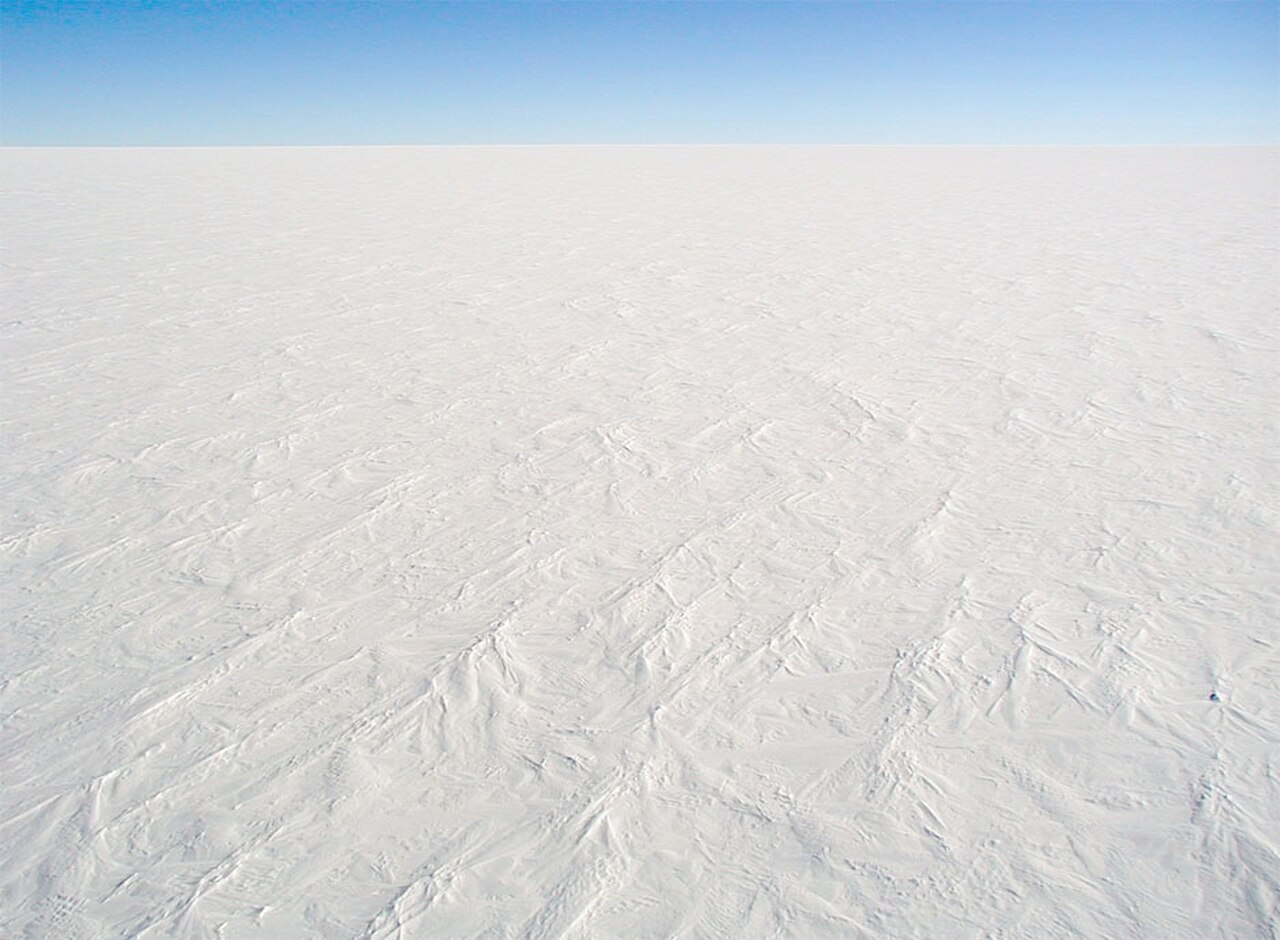
Greenland — technically a constituent territory of Denmark rather than a sovereign country — would rank #1 if counted, with an average annual temperature of about −7.1 °C and a record low of −66.1 °C at Northice (1954). Antarctica is the coldest continent (record −89.2 °C at Vostok, 1983) but has no permanent population.
1. Russia
- Average Annual Temperature: −5.1°C (22.8°F)
- Coldest Recorded: −67.8°C at Oymyakon (1933)
- Area: 17.1 million km²
- Key Factor: Vast Siberian interior
Russia is the coldest country in the world by average temperature, largely because of Siberia, which makes up roughly 77% of the country's territory. The town of Oymyakon in Yakutia holds the record for the coldest permanently inhabited place on Earth at −67.8°C.
In Yakutsk, the largest city built on permafrost, winter temperatures regularly drop below −40°C. Buildings must be constructed on stilts driven deep into the frozen ground to prevent their heat from thawing the permafrost beneath. Car engines are often left running all day in winter because they cannot restart once frozen.
2. Canada
- Average Annual Temperature: −5.0°C (23.0°F)
- Coldest Recorded: −63.0°C at Snag, Yukon (1947)
- Area: 10.0 million km²
- Key Factor: Northern territories and Arctic islands
Canada is the second coldest country, with vast Arctic and subarctic territories. About 80% of Canada's population lives within 150 km of the US border, leaving the enormous northern regions sparsely inhabited.
Alert, on Ellesmere Island, is the northernmost permanently inhabited place in the world. Winters in the Canadian prairies and northern territories routinely bring temperatures below −30°C, and wind chill can make it feel like −50°C or colder.
3. Mongolia
- Average Annual Temperature: −0.7°C (30.7°F)
- Coldest Recorded: −55.3°C at Zuun Mod
- Capital: Ulaanbaatar (−24°C average in January)
- Key Factor: High-altitude continental interior
Mongolia's capital Ulaanbaatar is the coldest national capital in the world, with January temperatures averaging −24°C. The country's high elevation (average 1,580 m), landlocked position, and distance from any moderating ocean make it one of the harshest climates on Earth.
Roughly 30% of Mongolians are nomadic herders who live in gers (yurts) year-round. The dzud — a uniquely Mongolian disaster combining drought with extreme winter cold — can kill millions of livestock in a single season.
4. Iceland
- Average Annual Temperature: 1.0°C (33.8°F)
- Coldest Recorded: −39.7°C at Grímsstaðir (1918)
- Key Factor: Subarctic location near the Arctic Circle
- Mitigating Factor: Gulf Stream moderates coastal temperatures
Iceland sits just below the Arctic Circle in the North Atlantic. While the Gulf Stream keeps it warmer than its latitude would suggest, the country still experiences long, dark winters with persistent cold. About 11% of Iceland is covered by glaciers, including Vatnajökull, Europe's largest ice cap.
Geothermal energy from Iceland's volcanic activity heats 90% of homes and provides hot water, making life comfortable despite the cold climate. Reykjavik is one of the most northerly capital cities in the world.
5. Kazakhstan
- Average Annual Temperature: 1.4°C (34.5°F)
- Coldest Recorded: −57.0°C at Atbasar
- Area: 2.72 million km²
- Key Factor: Continental steppe climate with extreme seasonal swings
Kazakhstan is the largest landlocked country in the world, and its vast steppe interior experiences extreme temperature swings. Winters bring temperatures below −30°C across much of the country, while summers can soar above 40°C — a temperature range exceeding 70°C.
The former capital Astana (now Nur-Sultan) is the second coldest national capital after Ulaanbaatar, with January averages around −15°C. The city was built from scratch on the windswept steppe starting in the late 1990s.
6. Finland
- Average Annual Temperature: 1.7°C (35.1°F)
- Coldest Recorded: −51.5°C at Kittilä (1999)
- Key Factor: Northern location; one-third above the Arctic Circle
- Daylight: Near-24h darkness in winter in Lapland
Finland is the northernmost country in the EU, with one-third of its territory above the Arctic Circle. Finnish Lapland experiences kaamos (polar night) — a period of weeks when the sun never rises above the horizon. Temperatures in Lapland regularly drop below −30°C.
Despite the cold, Finns are famous for their sauna culture — there are roughly 3.3 million saunas for a population of 5.5 million. The Finnish concept of sisu refers to a stoic determination to endure hardship, a trait forged by centuries of cold winters.
7. Estonia
- Average Annual Temperature: 5.2°C (41.4°F)
- Coldest Recorded: −43.5°C at Jõgeva (1940)
- Key Factor: Baltic location with continental winter influence
- Winter: Only 6 hours of daylight in December
Estonia is one of the coldest countries in the EU, with long, dark winters. The Baltic Sea partially freezes along the Estonian coast most winters, and the country's many islands become accessible by ice roads — official roadways across the frozen sea.
Estonia's bogs and forests cover over half the country and create a damp cold that feels even more bitter. The country is small but experiences significant temperature variation between its milder western coast and colder eastern interior.
8. Norway
- Average Annual Temperature: 1.5°C (34.7°F)
- Coldest Recorded: −51.4°C at Karasjok (1886)
- Key Factor: High latitude; extends well above the Arctic Circle
- Mitigating Factor: Gulf Stream warms the western coast
Norway stretches from 58°N to 71°N, with the northern regions deep inside the Arctic Circle. The inland areas and far north experience extreme cold, while the Gulf Stream keeps the western coast remarkably mild — the port of Hammerfest at 70°N rarely freezes.
Svalbard, the Norwegian archipelago at 78°N, has an average annual temperature of −6°C and is home to the Global Seed Vault, built into permafrost to preserve the world's crop seeds.
9. Kyrgyzstan
- Average Annual Temperature: 1.6°C (34.9°F)
- Coldest Recorded: −53.6°C
- Key Factor: Mountainous terrain; average elevation ~2,750 m
- Notable: Over 90% of the country above 1,500 m
Kyrgyzstan is one of the most mountainous countries on Earth, with an average elevation of 2,750 meters. Over 90% of the country is above 1,500 meters, and the Tian Shan and Pamir-Alay mountain ranges dominate the landscape. This extreme altitude makes Kyrgyzstan much colder than its Central Asian latitude would suggest.
The country has over 8,000 glaciers covering about 4% of its territory. Lake Issyk-Kul, at 1,607 m elevation, never freezes despite the cold due to geothermal activity and slight salinity.
10. Sweden
- Average Annual Temperature: 2.1°C (35.8°F)
- Coldest Recorded: −52.6°C at Vuoggatjålme (1966)
- Key Factor: Northern half above the Arctic Circle
- Notable: Kiruna is the world's northernmost city with over 20,000 people
Sweden stretches from the temperate south to the subarctic north, where the city of Kiruna hosts the famous Icehotel, rebuilt every winter from ice blocks taken from the Torne River. Northern Sweden experiences months of continuous darkness in winter and midnight sun in summer.
The Swedish concept of lagom — "just the right amount" — extends to how Swedes cope with cold: efficient heating, well-insulated homes, and a cultural embrace of outdoor winter activities.
Key Facts
- Russia and Canada together account for roughly one-quarter of the Earth's land surface.
- Oymyakon, Russia (−67.8°C) is the coldest permanently inhabited place on Earth.
- Mongolia's Ulaanbaatar is the coldest national capital with January averages of −24°C.
- Iceland is kept warmer than expected by the Gulf Stream but still averages just 1°C annually.
- Finland has more saunas (3.3 million) than cars as a cultural response to its cold climate.
Fun Facts
- In Yakutsk, Russia, eyelashes freeze together outdoors, and thrown boiling water turns to snow before hitting the ground.
- Mongolian nomads' gers (yurts) can maintain a comfortable 20°C interior when it is −40°C outside.
- Estonia's official ice roads across the Baltic Sea have speed limits posted on them.
- The Finnish word "pakkanen" specifically describes the biting cold that stings exposed skin instantly.
What makes a country cold?
Three factors do most of the work, and the coldest countries usually have all three:
- Latitude — every degree closer to the pole, the sun's rays hit at a shallower angle, delivering less energy per square meter. Russia, Canada, the Nordics, and Iceland all extend deep into the high latitudes.
- Continental interior — water moderates temperature; land does not. Far from any ocean, summers are hotter and winters are colder. Mongolia, Kazakhstan, and Kyrgyzstan owe their cold winters more to continentality than latitude (Mongolia is at about the same latitude as France).
- Elevation — temperature drops about 6.5 °C per 1,000 m of elevation gained. Kyrgyzstan averages 2,750 m, the Mongolian plateau averages 1,580 m. Both are far colder than they would be at sea level.
Two factors push the other way: warm ocean currents (the Gulf Stream is why Iceland and coastal Norway are habitable; Reykjavik in winter is warmer than New York City) and maritime moderation in general (the UK has milder winters than Germany at the same latitude because of the Atlantic).
How climate change is rewriting the list
The Arctic is warming roughly four times faster than the global average — a phenomenon called Arctic amplification. Russia and Canada are warming particularly fast. Some of the visible effects:
- Thawing permafrost across northern Russia and Canada is causing buildings, roads, and pipelines to subside. Yakutsk has had to rebuild major roads as the previously frozen ground softens.
- Disappearing sea ice in the Arctic Ocean is opening up new shipping routes (the Northern Sea Route, Northwest Passage) but also changing weather patterns far to the south.
- Mongolian dzuds (extreme winter events combining drought and cold) have become more frequent and severe, killing millions of livestock and accelerating rural-to-urban migration to Ulaanbaatar.
- Iceland's glaciers — including Vatnajökull, Europe's largest — are losing mass at accelerating rates. Okjökull was officially declared "dead" in 2014, the first Icelandic glacier to lose its glacier status.
The ranking of the coldest countries hasn't changed yet — but the absolute temperatures within each are gradually creeping up.
Frequently asked questions
What is the coldest country in the world?
Russia, by average annual temperature (−5.1 °C / 22.8 °F). Canada is a very close second at −5.0 °C. Russia also holds the record for the coldest temperature ever recorded at a permanently inhabited place: −67.8 °C at Oymyakon, Siberia, in 1933.
Is Russia colder than Canada?
Marginally. Russia averages −5.1 °C and Canada averages −5.0 °C across their entire territories. The two are nearly tied, but Russia edges out Canada because Siberia is so vast and so cold. Canada has more Arctic territory in absolute terms but a higher share of mid-latitude land.
What is the coldest place on Earth where people live?
Oymyakon, in Russia's Sakha Republic — the village recorded −67.8 °C in 1933, the coldest temperature ever measured at a permanently inhabited place. About 500 people live there year-round. Verkhoyansk, also in Sakha, is a close runner-up at −67.6 °C.
What is the coldest capital city in the world?
Ulaanbaatar, Mongolia — January temperatures average around −24 °C and the annual average is just below freezing. Astana (now Nur-Sultan) in Kazakhstan is second; Ottawa in Canada is the coldest G7 capital.
Is Iceland really cold?
Less than its name and Arctic latitude suggest. The country's annual average is about 1 °C and Reykjavik in January averages around 0 °C — milder than New York City. The Gulf Stream keeps Iceland's coasts much warmer than they "should" be, which is why the country is even habitable.
Why is Mongolia so cold despite being at the same latitude as France?
Two reasons. First, Mongolia is deep in the Asian interior with no ocean nearby — continental climates have far more extreme winter cold than maritime climates. Second, Mongolia sits on a high plateau with an average elevation of 1,580 m, which alone subtracts about 10 °C from sea-level temperatures.
Are Antarctica and Greenland the coldest places on Earth?
Yes — but neither is a sovereign country. Antarctica is a continent governed by the Antarctic Treaty system with no permanent population (research stations only) and is the absolute coldest place on Earth (record −89.2 °C at Vostok in 1983). Greenland is part of the Kingdom of Denmark and would top the list of "coldest sovereign territories" if counted as a country, with an annual average around −7.1 °C.
How do people live in extreme cold?
By engineering for it. Permafrost cities like Yakutsk build on stilts to keep building heat from thawing the foundation soil. Cars run continuously in winter because they may never restart once frozen. Insulation, triple-glazed windows, district heating, and specialized clothing are universal. Cultural practices matter too — Finland's roughly 3.3 million saunas, Mongolian gers (yurts) with central wood stoves, and the Russian banya all allow people to thrive rather than merely survive.
Bottom line
Russia is the coldest country in the world at −5.1 °C average, followed by Canada at −5.0 °C, Mongolia at −0.7 °C, Iceland at 1.0 °C, and Kazakhstan at 1.4 °C. The deepest cold on Earth happens in inhabited Siberia (Oymyakon, −67.8 °C) and in remote Antarctica (Vostok, −89.2 °C). What ties the top of the list together is some combination of high latitude, continental interior, and elevation — and what's changing the picture, slowly but unmistakably, is climate change accelerating in the polar regions faster than anywhere else on Earth.