

Copper has been mined and worked by humans for over 10,000 years, making it one of the first metals utilized by civilization. Global copper mine production reached approximately 22 million tonnes in 2024, driven by demand from construction, electronics, and increasingly the renewable energy sector, where copper is essential for wind turbines, solar panels, and electric vehicles.
Introduction
The geography of copper deposits is dominated by porphyry copper deposits — enormous bodies of low-grade ore formed by magmatic-hydrothermal processes at subduction zones. These deposits are concentrated along the western margins of the Americas and in Southeast Asia, following the Ring of Fire where oceanic plates dive beneath continental crust.
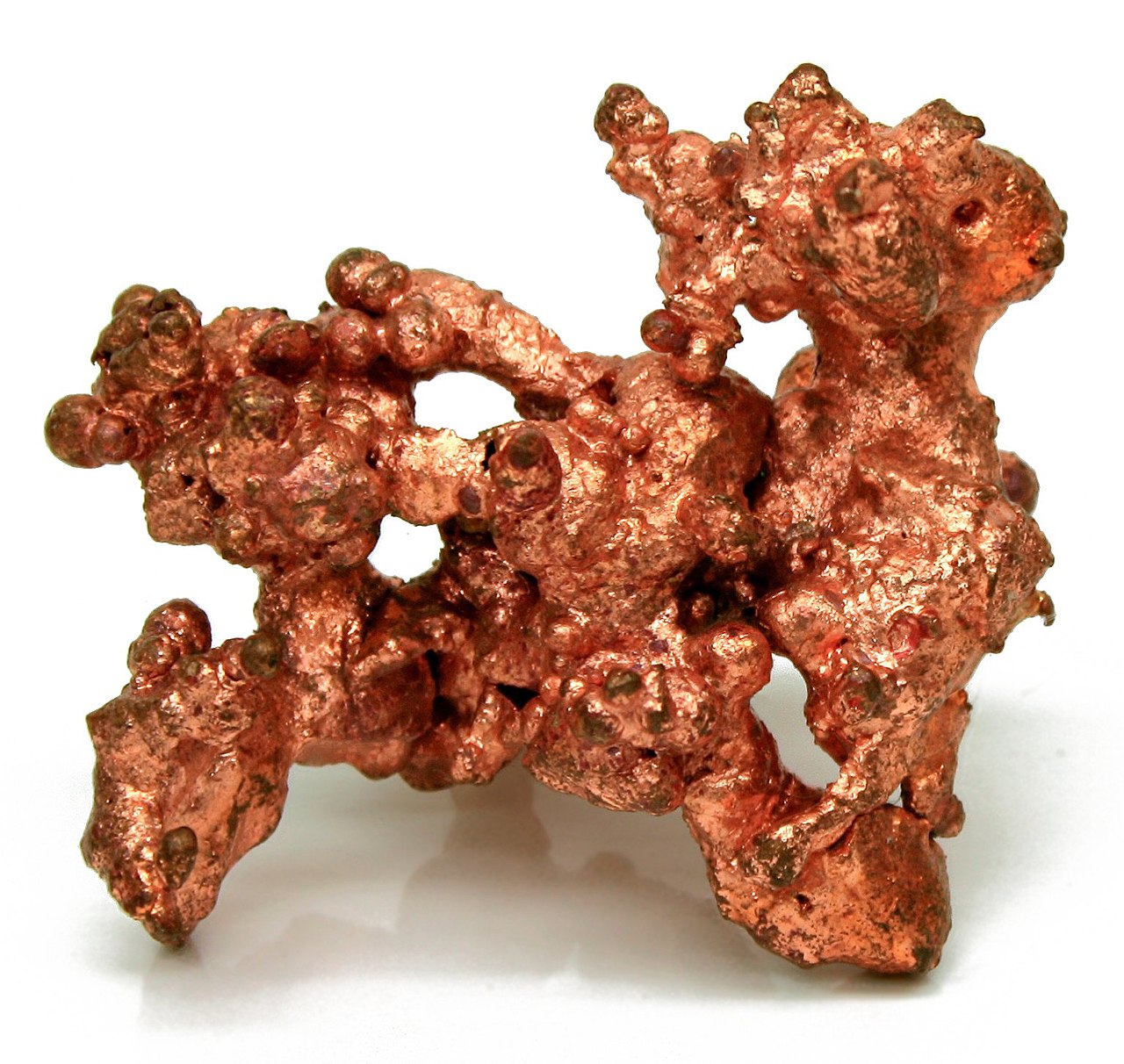
Major Copper-Producing Countries
- Chile: ~5.3 million tonnes/year (~25% of world)
- Peru: ~2.7 million tonnes/year
- DR Congo: ~2.5 million tonnes/year (growing rapidly)
- China: ~1.9 million tonnes/year
- United States: ~1.2 million tonnes/year (Arizona dominant)
Chile's Atacama Desert and the adjacent Andes mountains contain the greatest concentration of copper deposits on Earth. The Escondida mine in Chile's Atacama region is the world's largest copper mine, producing over 1 million tonnes of copper annually from a massive porphyry deposit at 3,100 m elevation. Chuquicamata, also in the Atacama, has been mined continuously since 1910 and is one of the largest open-pit mines ever excavated.
The Democratic Republic of Congo's Copper Belt, stretching across the southern provinces of Haut-Katanga and Lualaba, has emerged as one of the fastest-growing copper-producing regions in the world. The Copper Belt's deposits are sediment-hosted rather than porphyry-type, containing exceptionally high-grade ore (2-5% copper versus the 0.5-1% typical of porphyry deposits).
Geology of Copper Deposits
- Porphyry Deposits: ~60% of world copper production
- Sediment-Hosted: Copper Belt (DRC, Zambia)
- Volcanogenic Massive Sulfide: Submarine volcanic deposits
- Supergene Enrichment: Surface weathering concentrates copper
Porphyry copper deposits form when magma rises through the crust at subduction zones, releasing metal-bearing hydrothermal fluids that permeate and mineralize the surrounding rock over areas of several square kilometers. These deposits are enormous — containing billions of tonnes of ore — but typically low grade, requiring massive-scale open-pit mining to be economic.
The African Copper Belt, stretching over 500 km from southern DR Congo into northern Zambia, contains one of the world's greatest concentrations of copper (and cobalt). These deposits formed roughly 800-600 million years ago when copper-bearing brines migrated through sedimentary rocks and precipitated along chemical barriers. The Copper Belt has produced over 30 million tonnes of copper since large-scale mining began in the 1920s.
Mining Methods & Processing
- Open-Pit Mining: Dominant for large porphyry deposits
- Underground Mining: Used for deeper or higher-grade deposits
- Heap Leaching: Acid dissolution of copper from oxide ores
- Smelting: Concentrate refined to 99.99% pure copper
Most of the world's copper comes from open-pit mines that excavate enormous quantities of rock. The Bingham Canyon mine in Utah has removed over 5 billion tonnes of material since 1906, creating a pit 1.2 km deep and 4 km wide — the largest human excavation on Earth. The economics of copper mining depend heavily on ore grade; a decline from 1% to 0.5% roughly doubles the amount of rock that must be mined per tonne of copper.
After mining, copper ore undergoes crushing, grinding, and flotation to produce a copper concentrate (typically 25-35% copper), which is then smelted and electrolytically refined to 99.99% pure copper cathode. The entire process from ore to finished copper requires enormous energy inputs, making copper smelters major industrial installations.
Copper & the Energy Transition
- Electric Vehicles: Use 3-4x more copper than conventional cars
- Wind Turbines: ~4.7 tonnes copper per MW of capacity
- Solar Panels: ~5.5 tonnes copper per MW
- Grid Infrastructure: Massive copper demand for new transmission lines
The global energy transition is creating unprecedented demand for copper. Electric vehicles require 3-4 times more copper than conventional cars, primarily for motors, wiring, and charging infrastructure. A single offshore wind turbine requires roughly 8 tonnes of copper. The International Energy Agency estimates that copper demand from clean energy technologies will double by 2040.
This surging demand is driving exploration and development in new frontiers, including deeper deposits, lower-grade ores, and seabed mining proposals. However, developing a new copper mine typically takes 15-25 years from discovery to production, creating a potential supply gap that some analysts call a "copper cliff" in the late 2020s.
Environmental Impact
- Acid Mine Drainage: Sulfide-bearing waste generates sulfuric acid
- Tailings Dams: Massive structures storing processed waste
- Water Consumption: Mining in arid regions strains water supplies
- Land Disturbance: Some of the largest excavations on Earth
Copper mining generates enormous volumes of waste. For every tonne of copper produced from a typical porphyry deposit, roughly 200-500 tonnes of waste rock and tailings are generated. Tailings dams, the structures that impound this processed waste, are among the largest engineered structures on Earth and have been the site of catastrophic failures, including the 2019 Brumadinho dam collapse in Brazil that killed 270 people.
In Chile's Atacama Desert, copper mining competes with agriculture and communities for scarce water resources. Desalination is increasingly used to supply water to mines, with pipelines carrying seawater up to 3,000 m in elevation and 170 km inland. This adds significant cost but reduces pressure on dwindling groundwater supplies.
Key Facts
- Chile produces roughly 25% of the world's copper, primarily from the Atacama Desert.
- Porphyry copper deposits account for about 60% of global copper production.
- The Bingham Canyon mine in Utah has removed over 5 billion tonnes of material since 1906.
- Electric vehicles require 3-4 times more copper than conventional cars.
- The DR Congo's Copper Belt is one of the fastest-growing copper-producing regions in the world.
Fun Facts
- The Statue of Liberty contains 80 tonnes of copper sheeting, now green from oxidation.
- Copper is naturally antimicrobial — bacteria die within hours on copper surfaces.
- The word "copper" comes from the Latin "cuprum," derived from "Cyprus," where Romans mined it extensively.
- Chile's Chuquicamata mine was home to an entire town that had to be relocated in 2007 as the pit expanded.
Final Thoughts
The geography of copper mining follows the great tectonic boundaries of our planet, from the Andes to the African Copper Belt. As the world transitions toward clean energy, copper's importance will only grow, making the geography of copper deposits one of the most strategically significant resource maps of the 21st century.
Test Your Knowledge!
Think you know your mining geography? Try our interactive quiz!
Play Geography Games →